
How EV Public Transport Can Change Bus Advertising in India?
India is rolling out 23,000+ electric buses. Discover how this shift is opening new formats and smarter targeting for bus advertising.
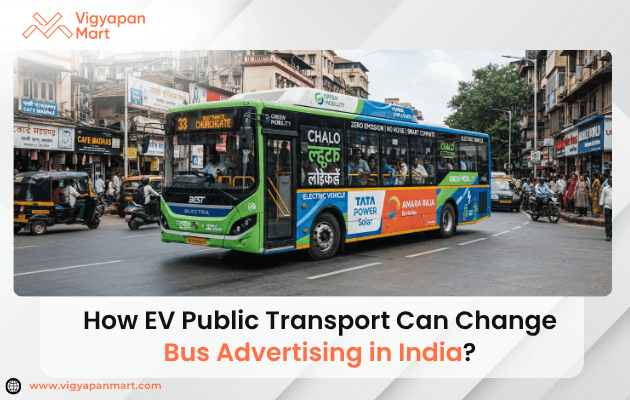
India’s public transport system is getting transformed. With a new line of electric buses ready to move across cities, a big change is coming for brands, industries, and advertisers.
The advertising platforms are now becoming greener and more sustainable.
The PM E-Drive Scheme is about to deploy up to 14,028 electric buses and have a budget of around ₹4,391 crore. Another 10,000 electric buses will be launched through the PM-eBus Sewa Scheme.
This represents a potential of more than 23000 buses across multiple cities and states.
Now, the question is what’s in it for advertisers? Could electric buses become the next big thing for outdoor advertising?
Bus Advertising
Bus advertising turns public transport vehicles into mobile billboards, giving brands repeated visibility across busy roads, markets, residential areas, and commercial zones.
Why Are Electric Buses Becoming a Bigger Part of India’s Public Transport?
India is moving towards cleaner and more efficient urban mobility. Electric buses are reducing dependence on fuels and also pushing the clean energy movement.
The electric buses are becoming a highly visible part of our lifestyle, with more than 23000 buses ready to be deployed around the country. Especially in Tier-2 and Tier-3 cities where electric buses are still not very prominent.
The rising concern for sustainability and eco-friendly energy is pushing this movement. Plus, electric buses are making India more self-reliant.
For brands, this is an opportunity to show ads, connect with the younger generation and maintain sustainability values. Wherever people see buses, brands see opportunities for ads.
Electric Buses May Change the Advertising Environment:
Bus advertisements always have one powerful benefit over static ads.
It’s MOBILITY.
An advertising bus travels across the city. It covers markets, residential areas, commercial districts, highways and busy intersections. As a result, it engages with pedestrians, people on bikes, everyday commuters, and local residential people all day long.
Electric buses offer another layer to your ads.
Electric buses are directly associated with:
- Clean technology
- Innovation
- Modern urban infrastructure
This gives advertisers a different environment for their messaging. The vehicle becomes a part of the advertisement.
From Full-Bus Branding to Smarter EV Bus Advertising:
Electric bus advertising is not covering an entire vehicle with a large advertisement. Brands can use different surfaces and ad formats depending.
These can include:
- Full exterior bus wraps
- Side-panel branding
- Rear-panel advertising
- Interior panel ads
- Window graphic ads
- Digital screen ads
- QR-code-led ad campaigns
- Route-specific ad creative
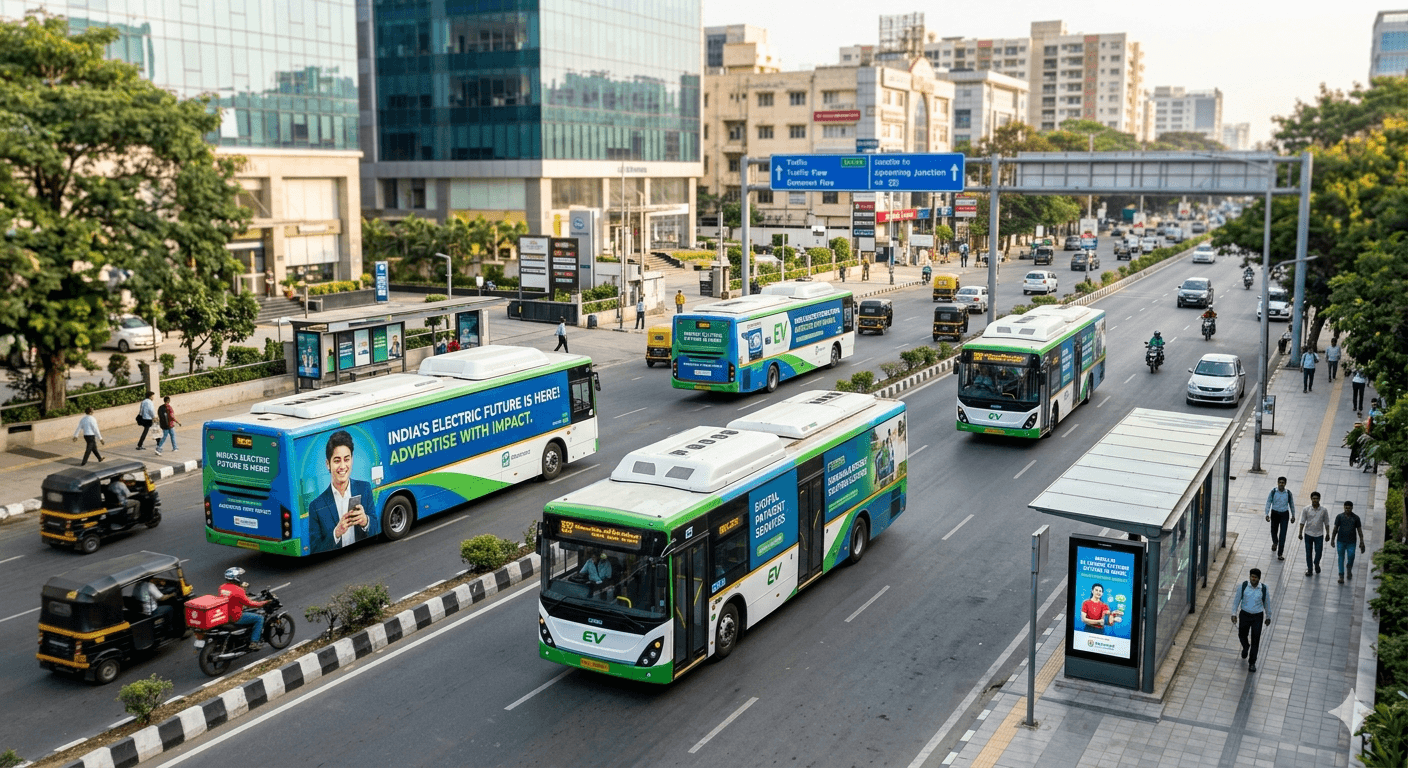
The key is Creative Ideas, not just the advertisement format.
Advertisers can use the specialised designs and interiors of the electric buses for their campaigns. Instead of putting their ads on a blank rectangle, brands can use creative visual elements.
Some of the modern tech electric buses offer:
- Data-based ads
- Traffic-based ads
- Local and Time based ads
The best ad campaigns may make the bus itself feel like part of the advertisement.
The Sustainability Advantage: Can EV Buses Strengthen Brand Image?
Electric buses offer sustainability as their core power. This attracts young buyer, improves the brand’s ESG scores.
A brand advertising on electric buses will automatically be accepted as an eco-friendly company. It shows that the company values cleaner mobility and better cities.
Brands that are working in the following industries gain the most benefits from this.
- Renewable energy
- Electric mobility
- Green technology
- Financial services
- Consumer products
So, brands need to be careful.
A green logo doesn’t make the campaigns greener. Your ad creatives should have a genuine connection with the message.
That makes the advertising truly relevant rather than simply making it look “green.”
DOOH Advertising
DOOH advertising uses digital screens to display dynamic brand messages across high-traffic locations, allowing campaigns to change creatives, timings, and content more easily.
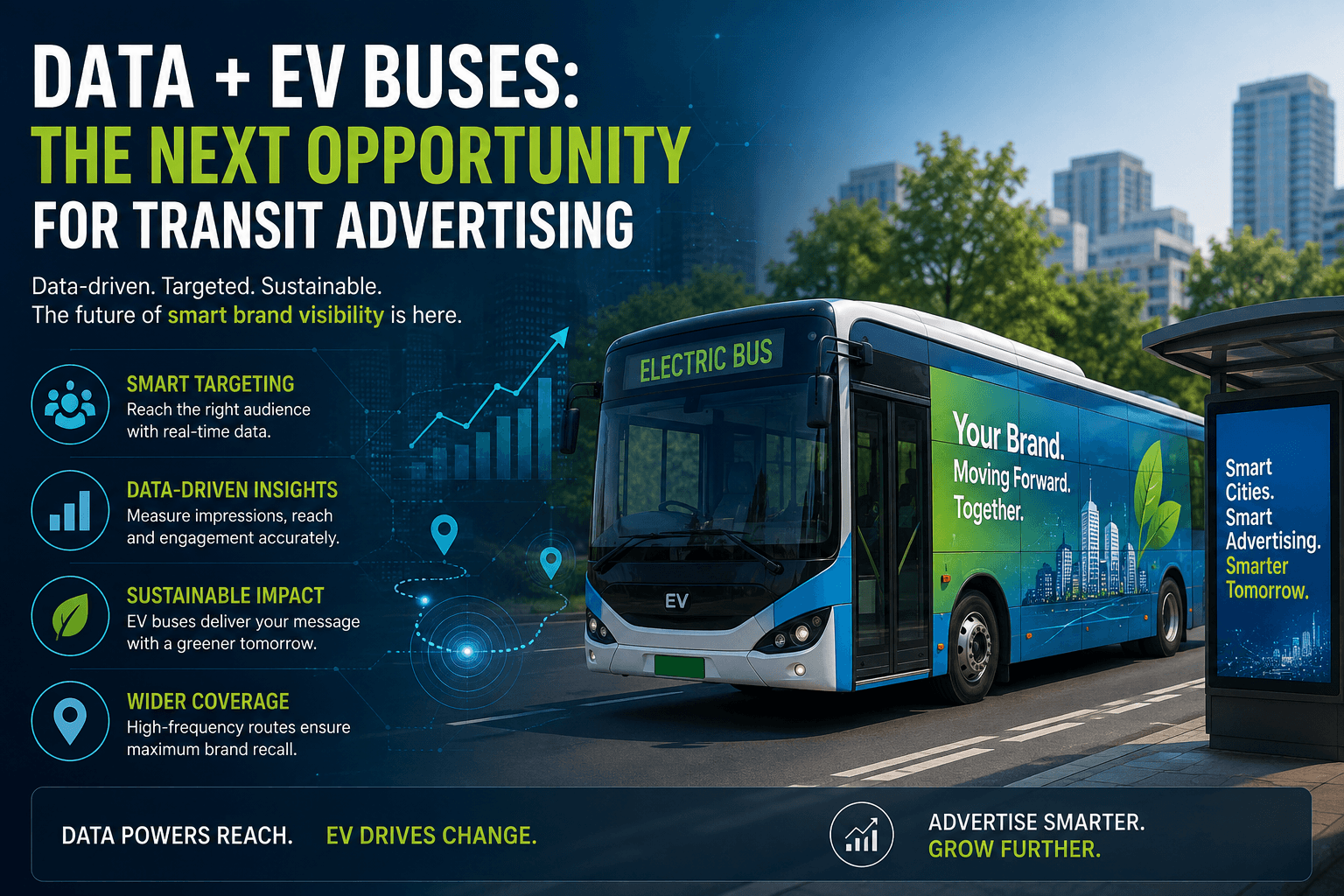
Data + EV Buses: The Next Opportunity for Transit Advertising
The biggest change possible is the technology that comes with the electric buses. The data is empowering OOH ads with physical visibility and better data.
Traditional bus ads often focus on factors such as route, fleet size and estimated reach.
Now with electric buses advertising, brands can focus on:
- Route-level audience
- Passenger volumes
- Traffic density
- Peak travel periods
- Residential and commercial zones
- Route frequency
- Digital engagement
This changes the most fundamental question for brands.
Instead of “How many buses should we brand?”, it's now “Which routes will target the right audience most often?”
This means transit advertising may become more strategic and accurate. Plus, brands can integrate bus advertising campaigns with other digital advertising and other OOH ads.
Transit OOH Advertising:
Transit OOH advertising uses buses, trains, metros, and other public transport systems to reach audiences while they travel through high-traffic urban locations.
What Will Make Electric Bus Ads More Effective?
Using Electric Buses doesn’t mean better advertising results. You still need the right outdoor company for managing all your ads. Here are some factors to consider:
- Choose high visibility routes for your ads.
- Your ads should have simple messages.,
- Design your ads for movement and angles.
- Use contextual creativity such as references from pop culture, insider jokes, or regional dialects.
- Connect your OOH ads with QR codes, social campaigns, and landing pages.
What Challenges Could Electric Buses Create for Advertisers?
Here are the top challenges electric buses have:
- Their different designs can restrict advertising areas.
- Windows, doors, charging ports, and other technical components can limit ad placement.
- You may have to follow the regulated colours, branding areas, and vehicle modifications.
- Premium electric buses and high-traffic routes may cost more.
- Brands may face challenges from guidelines and advertising standards.
- Advertisers must find the right balance between visibility, compliance, cost and creative impact.
- Understanding the vehicle specifications and advertising restrictions is important.
How Can Vigyapan Mart Help You Plan Electric Bus Advertising Campaigns?
Vigyapan Mart helps brands build effective electric bus advertising campaigns through route planning, creative strategy, vehicle branding, campaign execution, and integrated OOH ads.
We help businesses identify the right advertising routes, OOH ad formats, and audiences to maximise visibility while maintaining creative impact and advertising compliance.
Conclusion:
India’s bus advertising is changing and becoming more strategic, smarter, and sustainable. This has the potential to change transit OOH advertising forever.
Electric bus advertising shows that brands follow eco-friendly policies. The buses become a part of the story as well. For brands, this means instant attention from young buyers, effective campaigning, data-based advertising, and integration with digital platforms.
Join the new age of bus advertising; connect with Vigyapan Mart experts today.
FAQs:
1. Why should brands advertise on electric buses?
Electric buses offer mobility, repeated exposure, and strong visibility while also creating an association with cleaner technology and modern urban transportation.
2. What advertising formats can be used on electric buses?
Depending on the bus design and regulations, brands can use full or partial wraps, side and rear panels, interior branding, digital screens, and QR-led campaigns.
3. Are electric buses suitable for sustainability-focused brands?
Yes. Electric bus advertising can complement campaigns from EV, renewable energy, green technology, and other brands that want to communicate sustainability-related messages.
4. What should brands consider before advertising on electric buses?
Brands should consider route visibility, audience profile, bus design, available branding areas, campaign duration, regulations, production costs, and creative requirements before launching.
Subscribe to our newsletter
Get updates instantly! Join our community for the latest marketing insights.