
How Can E-Rickshaw Advertising Deliver More Than Visibility?
E-rickshaws have always been the budget-friendly method for outdoor advertising. But what if it has the power to advertise your brand awareness and also boosts your sales.
Published September 4, 2026
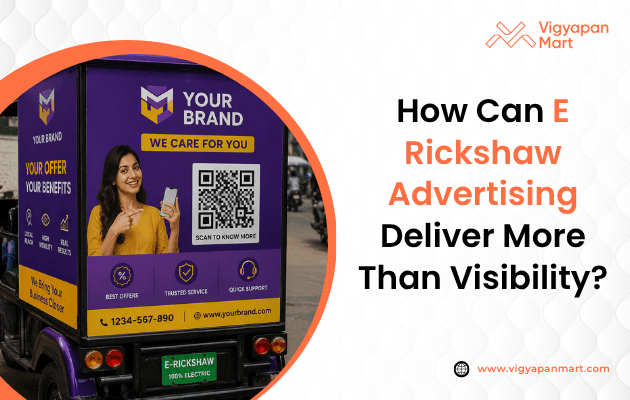
Yes! The modern e-rickshaw outdoor advertising is changing its position from an affordable brand awareness tool to getting real results.
But the real challenge is to change the awareness to brand recall, store visits, enquiries and sales.
E-rickshaws are small vehicles that move through residential areas, local markets, commercial streets, schools, offices and transport hubs where big billboards may not work properly. They offer hyperlocal visibility.
Alongside, India’s e-rickshaw numbers have grown to 632,485 units in FY2024 with a 38% CAGR.
This growing mobility ecosystem also creates an interesting opportunity for local and hyperlocal advertising - a shift that's reshaping outdoor advertising in India more broadly.
What is e-rickshaw advertising?
E-rickshaw advertising is a form of outdoor advertising where brands display their advertisements on e-rickshaws. These vehicles carry branded messages through residential areas, markets, commercial streets, schools, offices, and transport hubs.
From Moving Vehicles to Moving Brand Messages:
Traditional billboards give brands a fixed location. E-rickshaws add mobility to the equation.
A branded e-rickshaw can travel through several neighbourhoods in a single day. It can repeatedly appear near the exact areas where a business wants customers.
For example:
A new restaurant in Delhi can advertise their nearby area with e-rickashaws. The vehicle can roam around the residential colonies, markets, offices and metro roads.
The vehicle creates awareness, the offer creates interest and the QR code creates an opportunity for action.
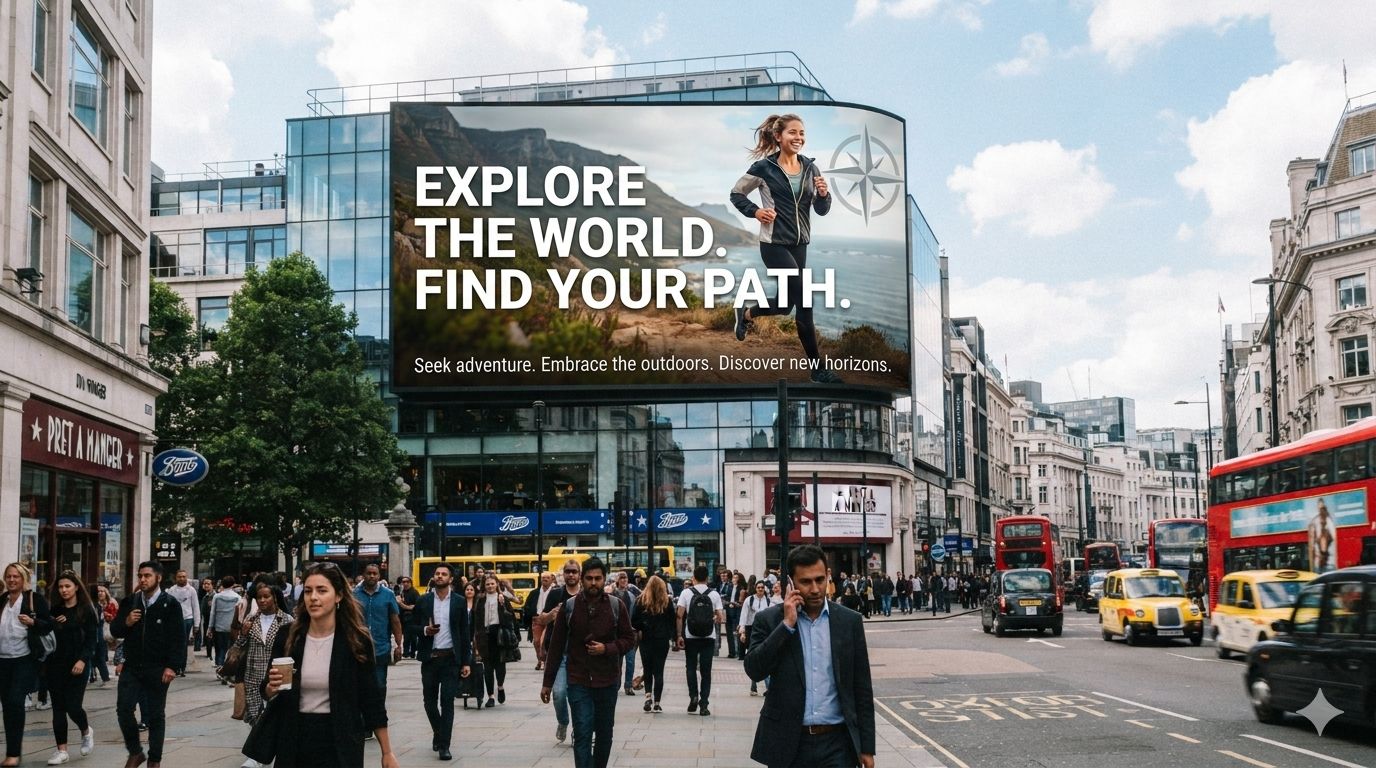
Billboard Advertising
Billboard advertising means displaying large advertisements on boards placed along roads, highways, commercial areas, and public spaces.
Building Local Brand Recall Through Frequency:
Brand building is not only about showing your logo or ads to audiences. It's about how you connect with them. For local businesses, this means connecting with the right audience repeatedly.
E-rickshaws can create this frequency because they operate along everyday routes. The same consumer may see a branded vehicle several times during a week.
This repeated exposure can help a new business become familiar within a particular catchment area.
Since, OOH advertising still holds an important place in India's advertising ecosystem, businesses have opportunities to gain momentum with nurturing the local audiences.
Driving Footfall Where It Matters:
For a neighbourhood business, the most important metric may not be total impressions. It may be how many people walked into the store.
E rickshaw advertising can support this objective through geographic targeting. A retailer can cover areas within a defined radius of its store. A coaching institute can target student-heavy routes. A restaurant can focus on residential and office clusters. This is how e-rickshaw covers the market.
For example:
If you run a Real Estate Company, choose locations near your potential buyers' residential and working areas.
Remember, closer distance means more actions.
How to Turn Your E-Rickshaws Into Lead-Generation Media?
Technology can make mobile OOH ads even more useful.
Advertisers can add:
- QR codes
- WhatsApp numbers
- Short URLs
- Campaign-specific phone numbers
- Discount codes
- Lead forms
A customer scans the QR code and reaches WhatsApp or a landing page. The business can then capture the enquiry and follow up.
The journey becomes:
See → Scan → Enquire → Follow Up → Visit → Convert
This makes e-rickshaws your partners in the sales channel.
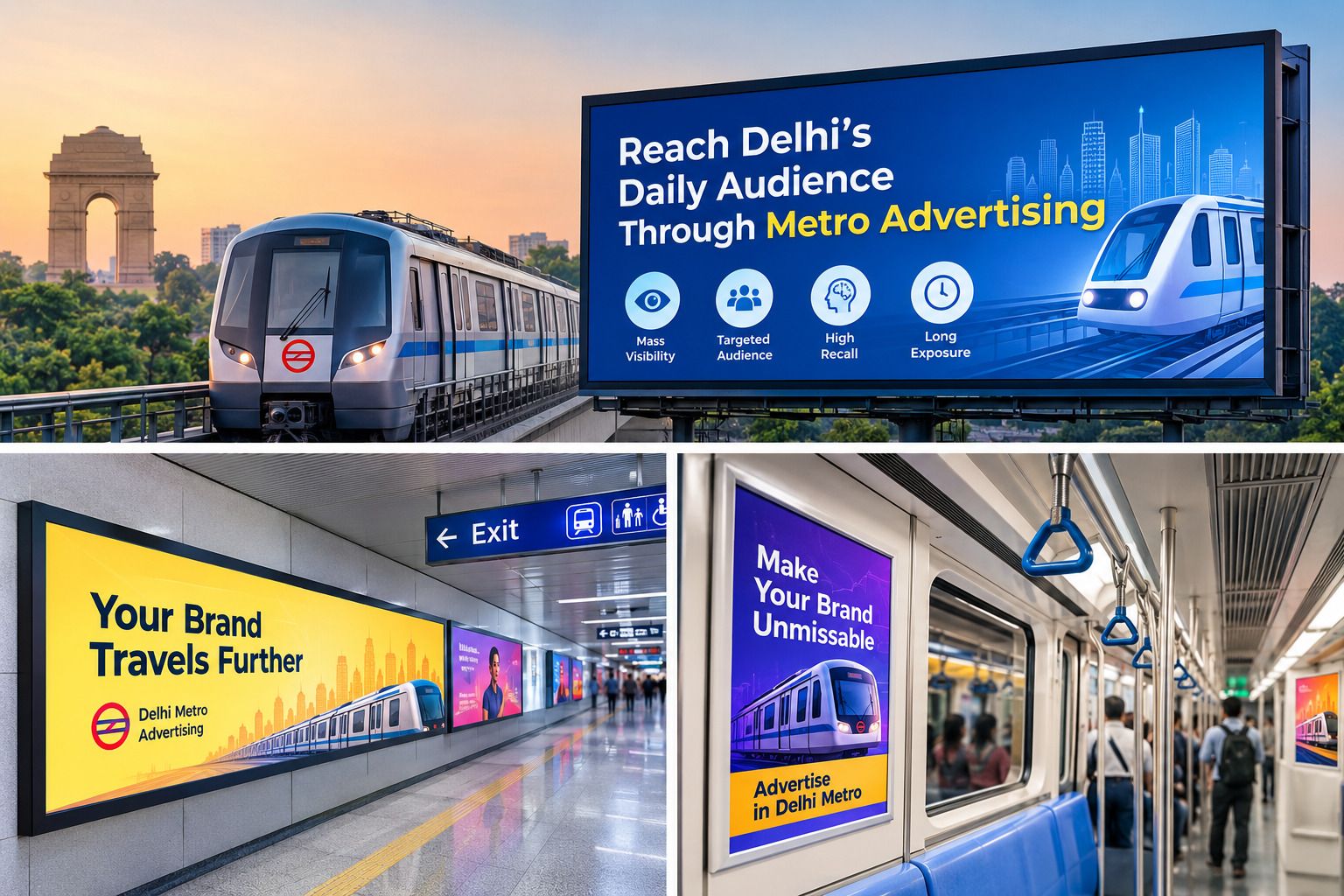
Metro Advertising
Metro advertising means placing advertisements inside metro trains, stations, platforms, corridors, escalators, and other metro network spaces.
Why Hyperlocal Advertising Matters?
The broader OOH industry is increasingly moving towards measurable and contextual campaigns. Industry reporting shows that India's OOH market is shifting from simple visibility towards accountability, resonance and measurable impact.
That change is important for local advertisers. A small business may not need a massive city-wide campaign. It may need 20-50 vehicles covering the right neighbourhoods with the right message and a measurable CTA.
This makes route planning, audience selection and creative execution more important than simply counting vehicles.
Making Every E-Rickshaw Work Harder:
A successful campaign needs more than a logo printed on a vehicle.
The ad creative should communicate the message within seconds. The brand name should be large and easy to read. The offer should be clear. The location should be visible. Most importantly, there should be one strong call to action.
Advertisers can also connect the campaign with digital marketing. Someone may first see the e-rickshaw and later search for the brand on Google or Instagram. Others may scan the QR code immediately.
This creates an effective offline-to-online customer journey.
How Can Vigyapan Mart Help With E-Rickshaw Advertising?
Vigyapan Mart helps brands plan and execute e-rickshaw advertisement campaigns based on their target locations, audience, routes, and campaign objectives. From vehicle selection and route planning to creative execution and ad campaign management, we provide end-to-end outdoor advertising solutions.
Conclusion:
India's OOH ads market is projected to continue growing, with one industry estimate placing the market at around ₹4,981 crore in 2025 and projecting it to reach ₹7,659 crore by 2031, a CAGR of approximately 7.2%. (mint)
As advertisers demand stronger results from every marketing rupee, mobile formats such as e-rickshaw advertising can become increasingly valuable for local campaigns.
The real strength of e-rickshaw ads is not simply that people see the brand. E-rickshaws can go to places where people live, shop, work, and travel. That’s too again & again.
In today's time when OOH ads are getting alive with new technologies, brands can utilize the best routes, creatives, offers, and use measurable CTAs. All these can make an e-rickshaw more than just a moving billboard.
It will become your local marketing platform, ready to give new customers to you everyday. Ready to capture your local market? Connect with Vigyapan Mart experts today.
Frequently Asked Questions
Subscribe to our newsletter
Get updates instantly! Join our community for the latest marketing insights.