
Kiosk Advertising Trends: QR Codes and AR for Street-Level Conversions
Kiosk advertising in Delhi NCR is evolving with QR codes and AR technology. These tools turn traditional OOH displays into interactive, measurable campaigns that boost engagement, increase street level conversions, and connect offline audiences with online actions for better marketing results.
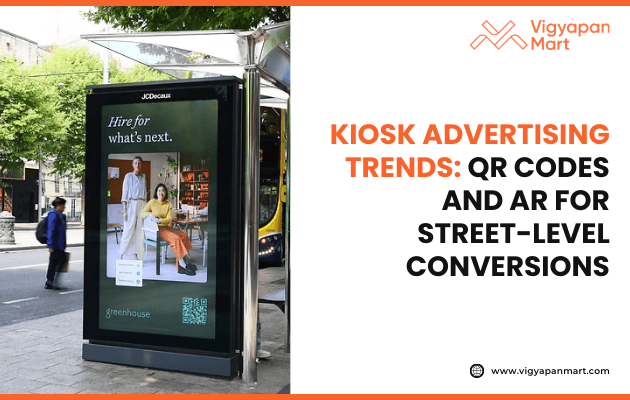
Kiosk OOH advertising is changing fast in big cities like Delhi, Gurugram, Noida, and Faridabad. Earlier, kiosks were just some simple OOH display panels that were installed near markets, metro stations, and busy roads. But today, things are different! Brands now use smart technology to make these kiosks OOH ads more interactive and result-driven. How? By using QR codes and Augmented Reality (AR) like technologies. Results? The simple kiosk panels become powerful tools to increase street-level conversions.
These tools help brands connect offline OOH ads with online actions. But why is this necessary? Because in modern times, OOH ads are no longer just about visibility. It is about engagement, tracking, and real business results.
How is Kiosk Advertising in Urban India Empowering Businesses?
Kiosks are commonly placed in high-footfall areas like Connaught Place, Cyber Hub, Sector 18, Noida, and major metro stations. In cities like Delhi NCR, people always move. City life stays busy all the time, and people shop, travel, eat out, and commute daily. This makes kiosks OOH ads a highly impressive and promising part of OOH campaigns. But things have changed now. Traditional kiosks used to focus only on brand awareness. They showed posters or backlit ads. But now, brands want more than visibility. They want measurable conversions. This is where QR codes and AR are playing a big role.
The Rise of QR Codes in Kiosk Advertising
QR codes have become very common in today’s times. Why? Because almost every smartphone can scan them easily. In busy areas like Rajiv Chowk Metro or Cyber City Gurugram, people quickly scan codes if the offer is attractive.
Brands use QR codes on kiosks for:
- Instant discount coupons
- App downloads
- Event registrations
- Product landing pages
- Store directions
This helps convert street viewers into actual customers. For example, a restaurant in Connaught Place can place a kiosk with a QR code offering 10% off. People nearby can scan and visit immediately. This makes OOH more action-oriented. QR codes also help in tracking performance. Brands can check how many people scanned the code and took action. This gives better clarity compared to traditional billboard ads.
Augmented Reality (AR) in Street-Level Campaigns
AR is making kiosk advertising more exciting. Instead of just looking at a poster, the viewers can experience the brand digitally. In premium areas like DLF Cyber Hub or malls in Noida, AR kiosks can allow users to:
- Try virtual sunglasses or watches
- See 3D product demos
- Play simple interactive games
- Take branded selfies
When users interact with AR, they spend more time at the kiosk. This increases engagement and recall. AR also encourages social media sharing, as many people click pictures and post online, offering extra organic reach. In modern OOH ad strategies, AR helps brands stand out in crowded streets.
Combining QR Codes and AR and Tracking the Results
The best trend today is combining both technologies. A kiosk may invite the viewers to scan a QR code to unlock an AR experience. Results? This connects offline visibility with mobile engagement. For example, a fashion brand in Gurugram can install a kiosk where users scan a QR code to see how a jacket looks on them using AR. After that, the users can receive a discount link. This smooth journey increases the chances of purchase. Such campaigns help brands measure:
- Number of scans
- Time spent on AR
- Coupon redemptions
- Website visits
This makes OOH campaigns more data-driven.
Why Is This Trend Growing in Delhi NCR?
Delhi NCR has a strong mix of corporate professionals, students, and shoppers. Cities like Noida and Gurugram have high smartphone usage and good internet connectivity. As a result, people here are comfortable with QR codes and AR like technologies for payment, information, and experience. Because of this digital readiness, tech-enabled kiosk OOH ads are becoming popular. As a result, brands now focus on interactive and measurable OOH ads instead of only visual presence.
This is boosting the street-level OOH conversions when someone scans a code and visits a nearby store within minutes. This is why QR and AR-based OOH kiosks are the future of smart OOH campaigns.
Conclusion
Kiosk OOH advertising in cities like Delhi, Gurugram, Noida, and Faridabad is moving towards technology-driven engagement. But modern times have a tweak. QR codes and AR technology. QR codes make it easy to convert viewers into customers instantly. AR creates memorable and interactive brand experiences. Together, they help brands track performance and improve return on investment.
Modern OOH is not just about putting ads on the street. It is about creating smart touchpoints that connect offline audiences with online actions. And smart kiosk OOH ads offer that. Results? Stronger engagement, better conversions, and more measurable results at the street level. Looking for professionals to launch your next kiosk OOH ad campaign? Connect with Vigyapan Mart experts today.
Subscribe to our newsletter
Get updates instantly! Join our community for the latest marketing insights.