
Shelf-Edge Display Ads: Impulse Buy Boosters for Retailers
This blog explains how shelf edge display ads boost impulse buying in retail stores. It covers SED types costs psychology setup tips challenges and solutions to help Indian retailers increase in store engagement sales and advertising ROI effectively.
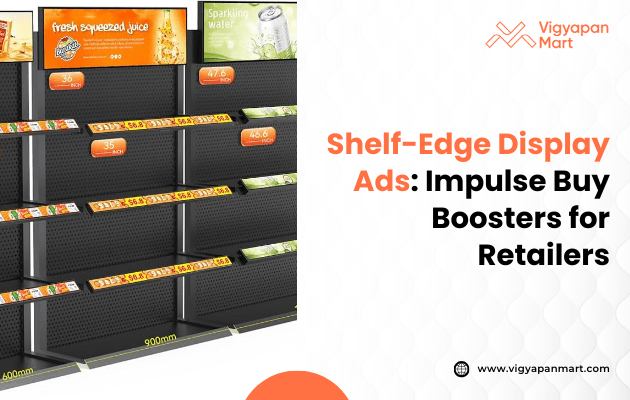
In busy Kirana stores or big supermarkets like Big Bazaar, shoppers often pick extra items off the shelf. Think about your last visit to a supermarket and how you picked up the biscuits or cold drinks without planning. Impulse buying is a real thing in supermarkets, and it contributes a high percentage to total grocery sales. But how does this happen? Shelf-edge displays (SEDs) are slim screens or lights fitted right at the shelf edge. These are LED screens that can display your advertisement and products to the viewers. Results? A simple LED screen advertisement boosts sales by up to 20-40%.
In 2026, where hybrid advertising campaigns are growing, this is an attractive way to let the shoppers buy smartly. In this blog, we will discuss how in-store advertising agency use SED advertisement displays, why they win impulse sales, and tips for Indian retailers to use them.
What Are Shelf-Edge Displays?
Shelf-edge displays are small gadgets placed at eye level on shop shelves. They show prices, ads, or promotions using LCD screens, e-ink, or LED lights. Unlike old paper signs, SEDs update in real time. Along with a small LED screen at the shelves runs the advertising campaign and further pushes the conversion rate.
They come in two main types: ones with fixed messages, and digital ones that change videos or images. Some ad displays or SEDs even link to the weighing scales for fresh produce. For example, imagine a vegetable shelf with SED flashing "Mangoes at Rs 50/kg – TODAY ONLY.” This stops the shoppers and pushes them to buy more. Notably, these small tools come at Rs 4,000-15,000 per unit and run your advertising campaign even on low power. This makes them perfect for power-cut-prone areas.
The Science behind Impulse Buys and SED Power
Impulse buys happen fast, driven by sight and need. Reports show that people buy extras near checkout or shelves due to visual cues like bright colours or "limited stock" signs. Using SEDs as your advertising screens makes your marketing more powerful and a decision-making tool. Such ads use personalisation based on time or stock by using IoT sensors that track what shoppers view and change the messages as required. Dynamic content creates urgency, and animated SEDs make snack sales jump. For Indian brands, this means more ROI, profits, and viewer engagement from advertisements.
Easy Setup Tips for Maximum SED Shelf Ads
To set up in your store:
- Pick busy shelves like snacks or dairy.
- Link SEDs to your billing system for live prices.
- Test simple videos vs still images.
- Start small: 10 units cost Rs 1-2 lakh, that recover in approx. in 3 months.
In 2026, programmatic SEDs use AI to auto-change ads by weather or footfall. This will turn the ads more personalised and effective, raising engagement and sales.
Common Hurdles and Fixes of SED Ads
1. High upfront cost: A single unit costs starts at Rs 4,000-15,000. This may be a worry for small kirana shops.
Fix: Buy basic e-ink models first (cheaper, long-lasting); scale up after sales boost.
2. Dusting in dusty markets: Indian shops get dirty fast that can block the screens.
Fix: Pick modular, easy to clean designs with anti-dust coatings.
3. Power cuts and maintenance: Unreliable electricity makes it hard to update manually.
Fix: Use cloud apps for remote updates and choose low-power models with batteries.
Conclusion
Shelf-edge displays turn shelves into sales machines, enhancing the potential for impulse buying with smart visuals and real-time info. They easily beat old signs and boost sales. In this blog, we have discussed how shelf advertisements can uplift your consumer engagement and offer quick wins. So what to do next? Launch your ad campaigns at a small scale and track all your impressions, engagement, and sales. And for professional assistance, connect with Vigyapan Mart supermarket advertising experts today.
Subscribe to our newsletter
Get updates instantly! Join our community for the latest marketing insights.