
Ultimate Guide to Bus OOH Advertising in India in 2026: What’s NEW
This guide explains bus OOH advertising in India, its evolution, new digital trends, AI targeting and eco friendly technology. Learn campaign costs, benefits and simple steps to launch a successful bus advertising campaign in major Indian cities.
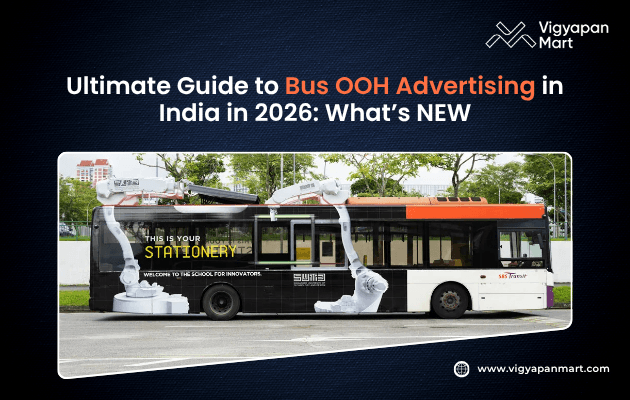
Bus OOH ads are growing fast in big cities like Delhi, Mumbai, and Bengaluru. Last year in 2025, the whole OOH market crossed ₹6,000 crore. Bus OOH took a big share because so many people use buses every day. Now, think of buses that run in the big cities with ads on them that can easily catch attention. Now in 2026, things get exciting with digital screens, smart AI, and eco-friendly tech. The bus advertising has evolved too and has become smarter, more accurate, and more powerful than ever before.
This guide tells you what's new in bus OOH. It explains why it's great for brands and how to run your own campaign. If you want to reach lots of people cheaply in cities, bus OOH is perfect. WHY? Let’s read till the end.
Evolution of Bus OOH in India
Bus OOH has changed a lot in places like Delhi and Mumbai. Long ago in the 2000s, it was just basic stickers on DTC buses in Delhi. Now, we see full wraps, side ads, and back panels on buses going from Connaught Place to Gurgaon. Moreover, Mumbai's BEST buses and Bengaluru's BMTC ones are ahead with digital changes.
By the end of 2026, most city buses will have LED screens because governments are updating them. Private company vehicles will do more for better customer retention. Brands know how powerful they can be with digital technology. Just in Delhi, buses carry over 10 lakh people daily, so bus OOH is super popular for brands who want to reach commuters.
What’s NEW in 2026: Game-Changing Innovations
Digital Out-of-Home (DOOH)
Bus screens in Delhi's Metro feeder buses now use Digital Out-of-Home, or DOOH. They change ads in real time. They use tools like Broadsign for this. Brands can bid for ad space right away. This makes costs go down by 30-40%.
AI-Powered Personalization
AI takes bus OOH to the next level. It knows when a bus gets close to a mall in Mumbai's Bandra area. Then it switches ads to shopping deals. India's DPDP Act protects privacy. There is no face scanning without permission. In Bengaluru, AI chooses ads based on the time of day. You see work-related ads in the morning. Food ads show up in the evening.
Interactive Features
Ads on buses are now interactive. QR codes let you scan and try on clothes or cars with AR on your phone. NFC works with a simple tap. It gives you coupons right away.
Sustainable Tech
Delhi wants 25% of its bus fleet to be EV buses in 2026. These buses have solar screens. The screens save power and make things greener.
Advanced Measurement
New tools use cameras and apps to count views. They show real results. For example, one Delhi brand used changing bus OOH ads. It got 20% more visitors during Diwali.
Seamless Tracking
You can now track bus OOH just like online ads. This works great for cities.
Top Benefits of Bus OOH Advertising for Brands
Here are some of the best benefits of bus OOH advertising to brands:
Massive Visibility
Bus OOH delivers 5-10 lakh views per route daily in Delhi, Mumbai, and Bengaluru. This beats many websites for getting noticed.
Low Cost per View
Costs stay affordable at ₹5-12 per thousand views. That's much cheaper than TV's ₹40+ rate.
Precise Targeting
Target specific groups easily. For example, run ads on Gurgaon-Delhi buses for IT professionals.
Proven Results
Digital bus OOH tracks success via QR scans or app interactions. Brands report 15-25% sales increases (per groupM data).
Mobile Reach
Ads move with people from home to work. This keeps them in daily routines.
Strong Recall
In Mumbai, bus OOH builds twice the memory compared to static billboards.
Analytics Integration
It now connects to Google Analytics. This shows clear ROI for 2026 campaigns.
Big Wins for Brands
Shops and car companies see huge returns from bus OOH in urban India.
How to Launch a Bus OOH Campaign in 2026
Running a bus OOH advertising campaign is easy to start. Here are all the steps you must follow:
Step 1: Choose busy routes using Delhi Traffic Police apps.
Step 2: Pick stickers (₹2-5 lakh a month) or digital (₹5-10 lakh).
Step 3: Make your designs simple. Use big letters, bright colors for fast-moving buses. Check they read in 5 seconds.
Step 4: Plan your budget; use QR to track. Follow rules and don’t fall for false promises.
Step 5: Go live and check results. Add digital platforms like Instagram to track better.
Challenges & Solutions of Bus OOH ads
Weather Damage
Rains in Delhi spoil sticker ads on buses. This is a common problem.
Solution: Use tough LED screens. They can handle rain and bad weather well.
Traffic Delays
Heavy traffic causes hold-ups for buses. Schedules get messed up often.
Solution: Add GPS to watch bus routes live. This helps track everything in real time.
Vandalism Risks
Vandals attack ads on buses in Mumbai at times. Damage happens now and then.
Solution: Put up strong LED screens. They resist hits and tampering easily.
Ad Fatigue
People skip over old-style bus ads. They do not pay much attention.
Solution: Make digital bus OOH fun with AR. This draws people in and keeps them engaged.
Brightness Regulations
MIB's new 2026 rules set limits on screen brightness. Displays cannot shine too much.
Solution: Adjust screens to meet the rules. Keep them bright enough to see clearly.
Route Changes
Buses switch paths without warning. This makes planning hard.
Solution: Use AI apps to guess routes ahead. They predict changes and fix ad plans fast.
Overall Reliability
These simple fixes make bus OOH work steady in 2026. No more big worries.
Conclusion
Bus OOH in 2026 changes the game for ads in cities like Delhi, Mumbai, and Bengaluru. DOOH, AI, and green tech make it the best for reach and returns. From easy bidding to fun screens, it's smart OOH you can measure. Now, the question is, what should you do? Plan your campaign, partner with a reliable bus OOH advertising partner for an end-to-end solution and track the results. And if you’re looking for professional assistance, connect with Vigyapan Mart experts today.
Subscribe to our newsletter
Get updates instantly! Join our community for the latest marketing insights.