
What Are the 7 Main Types of Advertising?
The 7 main types of advertising are print, broadcast, outdoor advertising, digital, direct mail, public relations and guerrilla marketing. Each type reaches audiences differently. Outdoor advertising for example uses billboards and transit ads to build visibility in public spaces while digital advertising targets users online through search, social and display ads.
Published September 2, 2026
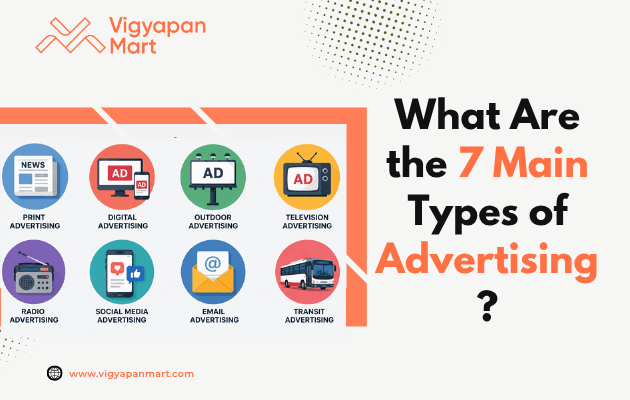
Most businesses don't fail at advertising because they picked the "type. They fail because they never understood what each type is actually good at. A billboard and a Google ad both count as advertising. They solve completely different problems.
This guide breaks down all 7 types of advertising with real examples and practical guidance on when each one makes sense. Including where outdoor advertising fits into a modern marketing plan especially in a market like India where it remains one of the most cost-effective ways to build brand visibility.
The 7 Types of Advertising at a Glance
1. Outdoor Advertising
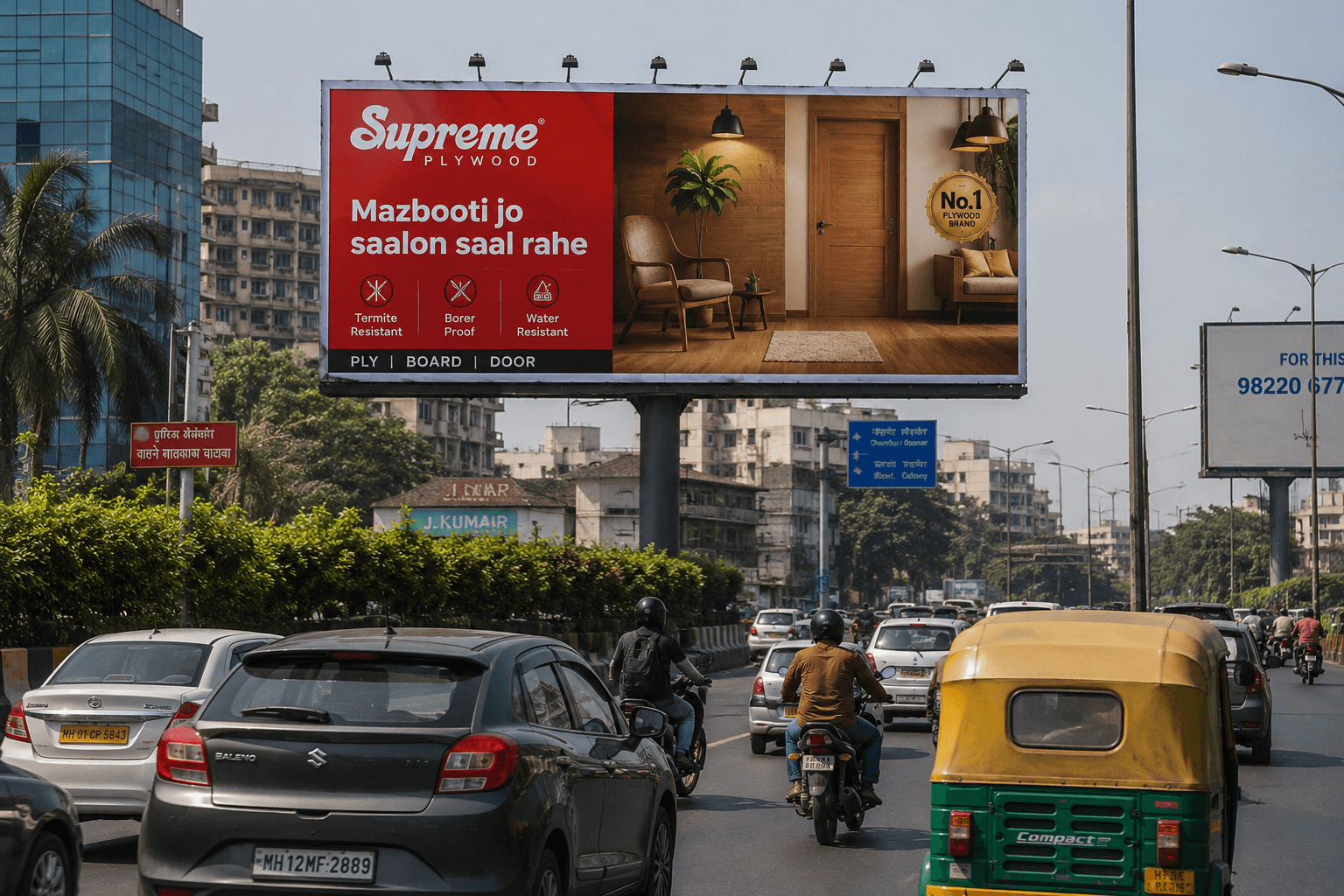
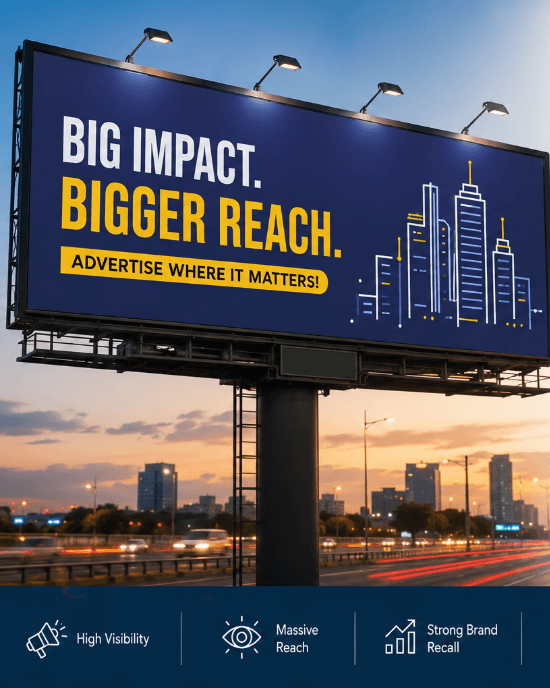
Outdoor advertising in india uses public-facing media. Billboards, transit ads, bus shelters and digital screens. To reach people as they move through cities. Unlike ads it can't be skipped, blocked or scrolled past which is why it continues to deliver strong brand recall.
In India specifically outdoor advertising has grown alongside urban infrastructure development. Metro networks, expressways and commercial hubs have created high-visibility ad inventory that didn't exist a decade ago. Agencies like Vigyapan Mart have built full-service offerings around this shift. Covering billboards, transit ads, street furniture and wall murals under one roof.
- Common outdoor advertising formats:
- Billboards. Static or digital boards on highways and busy junctions
- Transit advertising. Ads on buses, autos and metro trains
- Street furniture. Bus shelters, kiosks and unipoles
- Digital Out-of-Home (DOOH). Programmatic screens that update content in real time
2. Digital Advertising
Digital advertising includes search ads, social media ads, display banners and video ads served across websites and apps. It's the advertising type built for precise real-time targeting and measurement.
What makes it different:
- Audiences can be targeted by age, location, interest and behavior
- Performance is trackable down to clicks, conversions and cost-per-result
- Budgets can start small and scale based on results
Digital advertising doesn't replace outdoor or broadcast. It complements them. A placed billboard campaign often drives people to search for the brand online, which digital ads can then capture.
3. Print Advertising
Print advertising refers to paid ads placed in newspapers, magazines, brochures and flyers. It remains relevant for businesses and niche publications where readers actively trust the source.
Where it works well:
- Local newspapers for regional businesses
- Trade magazines for B2B products
- Flyers for events and local offers
Print has declined significantly with the rise of media but it still holds credibility in specific trust-driven categories. Real estate listings and legal notices are common examples that persist in Indian newspapers today.
How much does billboard advertising cost in India?
Billboard advertising cost in India typically depends on three factors: city tier, board size and format (static vs. Digital). A billboard in a Mumbai or Delhi location can cost several lakhs per month while a Tier 2 city placement may cost a fraction of that. Digital billboards generally cost 20–50% more than ones but allow real-time content updates.
Compared to broadcast advertising outdoor advertising usually offers an entry cost with strong local impact. Which is why many regional and mid-sized brands in India prioritize it over TV.
4. Broadcast Advertising
Broadcast advertising covers TV and radio commercials. Its built for reach. Getting a message in front of a very large often untargeted audience at once.
Why brands still use it:
- Builds brand recall through repetition
- Reaches audiences that don't spend much time online
- Works well for national product launches
The tradeoff is cost. A 30-second national TV slot in India can run into lakhs of rupees per airing which puts broadcast out of reach for small and mid-sized businesses.
5. Direct Mail Advertising
Direct mail promotional material. Postcards, catalogs, personalized offers. Straight to a customers address. It feels outdated to some. It still performs well for local businesses and specific demographics that respond better to physical mail than digital noise.
Where it still makes sense:
- service businesses (dentists, real estate agents)
- Renewal offers for existing customers
- High-value B2B outreach with personalized packages
6. Public Relations (PR)
PR isn't paid advertising in the sense. It's the practice of earning media coverage, managing brand reputation and building trust through third-party validation like press coverage, interviews and industry recognition.
Why it matters alongside advertising:
- Builds credibility that paid ads can't buy
- More cost-effective for long-term brand trust
- Works especially well combined with case studies and real client results
7. Guerrilla Marketing
Guerrilla marketing relies on low-budget high-creativity tactics designed to surprise people and generate organic buzz. Often through social sharing rather than paid distribution.
Examples include:
- Flash mobs or street performances tied to a brand
- Creative installations in public spaces
- Viral stunts designed for social media sharing
This approach works best for brands with a bold creative concept and a willingness to take risks since results are less predictable than traditional paid formats.
How to Choose the Right Type of Advertising
Theres no best" type. The right choice depends on three things: your budget, your audiences media habits and how fast you need results.
- For fast brand awareness: broadcast or digital advertising
- For consistent local visibility on a moderate budget: outdoor advertising
- For precise measurable targeting: digital advertising
- For long-term trust-building: public relations
- For maximum reach on a minimal budget: guerrilla marketing
Most established brands don't pick one. They layer two or three types together. A common combination in India is advertising for visibility paired with digital advertising to capture the resulting search interest. Agencies offering both under one roof, such as Vigyapan Mart are increasingly common for this reason. It simplifies coordinating a layered strategy.
Common Mistakes Brands Make When Choosing Advertising Types
- Choosing broadcast advertising without the budget to sustain frequency (a single airing rarely builds recall)
- Ignoring advertising because it seems "old " despite it still delivering strong local reach
- Running digital ads without a landing page built for conversion
- Treating PR as optional instead of a trust-building complement to paid ads
Conclusion
Understanding the 7 main types of advertising isn't just theory. It's what determines whether a marketing budget gets wasted or well spent. Outdoor advertising in particular continues to hold its ground in Indias growing cities offering visibility that digital formats simply can't replicate. The brands that win aren't the ones that pick a best" type. They're the ones that match the right format to the right goal, often working with an experienced outdoor advertising partner like Vigyapan Mart to combine a few formats for maximum impact.
Frequently Asked Questions
Subscribe to our newsletter
Get updates instantly! Join our community for the latest marketing insights.