
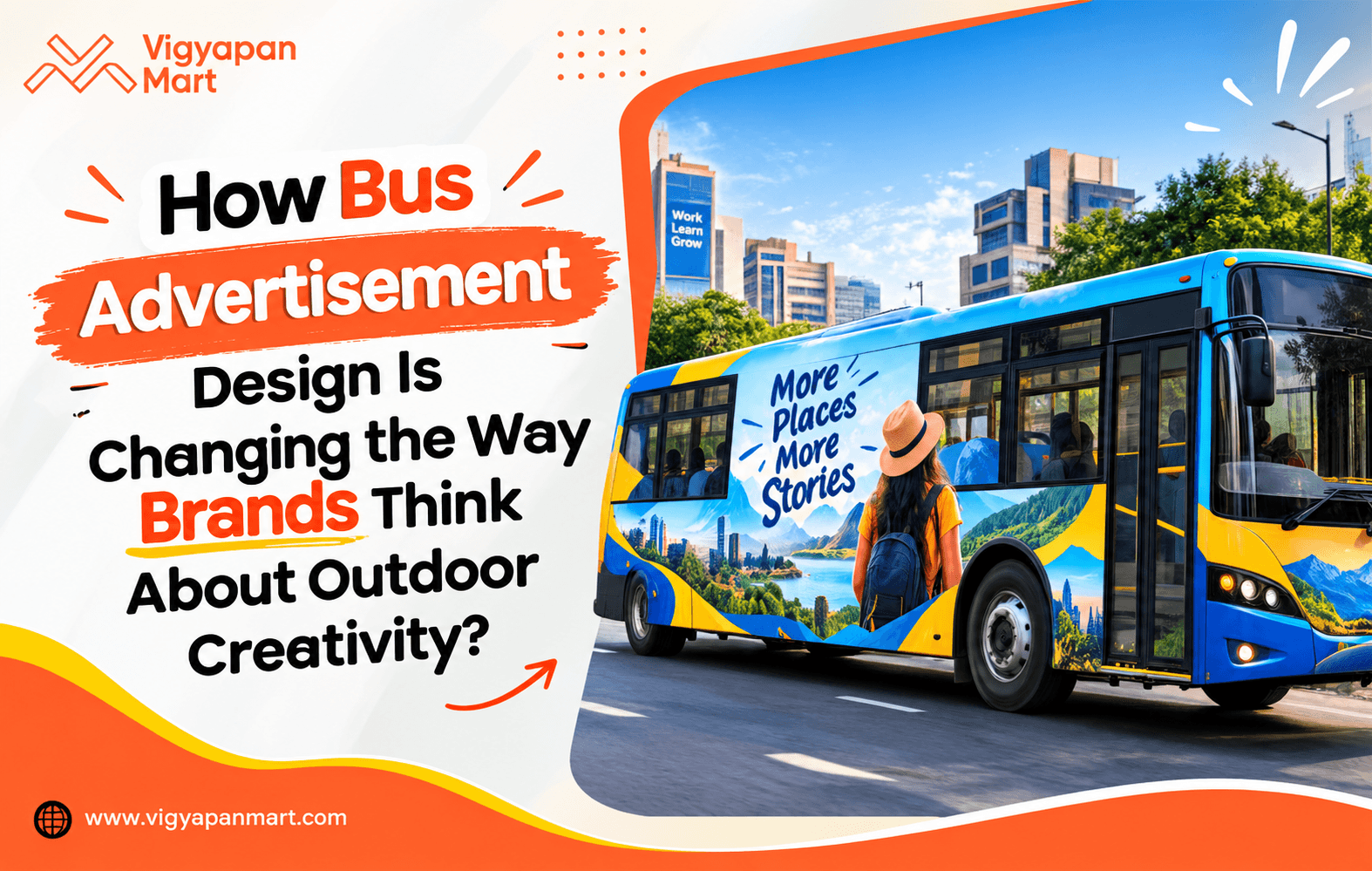
How Bus Advertisement Design Is Changing the Way Brands Think About Outdoor Creativity?
Bus advertisement design in India is evolving fast - from smart route planning to bold, creative vehicle branding. Explore real examples and expert insights from Vigyapan Mart on what makes a bus advertising campaign truly stand out.
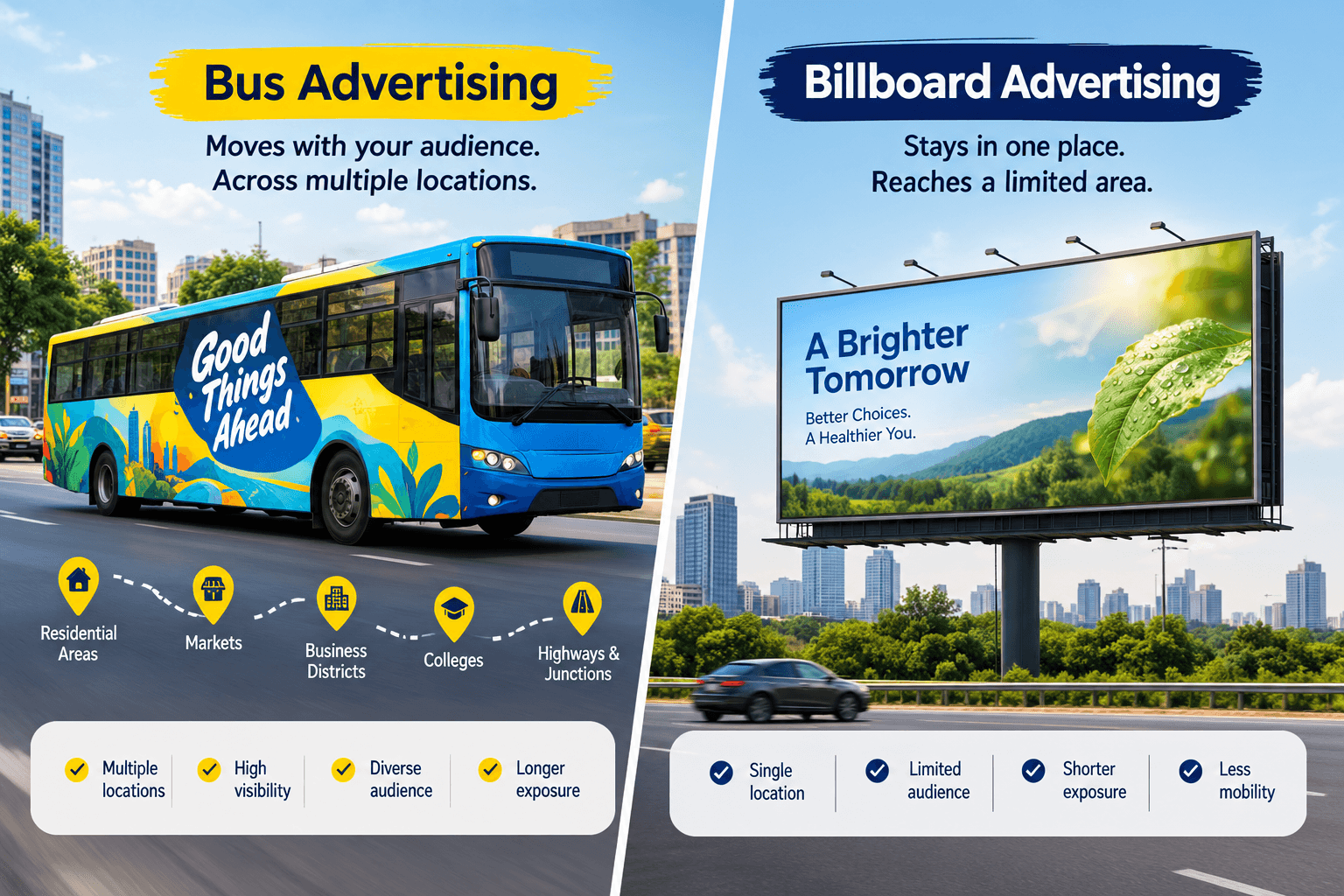
A billboard ad has one location. A bus ad does not. A bus advertisement moves through multiple high-traffic places such as:
- residential areas,
- markets, business districts,
- colleges,
- highways and
- traffic junctions
This is how they pass thousands of people in a single day, from different areas and demographics. In other words, bus advertisements turn the vehicle into a powerful moving brand asset that people can’t ignore.
That is why bus advertisements are changing. Brands are no longer treating a bus as simply another place to paste a large logo. They are treating the entire vehicle as a creative ad canvas. And this shift is making bus ad design more important than ever.
Bus Advertising
Bus advertising is a form of transit advertising where brand messages, images, or advertisements are displayed on the exterior or interior of buses and other bus-related advertising spaces.
What Makes the Best Bus Advertising Campaigns in India?
Quick AnswerThe best bus advertising campaigns in India combine smart route selection, simple and bold creative design, high-contrast visuals, and audience-specific targeting. Instead of just branding a vehicle, successful campaigns treat the bus as a moving brand experience - using windows, doors, and vehicle shape to make the message memorable within seconds. |
Bus Ads Are Moving Beyond the Basic Wrap:
Earlier, bus ads were simple. Just put the ad on the bus and run the campaign.
Today, that approach won’t work anymore. Now, you have to think more creatively. A full bus offers multiple creative surfaces for placing your ads:
- Front
- Rear
- Sides
- Windows and
- Interior spaces
This gives designers an opportunity to experiment and go creative. The goal here is to create an experience.
Attention, clarity, interest and mobility all influence how well people remember the advertisement. (IntechOpen)
This means a bigger advertisement is not automatically a better advertisement. The ad creative has to work while the bus is moving.
Billboard Advertising
Billboard advertising is a form of outdoor advertising that displays brand messages, images, or advertisements on large boards placed along roads, highways, markets, and other high-visibility locations. The billboard advertising cost in India varies based on location, size, city tier, and campaign duration making it essential for brands to plan their outdoor budget accordingly.
The Bus Has Become a Moving Billboard Advertisement:
In the last few years, India’s OOH ads has grown rapidly, and transit advertisement is one of the biggest contributing engines in this.
According to a report in 2026, India’s OOH ads market was around US$540 million in 2025 and may reach US$789 million by 2032. The report also advocates transit infrastructure as a leading OOH format for future growth.
Source: (Ken Research)
Another industry analysis estimates that transit formats could grow at around 8.05% annually, with transit potentially accounting for 29.4% of India's OOH and DOOH advertisement spending by 2031.
Source: (Mordor Intelligence)
This growth changes how brands should think about bus campaigns.
A bus is not confined to one advertising location. Its route creates repeated exposure across different neighbourhoods and audience groups.
That makes route + creative + frequency more important than simply counting the number of branded buses.
Creativity Has to Survive Movement:
This is where bus design becomes different from billboard design.
A billboard ad can hold more information because the audience knows where to look. A bus may be visible for only a few seconds.
So your ad creative needs to communicate quickly. Here are some tips to do so:
- Place large typography instead of tiny copies.
- Strong colour contrast helps.
- Use one clear & stronger visual idea.
The goal is simple:
Make people understand the idea before the bus disappears.
Digital OOH Advertising
Digital OOH advertising is a form of outdoor advertising in india that uses digital screens to display advertisements in public spaces such as roads, malls, airports, metro stations, bus stops, and commercial areas.
Ad Design Can Use the Shape of the Bus:
The most interesting bus ad campaigns do not treat the vehicle like a rectangular poster.
They use the physical structure of the bus and make it a part of their ads.
Windows can become part of the concept. Wheels can become visual elements. Doors can create a reveal. The rear can carry a different message from the side. The front can create recognition from approaching traffic.
This makes the vehicle a part of the ad storytelling.
For example:
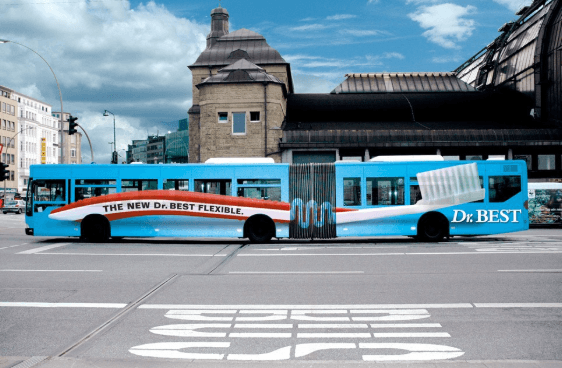
1. Dr Best presented the bus as a big toothbrush and used the accordion joint as the flexible neck of its new product, ‘Dr. Best Flexible’ toothbrush.
2. The Dallas Morning News wrapped a bus showing dogs on the window for their ‘More Reporters, More Reporting’ campaign. The goal was to show that they sniff out the story no matter how hidden it is.
The advertisement becomes memorable because the medium helps tell the story.
Route Planning Is Now Part of Creative Planning:
Great design cannot compensate for the wrong audience.
A premium car brand may want routes through affluent neighbourhoods and business districts. A university may want routes around student-heavy areas. A retail brand may benefit from routes connecting residential areas with shopping destinations.
This is why modern bus advertisements need to begin with the question:
“Who will see this bus?”
And not simply: “How many buses can we brand?”
This approach is turning the approach around and making the bus OOH advertisements more accountable.
According to FICCI-EY data, the transit advertising in India will rise from 30% in 2025 to 33% in 2028.
How Can Vigyapan Mart Help With Bus Advertising?
Vigyapan Mart helps brands plan and execute bus advertising campaigns based on their target audience, routes, locations, campaign duration, and objectives. From route selection and creative planning to vehicle branding and campaign execution, we provide end-to-end transit advertising solutions.
E-Rickshaw Advertising
E rickshaw advertising is a form of transit advertising where brand messages, images, or promotional content are displayed on e-rickshaws operating across residential areas, markets, commercial streets, and other public locations.
Conclusion:
Bus advertising is also becoming part of larger campaigns.
A QR code can connect the physical advertisement to a landing page. A social campaign can encourage people to photograph a creative bus. A product launch can use buses alongside billboards, metro advertising and digital media.
The future, therefore, is not about choosing between traditional bus wraps and digital advertising market in india.
It is about connecting them with creativity. Bus advertising in india has existed for decades. But the way brands use it is changing. The bus is no longer just a vehicle carrying an advertisement. It can become the advertisement.
Now, the strongest bus advertisements combine the following factors as part of the advertising campaign itself.
- Smart Route Selection
- Simple Messaging
- Bold Visuals
- Vehicle-specific creativity
- Digital Interaction
Instead of space, advertisers and brands should now start asking how creative the buses look. Because when the medium itself moves, creativity should move with it.
Want to explore the modern age of bus advertising? Connect with Vigyapan Mart Outdoor advertising experts today.
Frequently Asked Questions
Subscribe to our newsletter
Get updates instantly! Join our community for the latest marketing insights.