
OOH vs. Digital Advertising: Why Hybrid Wins in 2026
In 2026 OOH and digital advertising work best together. OOH builds trust and mass visibility while digital drives targeting and tracking. A hybrid strategy helps Indian brands cut waste boost recall and increase sales effectively.
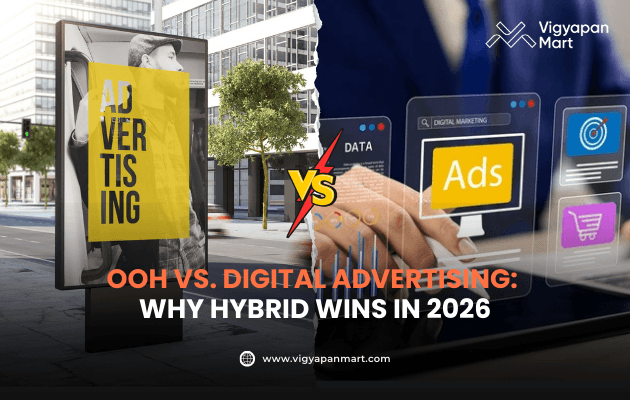
In 2026, the ad world is changing fast. Global OOH ad spend is expected to cross $1 trillion, and the OOH will grow at 7% yearly. Why? Because people are tired of digital ads. On the contrary, OOH means big billboards, bus shelters, or digital screens you can't miss on roads. Digital is social media, Google ads, or Reels. But playing only one side won't work. A hybrid approach of mixing OOH and digital is the smart way forward. It gives a big reach plus smart tracking. This post shows why pure OOH or digital loses, and hybrid wins big, especially in India.
The State of OOH in 2026
OOH is back strong after pandemic lows. People spend more time outside, driving on highways, or waiting at bus stops. Big brands like auto makers use billboards for that "wow" effect. In India, rural roads and Tier-2 cities see huge OOH success, think long drives where drivers notice ads easily. Digital OOH (DOOH) makes it even better. Screens now show ads based on time or weather, with QR codes linking to websites. New tools let you buy space online, just like Google Ads. But old OOH has limits, no exact data on who saw it, and reach stays local. Still, even the simple OOH ads build trust. But there is more, in 2026, the top OOH advertising agency will focus more on green OOH like solar-powered boards, fitting India's eco-push.
Digital Advertising's Edge and Pitfalls
Digital rules with smart targeting. Platforms like Instagram and YouTube use your data to show the right ad to the right person. In India, Reels and shorts drive quick sales for finance apps or bikes. Real-time changes mean pausing bad ads fast. Noticeably, digital ad costs can be low with good ROI tracking. But the problems are big. There are limitations on third-party data and cookies. The online market is saturated, and people are tired of so many pop-ups. Moreover, users often skip 25-30% of the digital ads due to blindness. Results?
Digital shines for bottom-funnel buys but misses the first spark.
Why Hybrid Advertising Wins?
A hybrid approach of marketing mixes the best of both. OOH grabs eyes on the road, and the QR code takes you to digital for details. Example: See bike ad on highway, scan code for test-drive booking via app. This full journey lifts results. For India, hybrid fits rural marketing. Billboards in villages link to WhatsApp shops. Auto brands track from the hoarding view to the showroom visit. Tools like Google Analytics join OOH data with online clicks for a full picture. No waste, pure gains.
Indian Market Case Studies
Patanjali's Hybrid Campaign
- OOH Setup: Placed large hoardings in small towns and villages across Uttar Pradesh and Bihar, showing herbal products with bold visuals and simple messaging.
- Digital Link: Each hoarding had a QR code or short URL directing to YouTube Shorts, quick 15-second videos demoing products and benefits.
- Why It Worked: Rural folks trust physical ads but buy digitally; hybrid bridged trust gap, cutting distribution costs.
Tata Motors' DOOH Strategy
- OOH Setup: Installed Digital OOH screens on busy highways like Delhi-Mumbai, showing dynamic car ads that changed by time (e.g., SUVs at peak hours).
- Digital Link: QR codes scanned led straight to Tata's app for car configurators.
- Why It Worked: Long-drive commuters notice highway ads; app integration made it easy, blending impulse awareness with digital action for auto sales.
HDFC's Finance Integration
- OOH Setup: Bus shelter posters in urban Tier-2 cities like Ghaziabad, highlighting quick personal loans with UPI-friendly visuals.
- Digital Link: QR codes opened HDFC's loan page instantly, pre-filling details for fast UPI-based applications.
- Why It Worked: Commuters see ads daily; UPI QR made loans feel instant and safe, perfect for salary-class Indians.
SBI's Rural Banking Approach
- OOH Setup: Transit ads on buses and trains in rural belts, promoting crop loans or Kisan cards with local language messaging.
- Digital Link: Follow-up SMS with unique links to the SBI YONO app for account opening or loan checks.
- Why It Worked: Farmers travel by public transport; OOH sparks interest, SMS/digital seals deals where the internet is spotty, and builds Tier-2 trust cheaply.
Conclusion
In 2026, each of the OOH and digital ads is bright. But a hybrid gets the best of both worlds and completely dominates India's advertising environment. OOH grabs attention on roads and in villages, while digital tracks every click. Together, they cut waste, boost recall, and lift sales. Several brands like Patanjali, Tata, HDFC, and SBI prove it. The best would be not sticking to one side either. Audit your campaigns now. Test simple QR links from OOH to social or apps. Use tools like Google Analytics for full tracking. It's not just smart, it's the only way to win big. Want to take your first move for hybrid advertising today? Connect with Vigyapan Mart advertising experts now.
Subscribe to our newsletter
Get updates instantly! Join our community for the latest marketing insights.