
E-Rickshaw Advertising Presents A Cost-Effective Method to Win the Urban India
E rickshaw advertising is transforming urban marketing in India by offering affordable high reach transit advertising. With moving visibility local targeting and strong ROI it helps brands connect with daily commuters across tier 1 and tier 2 cities in 2026.
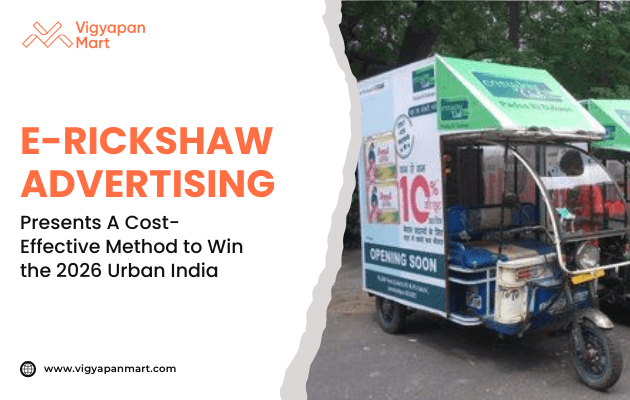
E-rickshaws have grown rapidly in the last few years. From Mumbai and Kolkata to Tier-2 cities like Lucknow, e-rickshaws move through traffic, carrying passengers for miles. But that’s not all, they are perfect partners for brands that want to reach their customers through transit advertising. How?
These e-rickshaws are growing over 1.5 Millions in India and cover last-mile routes daily, reaching lakhs of people. Moreover, they are highly affordable and offer greater visibility in crowded urban areas. Putting ads on e-rickshaws for branding beats the old-style TV ads and, in some cases, big hoardings. Results? Better Reach, Less Money. Notably, with such benefits, this is a smart win for businesses in Tier-1 and Tier-2 cities.
The Rise of E-Rickshaws in Urban India
E-rickshaws are everywhere in urban India today and are heavily growing in cities like Mumbai, Delhi, and Bengaluru. According to a report, more than 30% of the auto industry will go electric by 2027. Why? They are cheap, eco-friendly, and fit for areas where giant billboards and big vehicles can’t go. These e-rickshaws run fixed routes and cover 50-100 km daily. They reach daily commuters and pedestrians, including office-goers, students, and shoppers. The e-rickshaw advertisements connect them to these people with constant exposure as they move throughout the city. Unlike the static billboards, these ads move and are perfect for urban marketing where traffic jams create natural ad spots.
Cost Breakdown: Why Choosing E-Rickshaw Advertising is Affordable for Brands?
E-rickshaw ads cost much less than other traditional options, such as billboards or TV. A full wrap on one e-rickshaw may cost you ₹5,000-15,000 per month. Hire a fleet of 10 e-rickshaw ads, and it still costs you less than ₹1.5 lakh. Comparing that to hoardings, it still saves a lot of advertising money. Here's a simple table:
| Ad Format | Monthly Cost Range (₹) | Estimated Daily Cost (₹) |
|---|---|---|
| E-Rickshaw Wrap | 5,000 – 15,000 | 5,000 – 10,000 |
| Hoarding | 50,000 – 2,00,000 | 20,000 – 50,000 |
| Digital Auto Ad | 20,000 – 50,000 | 2,000 – 5,000 |
Falling battery prices make these ads even cheaper for brands and operators. Moreover, you don’t need the prime ad spots as well, just everyday routes. This low entry point helps small businesses compete with big brands.
How Brands Have Won with E-Rickshaw Advertising?
Considering the affordability and benefits over traditional OOH ads, brands are already testing and winning the market with e-rickshaw ads. According to reports, mobile OOH ads have 3x better recall than fixed ads. Why? Here are some reasons:
- Eye-level ad movement.
- Impact on traffic jams.
- Multiple locations and multi-route targeting.
- Cost-effective and higher ROI.
- 4-6% engagement rates with QR codes.
Here are some examples
- A food brand can run an e-rickshaw ad campaign in cities like Bangalore to capture the local residents of office areas.
- Local finance apps can use wraps to promote loans, hitting middle-class riders hard.
Strategies for Maximum Impact in 2026
- Add QR codes linking to Instagram Reels or payment apps.
- Use bright, local designs like festive offers for Diwali or finance tips for salary days.
- Track with GPS apps for route data.
- Team up with drivers as micro-influencers for TikTok videos
- Follow rules: Get BRTS nod in Delhi, keep wraps under 2 sqm.
- Target peak hours (8-10 AM, 5-8 PM) for max eyes
- Blend with AR filters for interactive fun.
Conclusion
E-rickshaw advertising delivers cost-effective wins in urban India 2026. They are low-cost, high-reach, and have better moving visibility. This outshines hoardings for local brands. So what is the future of e-rickshaw transit advertising? With the rise of small e-rickshaw fleets, experts are estimating a 40% shift to mobile OOH advertisements. Top transit advertising agency in India, such as Vigyapan Mart, are already shifting to the new trends, uplifting brands to capture the market like never before. Ready to try the e-rickshaw advertising campaign? Connect with our transit advertising experts today.
Subscribe to our newsletter
Get updates instantly! Join our community for the latest marketing insights.