
Urban Street OOH ROI: Foot Traffic Conversion Tips
Urban street OOH advertising delivers strong ROI when designed for foot traffic conversion. This blog explains how street furniture advertising in Indian cities uses hyper local creatives data tracking and DOOH strategies to turn daily commuters into real store visitors.
Published March 26, 2026 · Updated April 13, 2026
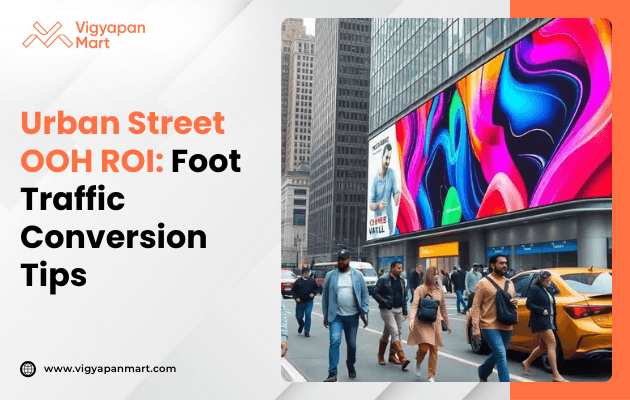
In busy Indian cities, street furniture advertising, such as bus stops, kiosks, and benches, grabs attention better than big billboards. Several studies say that utilising urban street furniture smartly for your brand can uplift your foot traffic to shops by 20-30% in high-traffic spots.
But this is not the case with all the campaigns. Several ones fail to turn looks into actual visits, wasting money. With more than a decade of experience at Vigyapan Mart, we execute our street furniture advertising with strategic plans, offering our partners calculated growth. But what do we follow? In this blog, we will discuss 7 tips we use to make our street ads work harder for real sales, and you should too.
The Foot Traffic Funnel: Mapping OOH to Conversions
The first question is how street furniture advertising works. Think of foot traffic like a funnel. First, awareness hits when people see your ad on a bus shelter. Next, interest grows if they stop to check it out. Finally, the action happens, and people walk into your store. For exact tracking, brands can use tools like geofencing apps and footfall cameras. In India, expect the cost per visit to be under ₹50 in busy urban zones. Street furniture shines here because it's close to shops, with 2x more people passing by than far-off hoardings
7 Battle-Tested Tips to Supercharge Conversions
Tip 1: Hyper-Local Creative That Screams Relevance
Make your ad speak like a local friend. You can launch an ad saying "Fresh Sarees 20% Off, Just 100m Walk!" instead of vague slogans. Next, use a QR code that shows a map to your store or a quick discount. This pulls people in fast. This works because local creatives match the area's vibe and blend in with the environment. But that’s not all. Brands can use these ads to leverage the festivals or local events. This can increase the QR scans with clear calls. Moreover, ideally, you should always keep your text big and bold for quick reads while walking. This tip turns casual glances into targeted foot traffic, key for street furniture OOH ROI.
Tip 2: Dynamic DOOH for Real-Time Urgency
Use digital out-of-home (DOOH) screens on kiosks that change ads by the hour. Think if its raining in your city and a bench shows a message like "Hot Chai Inside; 50m Ahead!". DOOH ads with AI can link the ad to weather apps or the time of day. Programmatic OOH makes this easy, and ads auto-switch based on data. Campaigns like this see impulse visits as people act in the moment.
Tip 3: Interactive Street Tech Boosts Dwell Time
Turn benches and stops into fun zones for people. Think about NFC tags that can let people use AR try-ons or games. For example, a jeweller can release an ad saying "Scan for Virtual Ring Try" on a kiosk. This can result in spiking shop visits. Moreover, people linger with such ads more, from 5 to 30 seconds, boosting recall. Here are some tips:
- Keep it simple
- Offer one tap, one reward, like a coupon
This interactivity fits street furniture perfectly, making OOH feel personal. Ensure that people stay longer seeing your ads because more dwell time means higher chances of foot traffic conversion.
Tip 4: Proximity Targeting with Geofenced Incentives
Hit people that are super close or within 100m with Bluetooth beacons. This helps you send messages like "Walk 50 Steps, Get Free Sample!" via app notifications. Then, track who redeems at your store. Brands can do this by using Geofencing to tie ad views to actual visits. In crowded Indian markets, this works wonders as people are already nearby. This advertising style is perfect for small but quick wins, such as "Buy One, Free Coffee." It nudges fence-sitters inside, turning proximity into profit.
Tip 5: Multi-Touch Sequencing Across Street Network
Don't rely on one ad. Sequence them: Awareness on a bus shelter, reminder on the next kiosk, action call on a shop-side bench. This builds memory and may jump the recall rate by 40%. Map your street furniture network like a story. This is perfect for urban cities like Delhi, where people move in patterns.
Tip 6: Data Layer for Footfall Attribution
In modern OOH advertising, data is everything, and all brands should keep records to show the wins. How to do that? Use WiFi tracking or app data to measure visits before and after ads. This helps you get your exact ROI of the campaign.
Simple formula: ROI = (Extra Visits × Average Sale) ÷ Campaign Cost.
The best would be partnering with a street furniture advertising agency and letting them do all the technical counting.
Tip 7: A/B Test and Iterate Ruthlessly
Lastly, brands should test two ad versions per spot. The one with price and the other with emotion. Run for a week, track the footfall, and pick the winner using scan or visit data. The tweak here is to choose the one with high results. Also, maintain the lighting, colours, and words of the advertisement. This keeps your street OOH fresh and converting.
Measuring Success: ROI Frameworks and Tools
A street furniture advertising company track these KPIs:
- Footfall lift (extra people)
- Conversion rate (% who buy)
- CPV (cost per visit)
At Vigyapan Mart, we use specially curated tools to track every metric. We offer a dashboard, tracking impressions, visits, and sales figures.
Conclusion
Street furniture OOH shines in urban India when you nail foot traffic conversion. But how can street furniture advertising do so? Use hyper-local creatives, dynamic DOOH, interactivity, and data to lift ROI 2-5x. In this blog, we have discussed 7 tips for your next street furniture advertising campaign. Now, what to do? Start small in high-traffic spots, city centres or chawks. Next, track every step from glance to sale. Ready to boost your ROI with street ads? Connect with Vigyapan Mart advertising experts.
Subscribe to our newsletter
Get updates instantly! Join our community for the latest marketing insights.