
How Can Brands Use Billboards to Influence Consumers Before They Reach a Store?
Shoppers often decide what to buy before they step into a store. Billboard advertising reaches them during their daily commute, builds brand recall and points them to your showroom with a clear offer.
Published November 23, 2026
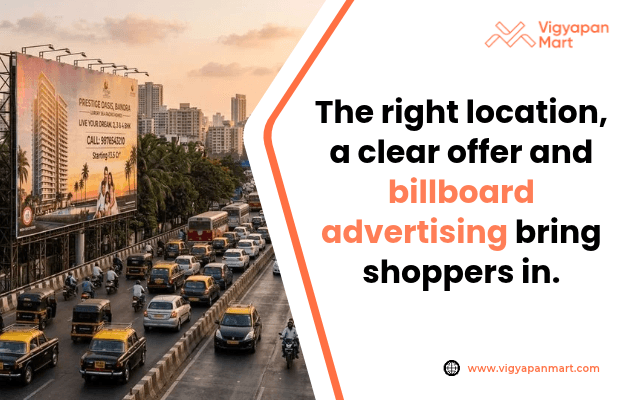
Customers often decide to purchase before they enter a store. They may notice your product on a billboard, remember your brand, or decide to visit your showroom for an offer.
But how do they decide before even exploring your store? This is where Billboard Advertising works.
Billboards give brands an opportunity to influence consumers and engage with them during their daily journeys. Instead of waiting for customers to enter and explore the products, billboards help brands:
- Build Awareness
- Create Purchase Interest
- Highlight Offers
- Encourage Store Visits
But how can brands use billboards to influence these decisions?
How do billboards influence shoppers before they reach a store?
Quick Answer: Billboards reach consumers during their daily journeys, build brand recall and promote offers near shopping areas. When a shopper later passes your store, the message they saw earlier encourages them to walk in, often before they even compare competitors.
Billboard Advertising:
Billboard advertising is a form of outdoor advertising that displays brand messages, images, offers or promotional content on large-format advertising boards.
1. Choose Billboard Locations Along Shopping Routes:
First, choose the right location.
A billboard location is not just about traffic or high visibility. Consumer behaviour directly affects the impact of the billboard.
For example: A billboard near a shopping mall, retail market, supermarket, or commercial centers can reach people who are already interested in making a purchase. So, brands should first look for:
- High traffic roads connecting residential and commercial areas.
- Best routes that lead to shopping malls or retail markets
- Junctions near supermarkets, showrooms, and shopping complexes.
- Areas with regular consumer movement and longer traffic stops.
The objective is to reach the consumers at the right place at the right time.
Outdoor Advertising:
Outdoor advertising promotes brands, products and services through media placed in public spaces.
2. Create a Strong Connection Between the Billboard and Store
A billboard is not just a brand name. It should give consumers a reason to visit the store. Brands should use billboards to give clear directions to the store or online profiles. Show nearby landmarks, store distances, and simple calls to action.
For example:
- "New Collection Now Available – 500 Metres Ahead."
- "Visit Our Showroom Near City Centre."
- "Walk In Today and Explore Exclusive Offers."
Simple, attractive messages can connect OOH advertising with physical retail locations. This also reduces the consumer’s effort to find a store.
3. Use Attractive Offers to Encourage Immediate Action
Consumers don’t buy products; they buy benefits. When your billboard deal shows clear benefits to the audience, they motivate them to buy. It can be anything such as:
- Discounts
- Limited-period offers
- New product launches
- Exclusive deals
They create a sense of urgency and push the viewers to the stores.
Brands can experiment with messages such as:
- "Flat 30% Off – This Weekend Only."
- "Buy One, Get One Free. Visit Today!"
- "New Arrivals Now Available at Our Store."
4. Use Simple Visuals and Memorable Messages
A billboard doesn’t work because it's cool. It works because it's understandable. Consumers generally have only a few seconds to read the messages, so brands should focus on strong visuals, readable text, and a clear brand identity.
A good billboard should focus on:
- One primary message
- Large and readable headlines.
- High-quality product images.
- Contrasting colours and consistent branding.
- A simple call to action.
For example:
A furniture brand can display an attractive living room image and share a headline: "Give Your Home a New Look."
Consumers can understand this message within seconds. However, remember that your creatives should also match your product category and the audience’s interests.
Digital OOH Advertising:
Digital Out-of-Home (DOOH) advertising uses digital screens in public spaces to display brand messages, images, videos and promotional content.
5. Use Digital Billboards for Timely Communication
Digital billboards give brands greater flexibility in communicating with consumers. Unlike traditional static billboards, they allow brands to change creatives, update offers, and display different messages at different times.
For examples:
- A restaurant can promote breakfast offers in the morning and dinner deals in the evening.
- A retail store can display festive discounts during shopping hours or new arrivals before weekends.
Digital OOH contributed 18% of total OOH revenue that was just around 7% in 2023.
Source Url: ( EY Report )
This growth shows that brands are looking for flexible and tech-centred outdoor advertising.
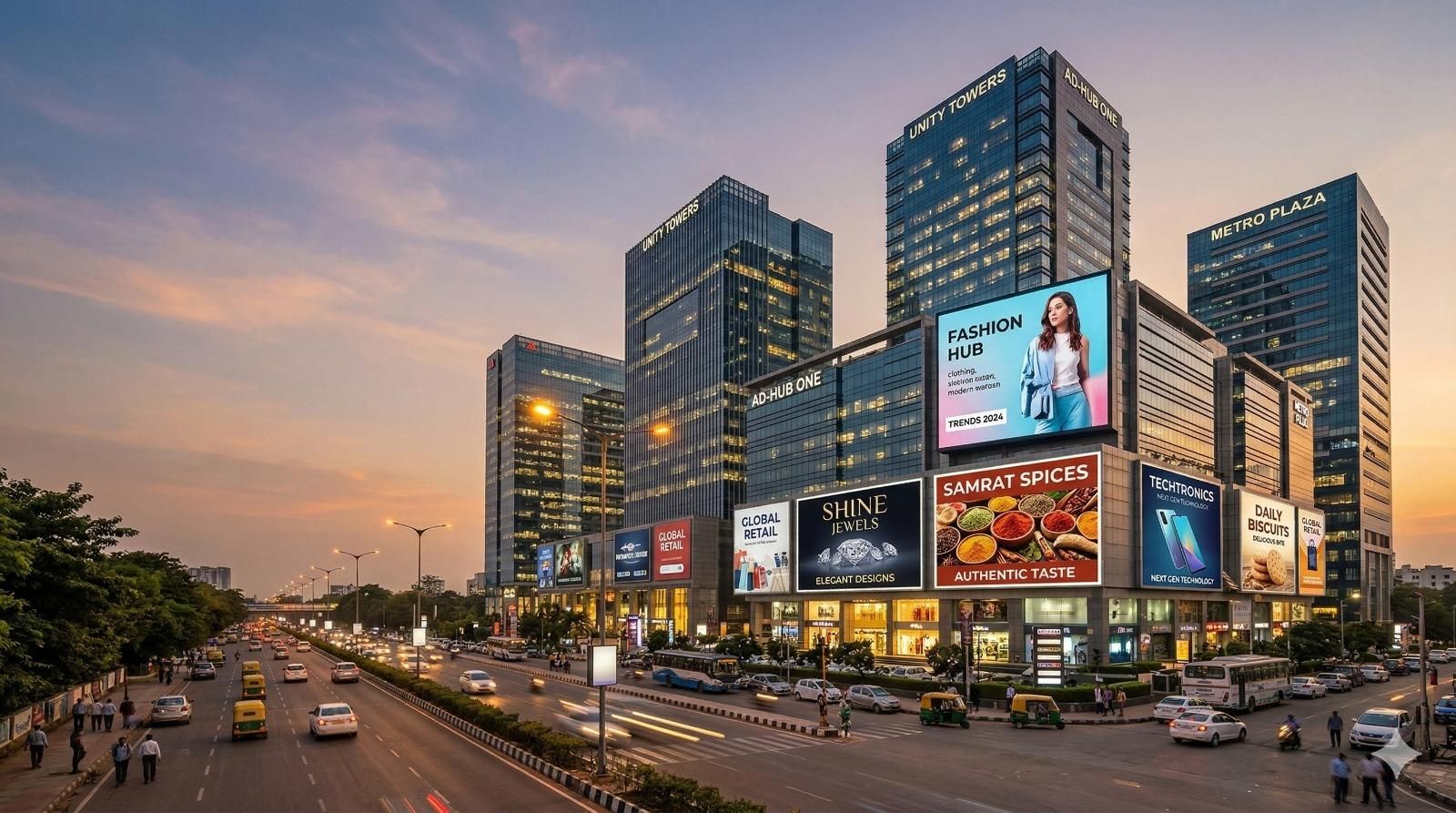
Retail Advertising:
Retail advertising refers to promotional communication used by retailers to attract customers.
6. Connect Billboard Advertising with Digital Platforms
In today’s tech era, brands are using billboards to introduce their product and connect with digital platforms. Therefore, the process becomes a path for users that helps consumers learn more about the brand and product before visiting its store.
Brands can connect the billboards with digital platforms through QR codes, website links, social media handles, and location-based campaigns.
For example:
A billboard can promote a new smartphone with a QR code, and consumers can explore the smartphone features on its website.
This develops an integrated customer journey instead of just an ad.
How Can Vigyapan Mart Help Brands Drive Store Visits Through Billboard Advertising?
Vigyapan Mart helps brands plan billboard campaigns around relevant locations, shopping routes and target audiences. From media planning and creative design to site selection and campaign execution, we help connect outdoor advertising with retail objectives.
Conclusion:
Billboards can influence consumers at several stages of their buying journey. They create initial awareness, boost engagement, and promote exclusive offers strategically. Moreover, they strategically direct people towards nearby stores or any other destination. The key is to combine the following factors:
- Right location
- Relevant messaging
- Attractive creatives
- Clear calls to action.
When planning an OOH advertising campaign, brands should plan and execute billboard campaigns that connect with consumers, boost local visibility, and encourage meaningful store visits. Follow all the points and launch your next billboard campaign thoroughly with Vigyapan Mart experts.
People Also Ask:
How do you measure the ROI of billboard advertising?
Use unique QR codes or promo codes on the billboard and compare store footfall before and after the campaign. Also track branded search volume in Search Console, website traffic and sales lift. Geo-fencing data can further estimate store visits from people exposed to the billboard.
What is the difference between static and digital billboards?
Static billboards run one creative for a long period at a lower cost, which suits long-term brand visibility. Digital billboards rotate multiple ads on one screen and allow creatives to change anytime, which suits offers and time-based messaging. Cost depends on city, location and format.
Frequently Asked Questions
Subscribe to our newsletter
Get updates instantly! Join our community for the latest marketing insights.