
Street Furniture Ads 101: Benches, Poles, and Kiosks Explained
Street furniture advertising blends brands into everyday urban life using benches poles and kiosks. This blog explains street furniture ad types benefits examples and trends helping Indian brands achieve hyper local reach high visibility and cost effective urban marketing results.
Published March 25, 2026 · Updated April 13, 2026
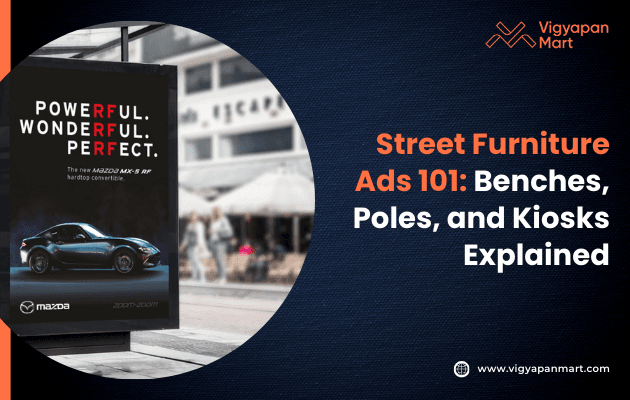
Imagine this scene: there is a traveller, tired of a long walk, who sits on a bench in a public space. Notably, the bench has your brand’s name and advertisement message printed on it. The traveller will see your ad and scan the QR code for services/products.This is how street advertising works.
Welcome to the future of advertising, where public benches will become solid 3D billboards for brands. These are smart OOH ads that blend with everyday life so much that they become a part of people’s lives too. Street furniture advertising uses everyday city items, like benches, poles, and kiosks. But the question is, are they effective? Notably, these ads reach lakhs of people daily in high-footfall spots such as bus stops and markets. In India, where cities are full of people and life, street furniture ads offer low-cost, hyper-local impact. Want to explore the opportunities and power of street furniture advertising? In this blog, we will discuss street furniture advertising on benches, poles, and kiosks: their types, benefits, examples, and tips. So, let’s read.
What Are Street Furniture Ads?
Street furniture ads are creative displays on public city fixtures. Think about benches in parks, poles on streets, and kiosks at stations. These everyday items blend into daily life, catching eyes without shouting like big billboards. But where did all these start? Street Advertising started as simple posters, but now includes digital screens. In India, they grow fast with smart city projects. But here’s the catch: in big cities, often municipal bodies decide approval for such advertisements for safety and beauty.
Key perks of street furniture advertising:
- High visibility in busy areas.
- Low cost compared to TV or online ads.
- Targets locals: shoppers, commuters, families.
Brands love them for quick setup and easy changes. They work best with bold designs and local messages, like festival offers.
Benches: Rest and Reach Your Audience
Benches are stars of street furniture ads. People sit for 30-60 seconds, giving time to read your message. The most common types of bench advertising are vinyls, seat-top prints, and full wraps. The new age benches have digital screens on the sides. Now, how can brands use them? Use them at bus stops, parks, or malls. In Delhi's markets, branded benches promote nearby shops. They use weather-proof materials like UV vinyl to last monsoons.
Pros
- Builds emotional connection with the people when they relax and notice.
- Offers Easy QR codes for instant action.
Tips for success
- Use large fonts and happy images.
- Avoid clutter.
- Check local rules for not getting fines.
- These are affordable.
Benches shine for retail and food brands. They turn wait time into brand love.
Poles and Lighting Columns: Stand Tall in Traffic
Street poles, lighting columns, traffic poles, or utility posts offer vertical punch. Wrap your advertisements with banners or flags. The most common types of pole advertisements are full wraps, hanging banners, and LED-lit panels for night glow. Notably, these ads are ideal for brands targeting roadsides, highways edges, and markets. The most interesting point is that drivers and walkers see them from afar.
Pros
- They offer 24/7 views, rain or shine.
- These are scalable, and brands can easily cover many poles cheaply.
Cons
- Wind can tear cheap materials, so always choose strong mesh vinyl.
For example, a mobile store can use pole banners with "Buy 1 Get 1" deals.
Here are some design tips
- Use tall, slim formats.
- Use bright colours that pop against grey poles.
- Add phone numbers or maps.
Poles suit auto, real estate, and service brands chasing moving crowds.
Kiosks and Newsstands: Touch and Interact
Kiosks are interactive powerhouses. Think about info booths, phone stands, or newsracks with ad space. Please note that there are multiple types of kiosks advertising, from static panels to touchscreens playing videos. You can easily see them at railway stations, airports, and shopping plazas. The digital ones track views and touches. Kiosks fit tech, finance, and e-commerce brands wanting engagement.
Pros
- Use the magic of Multimedia. Videos always grab 5x more attention.
- Collect audience data via NFC or QR scans.
However, one of the biggest challenges brands face with kiosks is their high initial costs. Moreover, they need power and permits as well.
Here are some pro tips
- Keep your messages short. The maximum length of your videos should be 10 seconds.
- Use AR for fun, like virtual try-ons.
- Partner with civic apps for approvals.
Why Street Furniture Wins for Marketers
Street furniture ads beat others in cities. Why? Because street furniture advertisements have a CPM (Cost per Thousand Views) stays under ₹200, far below digital OOH. Such advertisements hit captive audiences where people just can’t scroll away. Here are the big benefits of street furniture advertising:
- Hyper-local: Target one neighbourhood.
- Measurable: Use QR scans, promo codes.
- Eco-friendly options: Solar digital benches rise in green cities.
Next, you can integrate your street furniture ads with Instagram or Google for full-funnel wins. Notably, in India, street furniture advertising shares about 20% of the whole OOH advertising industry.
Trends Shaping 2026 Street Furniture
- Digital takes over: 5G screens on benches show weather-tied ads in 2026.
- Programmatic OOH: Buy street ad slots real-time, like Google Ads for outdoors.
- AR and AI personalise: Kiosk ads show your face or custom offers.
- Smart cities: Indore adds sensor-triggered displays on poles and shelters.
- Sustainability rules: Recycled vinyl wraps and no-plastic poles everywhere.
- Indian brands gear up: Hybrid campaigns blend street furniture with social media.
Conclusion
Street furniture ads, such as benches for restful reach, poles for traffic tallness, and kiosks for interaction unlock urban marketing gold. Brands love such ads because they are low cost, highly attractive, and offer a local bunch that make them must-haves for Indian brands. Now, what should be your first steps now? Start small, pick one type, test in your city, and track scans. Ready to bench your competition with street furniture advertising? Connect with Vigyapan Mart today.
Subscribe to our newsletter
Get updates instantly! Join our community for the latest marketing insights.