
The Evolution of Billboards: From Static Signs to Smart DOOH
The evolution of billboards from static painted signs to smart DOOH screens shows how OOH advertising transformed through digital innovation AI analytics and programmatic buying. Modern billboards now deliver interactive experiences better targeting stronger engagement and measurable ROI for brands.
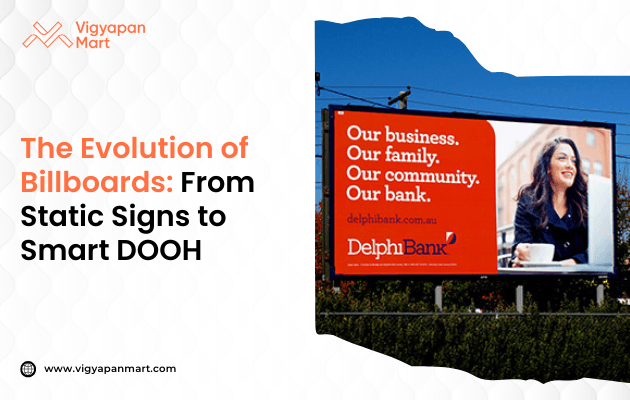
Back in 1867, when the first billboard was put up in New York, it was just a painted board shouting about a circus show. Fast forward to today, Mumbai’s busy streets flash smart screens that change ads based on the weather or crowd mood. This change shows how billboard OOH ads have come a long way from those wooden signs to digital out-of-home (DOOH) wonders powered by AI and data. Notably, this evolution isn’t just about brighter lights; it's reshaping how brands grab attention in a world where people zoom by on bikes and autos.
The Indian OOH market is growing at a massive rate of 15% yearly. Notably, the OOH industry is always changing, shifting to becoming a smarter and more relevant OOH medium. Understanding this shift helps marketers boost the ROI, and brands have more impressions than ever. But how did it actually start back then? Let’s discuss the journey from static OOH boards to tomorrow's smart displays.
The Dawn of Static Billboards
Static billboards started in the 1800s as big painted posters on walls or wood frames. In India, they boomed along highways in the 1950s, pushing films and soap brands. They carried a vibe with them, especially the ones with roadside chai ads.
They were cheap and reached lakhs of drivers daily. But problems piled up: paint faded in monsoons, messages stayed fixed, and there was no way to measure who saw them. Rules like India's 1960s highway laws tried to tidy things up. Still, static boards ruled for decades because they were simple and tough.
Rise of Digital Billboards
The 2000s brought LEDs, turning billboards electric. Now, there are no more fixed ads, and screens can swap the ads in seconds. Imagine about NewYork Times Square and India’s ITO junction in Delhi that shines 24/7. Digital boards shine 24/7, and even at night, they advertise with boldness. As per several international reports, digital OOH ads lift ad recall by 40% over static ones. How?
They cut printing costs, offer relevancy, and catch viewers’ attention instantly. As a result, they grew without limits. But power bills and bright glare rules slowed rollout. In Mumbai, digital billboards now cover key spots like Bandra-Worli Sea Link, making ads pop for commuters.
Creative Billboards: Art Meets Innovation
Around 2010, brands got wild and started putting Anamorphic designs that quickly tricked eyes, such as Burger King's 3D flame burger seeming to leap out, and Pepsi’s 2014 London bus shelter used AR for fake UFOs, going viral online. India jumped in, too. We see a 2022 Flipkart Diwali ad in Bengaluru, twisted with moving diyas. Moreover, Sensors made boards react to wind or traffic. These creative OOH ads earned free buzz and won the market like never before.
For example, Nike's 2019 "Unlimited Stadium" in India drew millions of views. They bridged old-school reach with social media shares, proving billboards could entertain, not just inform.
The Smart DOOH Revolution
Now, it’s time for the smart DOOH revolution. These are digital billboards with brains. They use AI technology to spot crowd age or mood via cameras (privacy-safe), tweaking ads live. For example, if it's raining in Delhi, your coffee warms up. Moreover, programmatic OOH ad buying lets brands bid for slots like Google Ads. According to reports, the global DOOH ad spending hit $10 billion in 2025 and is growing fast. In India, screens sync with apps for retargeting. See an ad on a billboard OOH, and this tech will push the ad to your phone. Results?
It boosts your responses by up to 70% and leaves a personal touch. This creates a multiple penetration into the viewer’s surroundings. However, challenges like data rules exist, but a smart DOOH advertising agency in India knows how to deal with these. The point here is that DOOH ads make every rupee count.
Billboard Pioneers Shaping Tomorrow
- AI-Powered Personalisation: Billboard OOH ads will use AI for real-time tweaks based on weather, traffic, crowd mood, or events, boosting relevance and engagement.
- Programmatic DOOH Buying: Automated OOH bidding like digital ads, with more inventory for dynamic, targeted slots across channels.
- Interactive AR and 3D Experiences: QR codes, NFC, AR games, or 3D illusions linking to mobiles for immersive, shareable moments.
- Sustainability Focus: Solar-powered, energy-efficient LEDs, recyclable materials, and eco-friendly OOH billboards with plants or air purifiers.
- Omnichannel Integration: OOH billboards syncing with apps, CTV, and social for seamless phygital campaigns and better measurement.
- Advanced Analytics and Attribution: Data tools tracking footfall, sales lift, and ROI, making OOH as measurable as online ads.
- India-Specific Growth: 12.5% CAGR for digital OOH to 2032, with programmatic OOH and smartphone-tied ads booming in metros like Mumbai.
Conclusion
From 19th-century static signs that used to struggle with monsoons to the digital AI-driven DOOH advertising with personalized messages, billboards have truly evolved. This has evolved into smart marketing machines. We've seen digital glow-ups, creative viral stunts, and data wizards leading the pack. For Indian marketers, this means higher engagement and measurable wins in our booming OOH scene. The future? We will see eco-friendly, AR-blended boards ruling smart cities. It's time to ditch old tactics. So what to do now? Test DOOH for your next campaign. Looking for a professional DOOH advertising agency? Connect with Vigyapan Mart experts today.
Subscribe to our newsletter
Get updates instantly! Join our community for the latest marketing insights.