
Why Does Generating 500 Exhibition Leads Not Always Mean a Successful Exhibition Campaign?
You may invest more than ₹15 lakh in an exhibition, book a prime stall, create an attractive display, launch an interactive product demonstration, and bring an experienced sales team. But even after 500 leads, you may not get the results you expected.
Published November 28, 2026
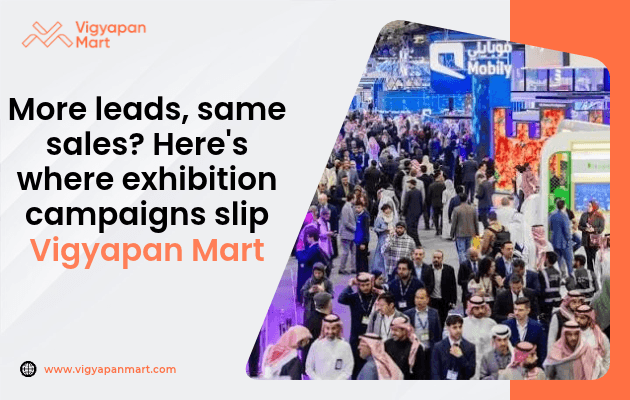
500 leads seem great in a report, but what about the results in sales? Three months later, you may find that only 80 people have responded to follow-up calls, just 25 have shown genuine buying interest, and only 5 people actually have bought the deals.
What is Events & Exhibitions Marketing?
Quick Answer: Events & Exhibitions Marketing is a marketing approach where a brand promotes its products or services through physical events such as trade shows, exhibitions, product launches, dealer meets, and corporate events. The goal is to meet the target audience face to face, showcase the offering, and generate leads, brand awareness, and business relationships.
Suddenly, those 500 leads do not look so impressive.
One thing is clear. Generating leads is not equal to a successful exhibition. What matters is how many of those leads actually turn into business opportunities, customer relationships, and actual revenue.
1. Not Every Exhibition Visitor Is a Potential Customer
A crowded exhibition stall can create the impression of a successful campaign. But footfall doesn’t mean sales.
Every visitor may have a different motive. Some may come to explore new products, others to watch the demos, participate in the activities, or simply look around.
They surely improve brand visibility, but they may not create sales opportunities. This is why exhibitors must focus on lead quality rather than lead quantity.
Before you participate in an exhibition, identify the following:
- Ideal customer profiles
- Target industries
- Decision-makers
- Purchasing requirements
- Budgete
This helps the exhibition team identify visitors who have genuine business potential.
Event and Exhibition Marketing:
Event and exhibition marketing involves promoting a brand, product or service through organised events, trade shows, exhibitions, product demonstrations and direct interactions with potential customers.
2. Collecting Contact Details Is Not the Same as Generating Qualified Leads
A business card, phone number, or email address does not automatically become a sales opportunity.
For example, consider two visitors at an exhibition.
The first visitor scans a QR code to receive a free company brochure. The second visitor spends 20 minutes discussing product specifications, pricing, delivery timelines, and a possible bulk order. Both become leads in the database, but their business value is very different.
Basic contact information is not a sign of a qualified lead.
Sales teams should understand:
- What product or service does the visitor need?
- Does the visitor have purchasing authority?
- What is their estimated budget?
- When are they planning to make a purchase?
- What problem are they trying to solve?
These questions help businesses categorise leads into hot, warm, and cold prospects.
Note: According to the 2026 Spreadly Trade Show Pulse, 51% of surveyed exhibition professionals do not qualify leads directly at the booth.
3. Delayed Follow-Ups Can Destroy Valuable Opportunities
Imagine you have secured a potential customer at an event. The person shows genuine interest in your product, and you exchange contact details too. Moreover, you promise to share a customised quotation for his bulk orders.
However, after the exhibition, you get so busy that you miss it. The visitor receives a follow-up email after ten days.
The deal is already lost by then.
The visitor may have contacted 3 competitors, compared their quotations, and already made a purchasing decision.
This is how you lose opportunities.
According to The Spreadly 2026 Trade Show Pulse, 57% of the team take more than 48 hours to follow up their exhibition leads. Only 5% connect with their prospects on the same day. Source Url: ( Spreadly 2026 Trade Show )
Businesses should create a structured follow-up system:
- Within 24 hours: Contact hot leads and share promised information.
- Within 48 hours: Schedule meetings and product demonstrations.
- Within 5–7 working days: Follow up with warm prospects.
- Over the following weeks: Nurture cold leads through relevant emails, updates, and offers.
A timely and personalised follow-up can make a significant difference to exhibition results.
Outdoor Advertising:
Outdoor advertising promotes brands, products and services through media placed in public spaces, such as billboards, bus shelters, transit vehicles, street furniture and digital screens.
4. An Attractive Exhibition Stall Does Not Guarantee Meaningful Engagement
A visually impressive exhibition stall can attract hundreds of visitors. But what after that?
Some businesses make this mistake. They invest heavily in stall design, lighting, promotional merchandise, and branding but overlook visitor engagement.
A visitor might spend 15 seconds looking at the stall, but a 15 minute quality interaction is what will hold them. Every visitor should be attended to by a salesman and, if suitable, be explained the products, have their questions answered, and discuss business needs.
This creates a strong opportunity for business.
According to UFI's January 2026 Global Exhibition Barometer, visitors are expecting more interactive demonstrations, competitions, gamification, and engaging learning experiences.
Businesses should therefore design their stalls for participation, not just attention. Focus on live demos, product trials, interactive screens, expert consultations, and personalised discussions.
Audience Demographics: Audience demographics refer to the statistical characteristics of a group of people, such as age, gender, income, education, occupation and location.
5. Businesses Often Measure Leads but Ignore the Actual Return on Investment
Generating 500 leads sounds very impressive, but businesses often forget to calculate the cost to get each qualified lead. So, let’s continue with our earlier example.
Suppose a company spends ₹15 lakh on its exhibition campaign and generates 500 leads.
Its results look like this:
| Performance Metric | Results |
|---|---|
| Total Exhibition Investment | ₹15,00,000 |
| Total Leads Generated | 500 |
| Qualified Leads | 130 |
| Sales Meetings Scheduled | 40 |
| Actual Customers Acquired | 5 |
| Revenue Generated | ₹12,00,000 |
Results? 500 leads but only 5 customers. The total cost for one customer was around ₹3 lakh.
This is why businesses must evaluate more than just the number of leads.
Some important exhibition performance metrics include:
- Cost Per Lead (CPL): Total exhibition investment divided by total leads.
- Cost Per Qualified Lead: Total investment divided by qualified leads.
- Lead-to-Customer Conversion Rate: Percentage of leads that become paying customers.
- Customer Acquisition Cost (CAC): Total acquisition cost divided by new customers.
- Revenue Generated: Actual sales revenue attributed to the exhibition.
- Return on Investment (ROI): Financial return compared with the total campaign investment.
Moreover, businesses should also consider the following:
- Long-term opportunities
- Repeat purchases
- Partnerships
- Pipeline value
How Can Businesses Make Their Next Exhibition Campaign More Successful?
When you plan an event & exhibition activation advertising campaign, coordination is what you need. Three departments - marketing, stall management, and sales teams must work together.
Here are a few practical steps businesses can follow:
- Set Clear Objectives, whether it's sales, brand awareness, launching products, finding distributors, or establishing partnerships.
- Teach your staff how to approach visitors, understand their requirements, qualify prospects, and record relevant information.
- Use QR codes, digital forms, and CRM tools to collect accurate information.
- Use demonstrations, product trials, presentations, and interactions.
- Establish follow-up timelines before the exhibition begins.
- Monitor meetings, quotations, sales, revenue, and pipeline development.
How Can Vigyapan Mart Help Businesses Plan Successful Exhibition Campaigns?
At Vigyapan Mart Pvt. Ltd., a 360-degree marketing, branding, and OOH advertising agency, we understand that an exhibition stall should do more than attract visitors. It should create memorable brand experiences and meaningful business connections.
From exhibition stall design and fabrication to branding, event promotion, and on-ground execution, the focus should always remain on creating experiences that deliver value beyond the exhibition floor.
Conclusion: Exhibition Success Is About What Happens After the Event
Exhibitions & event marketing are a great opportunity for businesses. Brands interact with visitors, give product demos, build relationships, and strengthen brand visibility. Brands often collect hundreds of leads every event, but collecting hundreds of leads doesn’t automatically guarantee business growth.
The real success of an exhibition campaign lies in attracting the right audience, creating meaningful interactions, qualifying prospects, and converting opportunities into measurable business outcomes.
Frequently Asked Questions
Subscribe to our newsletter
Get updates instantly! Join our community for the latest marketing insights.