
Challenges & Solutions of Infrastructure Issues in Rural OOH
Rural OOH advertising faces major hurdles from poor roads, weak electricity, and limited ad spaces. This blog explores challenges and offers practical solutions to make outdoor advertising in rural areas more effective, inclusive, and impactful.
Published May 5, 2025 · Updated April 13, 2026
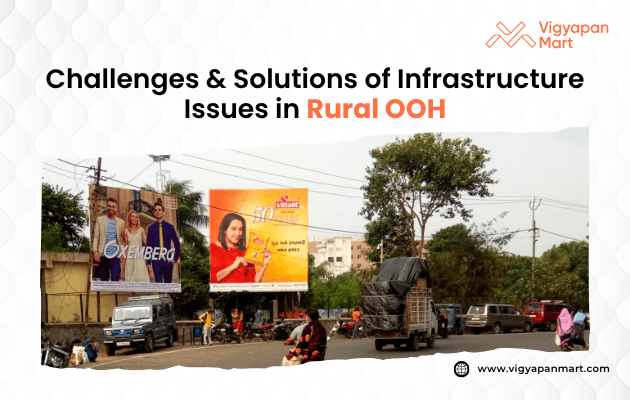
Outdoor advertising (also called OOH, which stands for Out-Of-Home) is everywhere. When you see billboards, posters, or signs by the roadside, that’s OOH. These ads work well in cities, but what happens when we try to use them in rural areas? Rural OOH faces many challenges, especially because of poor infrastructure. Let’s look at what makes rural OOH difficult and how we can fix these problems.
What Is Rural OOH and Why Does It Matter?
In cities, people see lots of billboards and posters. In villages and small towns, there is much less OOH advertising. However, rural areas have millions of people who could be customers. Reaching them could help companies grow and help communities get important information. But there’s a problem: it’s not as easy as putting up a sign by the road in the city. There are tough infrastructure challenges to solve.
Top 5 Challenges of Infrastructure in Rural OOH
1. Poor Roads and Hard-to-Reach Places
Rural roads are often narrow, broken, or muddy. It’s hard to bring big billboards, poles, and advertising materials to these areas. Trucks may get stuck or delayed. This makes it expensive and slow to set up ads in villages and small towns.
2. Fewer Places to Put Ads
In cities, there are many walls, bus stops, and buildings for ads. Villages don’t have as many options, and the buildings may be far apart. That means advertisers struggle to find the best spots where many people can see their message.
3. Electricity and Technology Problems
Digital billboards and bright signs need electricity. Many rural places have power cuts or poor wiring. Sometimes, entire villages have no electricity at all! And, because internet service is also weak or missing, smart or digital OOH isn’t possible in many villages.
4. Expensive and Slow Internet
Even if there is electricity, the internet speed in rural areas is often very slow. Some villages still do not have good broadband. Research shows that 25% of rural areas cannot get fast internet, compared to just 2% in cities. This means advertising that uses the internet such as screens with changing ads, QR codes, or SMS campaigns may not reach rural people well.
5. Small Spread-Out Audiences
Rural people live far apart from one another, unlike cities where thousands pass by a billboard every day. It takes more signs and effort to reach just a few people. This means the cost per customer is high, and ads might not be seen by many.
Important Facts
- 25% of rural areas lack access to internet speeds of at least 50 Mbps.
- Rural billboards often have less competition, so if placed correctly, they can get more attention from people passing by.
- Rural consumers can be hard to reach with digital campaigns due to limited power or internet.
Solutions to Rural OOH Infrastructure Problems
Now, let’s talk about what can be done to fix these issues.
1. Use Local Materials and Talent
Instead of waiting for big companies to bring billboards from cities, work with village carpenters and painters. Use local materials like wood, bamboo, and paint. This is cheaper, creates local jobs, and makes repairs easy.
2. Pick the Best Spots
Since there are fewer places available, pick spots where many people meet: market areas, schools, or bus stops. Main roads in and out of villages are good too. Use smaller signs if big billboards can’t fit.
3. Go Simple: No Power Needed
Use non-digital signs where power is weak. Painted boards, banners, and posters don’t need electricity. You can still get your message out, just without the fancy lights.
4. Public-Private Partnerships
Getting government help can make a huge difference. When the public (government) and private companies work together, they can pool money and build better roads, internet, or bus stops. This helps not just for ads, but for the whole village.
5. Mobile Advertising
If people are far apart, use vehicles with speakers or mobile billboards. A van or even a bike with a sign can move from place to place and spread the word. This is popular in places where people can’t always check their phones or see big posters.
6. Focus on Community Connections
Rural communities are tight-knit. Advertisers who work with local leaders or use messages in the local language are trusted more. This can be more powerful than a fancy ad. It helps everyone feel included and respected.
7. Use New Funding and Technology
Some special loans or “green bonds” are now available to help fix roads, electricity, or water problems. Rural advertisers and local leaders can ask for these, which helps the whole area, and makes advertising easier in the future.
Conclusion
Infrastructure problems in rural OOH are real. Poor roads, fewer ad spaces, weak electricity, slow internet, and scattered villages make advertising tough outside cities. But by using clever ideas such as local materials, public partnerships, simple signs, and community spirit, we can overcome these challenges. Doing this not only helps businesses, it brings important messages and new opportunities to rural places, making life better for everyone. Want to overcome all challenges of rural marketing and launch a successful advertising campaign? Connect with Vigyapan Mart experts now.
Subscribe to our newsletter
Get updates instantly! Join our community for the latest marketing insights.