
Gemini, Meta AI, WhatsApp & Google Ads: A Real-World Digital Marketing Playbook for 2027
If you run a brand in India right now, your customer's day probably looks like this: a quick question to Gemini or ChatGPT, a scroll through Instagram, a WhatsApp message from a friend, a Google Meet call with a vendor, and an Amazon cart they keep forgetting about. Every one of those moments is a place where your brand can show up, or quietly get skipped.
Published November 28, 2026
We're Vigyapan Mart, a 360-degree advertising and marketing agency. We spend our days across OOH, digital, retail and creative work, so we see how these channels actually behave when real budgets are on the line. This post pulls together the platforms everyone is searching for right now (Gemini, Meta AI, Meta Ads, Google Ads, AdSense, Instagram, WhatsApp Web, Google Meet, Amazon Prime and SEO) and explains what each one means for your marketing, in plain language. No jargon wall. Just what's changing, what's worth your money, and what you can do this week.
What is the biggest Digital Marketing shift for Indian brands in 2027?
Quick Answer: The biggest digital marketing shift in 2027 is that customers now ask AI assistants like Gemini, ChatGPT and Meta AI full questions before they search on Google. Instead of typing short keywords, people ask things like "which agency can handle bus branding and digital together?" and get a short answer that names two or three brands. Ranking on page one still matters, but being the brand an AI assistant mentions is now the new priority. To get there, Indian brands need clear, specific pages, consistent business details across the web, and credible content backed by real experience.
1. Gemini, Meta AI and ChatGPT: your customer now asks before they search
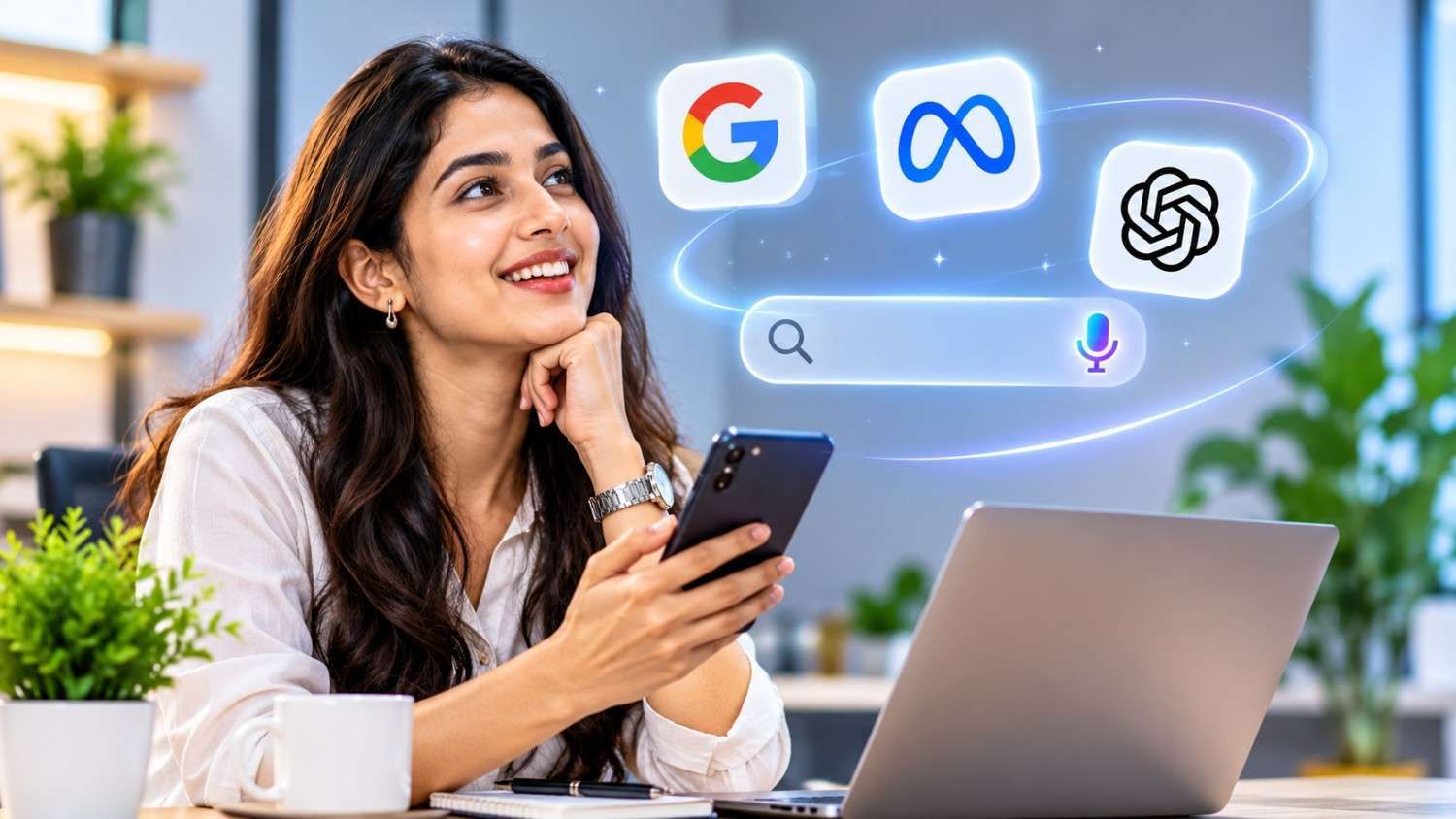
People don't only type keywords into Google anymore. They ask Gemini, ChatGPT or Meta AI full questions, like "which agency can handle bus branding and digital together?" or "what's the best way to run ads for a small D2C brand?" The answer they get back is often a short summary with two or three brands named.
That changes the game. Ranking on page one is still good, but being the brand an AI assistant mentions is the new prize. And these tools tend to pull from pages that are clear, specific and written by people who clearly know the subject.
What we tell our clients to do
• Write pages that answer one question properly, instead of five questions badly.
• Put real numbers, real examples and your own experience in the content. Generic text gets ignored.
• Keep your business details consistent everywhere: website, Google Business Profile, LinkedIn, directories.
• Add an FAQ block to key pages. Short question, direct answer, two or three sentences.
• Show who wrote it. Author names and company credentials help both readers and search systems trust you.
Think of it as writing for two audiences at once: the person reading and the AI summarising. Luckily, what helps one helps the other.
2. Google Ads and Google AdSense: two sides of the same coin
These two get mixed up all the time, so let's clear it up. Google Ads is where you pay to get in front of people searching, watching or browsing. Google AdSense is where you earn by showing ads on your own website or blog. One is for advertisers, the other is for publishers.
For most brands, Google Ads is the one that moves the needle quickly. A few habits separate campaigns that make money from campaigns that just burn it:
• Start with intent. Someone searching "bulk corporate gifts" is far closer to buying than someone watching a random video.
• Use negative keywords from day one. Weekly checks of the search terms report save more budget than any clever bidding trick.
• Send each ad group to a page built for it, not your homepage.
• Track what happens after the click: calls, form fills, WhatsApp chats. Clicks alone tell you very little.
• Let automated campaigns learn, but feed them good conversion data and fresh creatives.
If you publish content, AdSense is worth a look. A blog that ranks well for useful topics can earn ad revenue on top of generating leads. The catch is that AdSense rewards traffic and original content, so it works best when your SEO is already doing its job. For a service business like ours, the real value of a blog is leads, and any ad income is a bonus.
3. Meta Ads and Instagram: Creative is the new targeting
Meta's ad system has moved a long way from hand-picking audiences. Today the platform's AI does most of the finding, which means your creative does most of the targeting. The ad itself tells Meta who to show it to, based on who stops, watches and clicks.
So the question isn't "which interest should I pick?" anymore. It's "does this reel make someone stop scrolling in the first two seconds?"
What's working for Indian brands
• Short vertical video shot on a phone, with a real person talking, often beats polished studio footage.
• Regional language creatives. A Hindi, Tamil or Bengali ad speaks to people in a way English can't.
• Click-to-WhatsApp ads. In India, people would rather message than fill a form, and this format meets them there.
• Testing 3 to 5 creatives at a time, then cutting the weak ones fast.
• Retargeting people who watched your videos or visited your site, with a clear next step.
Instagram deserves a mention on its own. Reels, Stories and creator collaborations are where discovery happens, and a profile that looks active and trustworthy converts better than any ad copy. If your ads send people to a dead-looking page, you've paid for a bad first impression.
Quick mockup tip: before spending on production, mock up your ad concepts as simple static or storyboard versions and test the idea first. It costs almost nothing and tells you which hook deserves a full shoot.
4. WhatsApp and WhatsApp Web: the channel your customers already check
In India, WhatsApp isn't an app. It's basically the phone's front door. Open rates on a good WhatsApp message beat email by a wide margin, which is why it has become a core sales and support channel.
Two tools are worth knowing:
• WhatsApp Business app is fine for small teams. Catalogue, quick replies, labels, and you can use it on WhatsApp Web from your desktop, so your sales team can reply from a laptop.
• WhatsApp Business API is for scale. Approved message templates, broadcasts, chatbots and CRM integration. This is what you want for lead follow-ups, order updates and campaigns.
How to use it without annoying people
1. Always get opt-in. Spam gets your number restricted.
2. Reply fast. A lead who messages you is warm for about five minutes.
3. Use templates for the first touch and a real human for the conversation.
4. Segment your list. A pincode-based or interest-based message feels personal. A blast to everyone feels like noise.
5. Connect your Meta click-to-WhatsApp ads to a clean reply flow so no lead falls through.
A practical note on WhatsApp Web: it's convenient, but shared logins and personal phones create messy lead data. For anything beyond a very small team, move to the API with a proper inbox.
5. Google Meet and the web tools behind modern B2B sales
Searches like "Google Meet" and "meet Google" look boring next to AI and ads, but they point at something real: sales has moved online. Pitches, proposals, onboarding and client reviews now happen over a video link, which means your meeting is part of your marketing.
A few small things make a big difference:
• Send a clear agenda and a one-page summary before the call, not after.
• Share your screen with live data or a campaign dashboard. Proof beats promises.
• Record the session (with permission) and send a short recap with next steps within the hour.
• Keep a branded, professional setup: clean background, good audio, a consistent look.
The brands that win B2B deals today tend to be the ones that make the whole journey smooth, from the first Google search, to the WhatsApp message, to the Meet call, to the signed proposal. Each step should feel like the same company.
6. Amazon and Amazon Prime: what marketers can learn from a subscription giant
People search "Amazon Prime subscription" because they want to know what they get for the money. That's a lesson in itself. Prime works because the value is obvious, the benefits stack up, and leaving feels like a loss.
You don't need Amazon's size to borrow the idea:
• Make the benefit obvious. If a customer can't explain in one line why they should stay, your offer is too vague.
• Build loyalty, not just sales. Repeat-purchase programs, member pricing and early access bring people back without extra ad spend.
• Be present where people shop. If you sell products, marketplaces like Amazon are also a search engine. Titles, images, reviews and keywords matter there just as they do on Google.
• Use retail media. Sponsored placements on marketplaces put your product in front of people who are already ready to buy.
For our own platform, Mercheck.ai, which handles corporate gifting and promotional merchandise, the same thinking applies: make the offer easy to understand, make reordering painless, and reward repeat buyers.
7. SEO: the thread that ties it all together
Every platform above rents attention. Ads stop the moment the budget stops. SEO is the part you own. A page that ranks keeps bringing in people for months, and it feeds the AI assistants too.
The basics haven't changed, they've just gotten stricter:
• Match search intent. If people want a how-to, don't give them a sales page.
• Make the site fast and mobile-friendly. Most of your Indian audience is on a phone.
• Fix technical hygiene: clean URLs, XML sitemap, canonical tags, no broken links, proper schema.
• Build topic clusters. One strong pillar page, supported by detailed pages that link to it.
• Earn trust signals: real author names, case studies, reviews, mentions on credible sites.
• Refresh old posts. Updating a page that already has some authority is often faster than writing a new one.
Your 30-day starter plan
Week 1: Audit your site speed, indexing and top 10 landing pages. Fix anything broken.
Week 2: Set up conversion tracking for calls, forms and WhatsApp clicks. Without it, you're guessing.
Week 3: Launch one Google Ads search campaign and one Meta click-to-WhatsApp campaign with a small, testable budget.
Week 4: Publish one pillar post, add FAQ blocks to your top service pages, and review what the data says before you scale.
Can Vigyapan Mart manage ads, SEO and WhatsApp marketing together?
Yes. Vigyapan Mart is a 360-degree agency covering digital, OOH, retail,billboard, transit, bus, events and creative work, so your campaigns can run as one connected plan. You can reach us through vigyapanmart.com.
Frequently Asked Questions
Subscribe to our newsletter
Get updates instantly! Join our community for the latest marketing insights.