
What Can Traffic Behaviour Tell Brands About the Right Time and Place for Billboard Advertising?
A busy road doesn't always mean a successful billboard. This blog explains how traffic volume, speed, congestion, direction and peak hours help brands choose the right time and place for billboard advertising, and how DOOH makes timing more flexible.
India’s OOH advertising market was around ₹4,835 crore in 2025, and nearly 45% of the total OOH & DOOH market was accounted for by billboards.
This is huge, but a billboard is not a guarantee of rising awareness, online searches, sales, or brand recall.
In fact, a billboard can be in a busy location and still not get the desired results. The reason is very simple. Traffic is just one part of the equation of the OOH market.
In today’s hyper-busy lifestyle, brands need to understand that people travel differently in different places. You need to understand
- Where are people going?
- How fast are they moving?
- How long may they remain near a location?
- Whether they are likely to notice an advertisement?
This is where understanding traffic behaviour becomes highly valuable for all.
What catches people's attention in advertising?
Quick answer: People notice advertising that is simple, visual and relevant to their moment. A short message, strong visuals, bold colour contrast and a clear brand cue are processed fastest, especially in billboard advertising, where viewers may have only a second. Placement that matches audience routes and timing, plus repeated exposure on daily commutes, turns that attention into recall.
Billboard Advertising
Billboard advertising is a form of outdoor advertising that displays brand messages, images, offers or promotional content on large-format advertising boards.
1. Traffic Volume Shows Potential Reach:
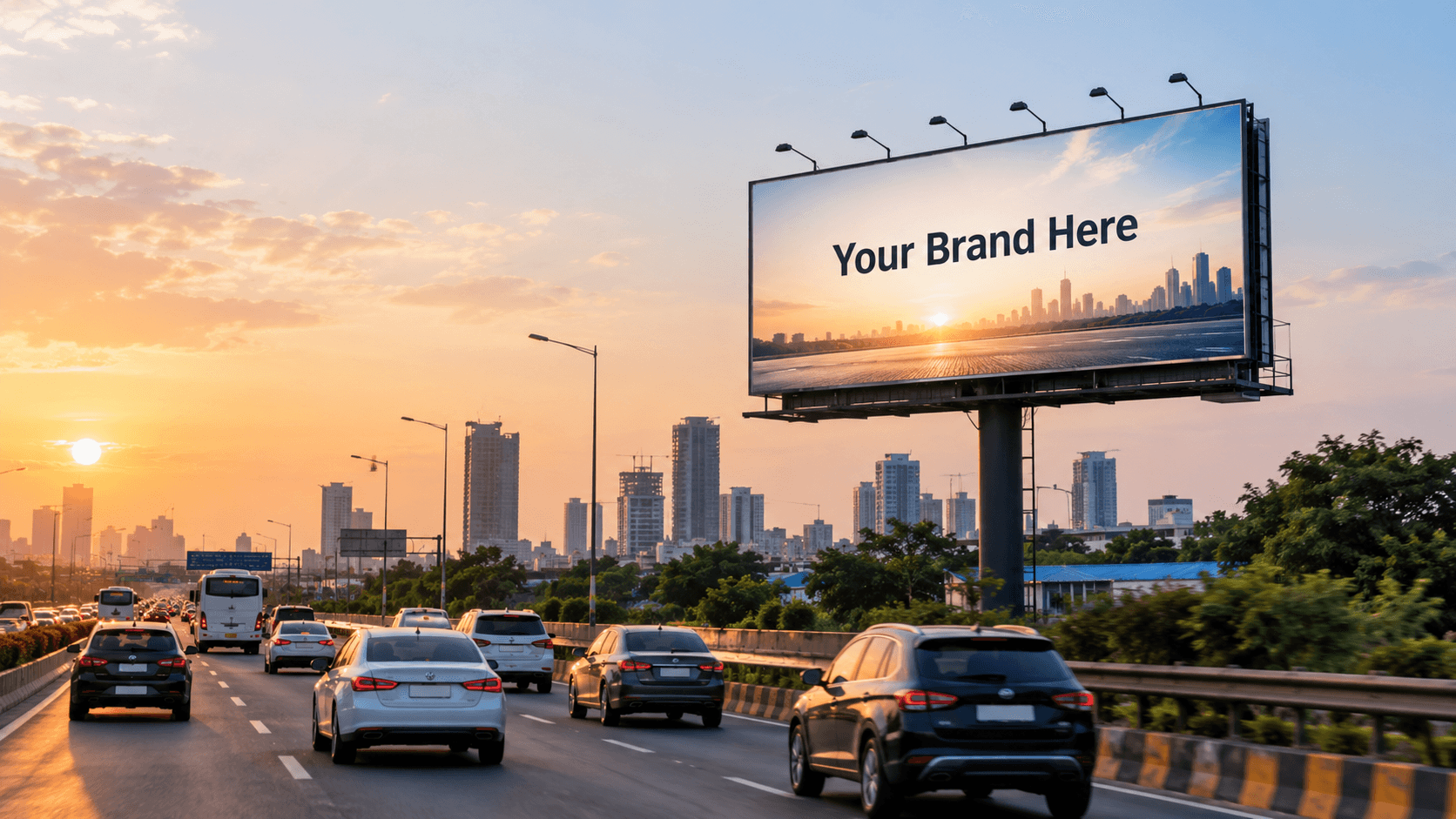
Traffic is very important. It shows how many people have passed the billboard.
There are some highly anticipated locations such as
- High-traffic roads
- Major intersections
- Highways
- Business districts
- Transport corridors, etc.
These are some of the evergreen places where your billboards may get a large number of potential impressions every day. But high traffic doesn’t mean success.
High-speed traffic means your ads may not have better visibility. Slow-speed traffic means the commuters have more dwell time for reading & understanding the ads. In this case, brands need to focus on 4 factors:
- Traffic Volume
- Vehicle Speed
- Congestion
- Lane Direction
- Viewing Conditions
This can create more time for people and process the message.
2. Traffic Speed Helps Determine Creative Complexity
Traffic speed suggests how much information you can put on the billboards. At high speeds, they may have only a second to notice the ads.
- A Short Headline
- Strong Visuals
- Simple Brand Cue
One focused advertising message works better here.
On slower urban roads, brands have more chances to share additional information.
This means traffic behaviour also influences what the billboards say.
Transit Advertising
Transit advertising is a form of outdoor advertising that communicates brand messages through advertising media associated with public transportation systems, including buses, metros and trains.
3. Peak Hours Reveal the Best Time to Reach Specific Audiences
Traffic changes throughout the day. There are multiple peak hours with different traffic patterns. This establishes a simple idea.
Brands need to identify your target audience and find the best time to meet with them. For example:
- Morning Traffic: People travelling towards business districts, schools, colleges and commercial centres
- Evening Traffic: People travelling towards residential areas, shopping zones and entertainment destinations.
The direction of the commute changes the value of the same billboard.
Two billboards on the opposite sides of the same road can have different ad values at different times.
4. Congestion Can Increase Exposure Time
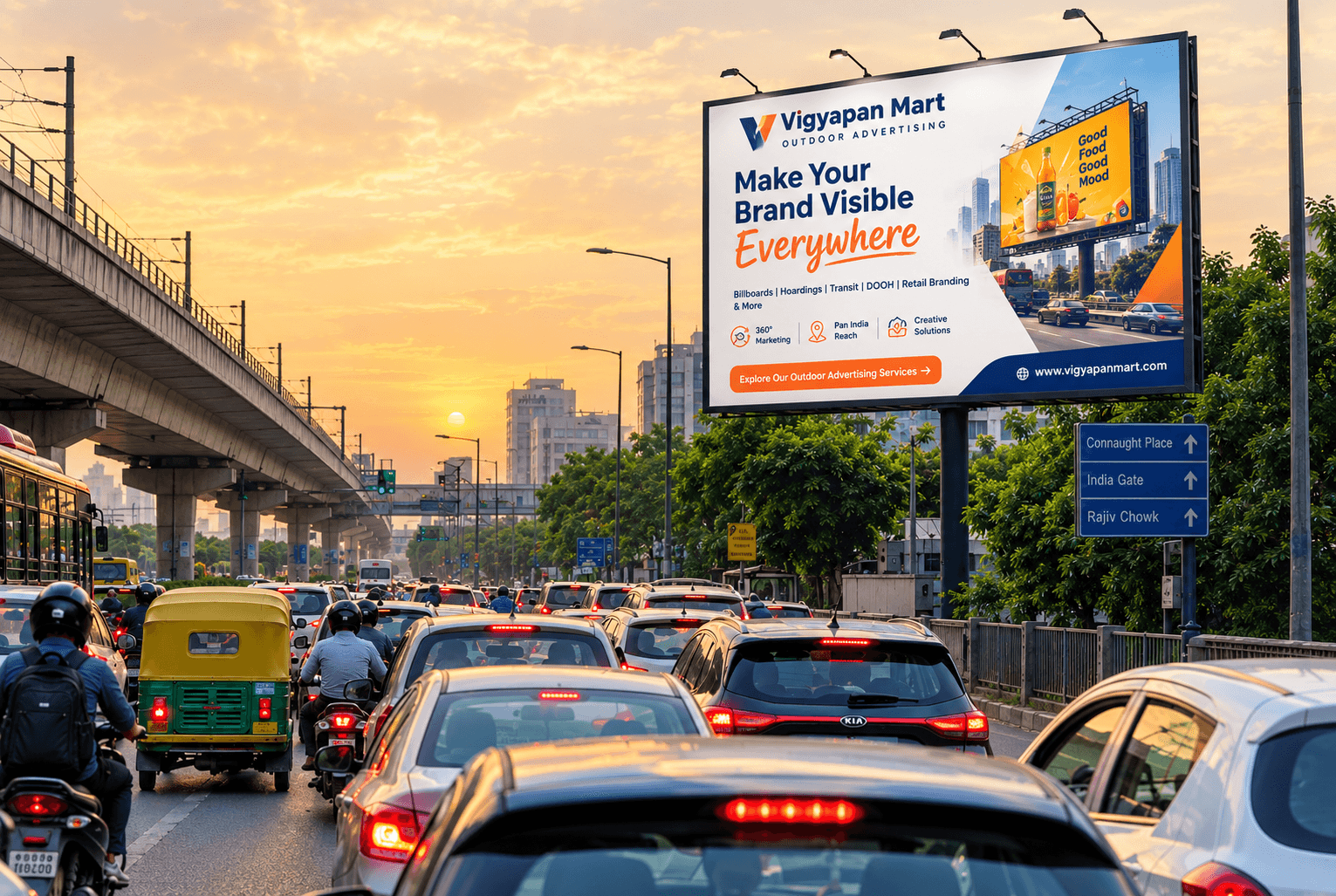
Traffic congestion is generally a problem for commuters, but for OOH advertisers, it is an opportunity for longer dwell time and better visibility.
Consider a road where vehicles normally travel at 40 km/h but get very slow in the morning and evening rush. People may spend more time around the billboards.
But don’t take congestion as better visibility.
- Poor traffic flow
- Obstructions
- Road construction
- Driver distraction
These factors directly reduce visibility. However, when the site has clear visibility, slow traffic often means more exposure and dwell time.
Metro advertising is a form of transit and outdoor advertising that displays brand messages across metro-related media spaces, including trains, stations and digital displays.
5. Traffic Direction Can Match Ads With Consumer Intent:
Traffic behaviour also tells us where the people are going. Inbound locations may reach people who travel to offices, schools, and many workplaces.
An outbound location may reach people who return to their homes.
The same principle applies to shopping districts, airports, railway stations, entertainment zones and residential areas.
For example:
- Restaurants: Routes leading to commercial or entertainment places
- Housing Developer: Routes that connect employment areas to residential places.
Remember, your ad should connect to movement with consumer intent.
6. Repeated Routes Can Build Brand Recall
Many commuters follow the same routes every day. Means brands have the chance to reach the same audience every single day.
This is called Ad Frequency.
A person who sees the same brand message repeatedly every day may become more familiar and remember the brand more. This makes commuter corridors valuable for advertising campaigns on awareness and recall.
7. DOOH Makes Timing More Flexible
Digital OOH advertising makes targeting more practical and smart. The good news is that India’s OOH market is moving towards digital outdoor advertising formats.
According to PwC, DOOH may hold around 44.1% of the total OOH market by 2029.
Source Url: ( PwC )
Digital outdoor advertising offers greater flexibility. These digital billboards may see multiple creatives and messages during morning, afternoon and evening periods.
For example:
- Morning: “Start your day with…”
- Afternoon: “Take a break…”
- Evening: “On your way home? Visit us.”
Same location, different message around peak hours.
8. The Right Billboard Is a Combination of Location, Time and Behaviour
Traffic data help brands answer three questions:
- Where is my audience travelling?
- When are they most likely to pass the location?
- What conditions will affect their ability to notice and understand the message?
Why are these questions important? Because billboard advertising in 2026 is getting more data-based. It means brands can use audience measurement tools, GPS, and digital inventory to understand movement.
How Can Vigyapan Mart Help With Billboard Advertising?
Vigyapan Mart is a full-service OOH advertising agency that helps brands plan and execute data-driven billboard advertising campaigns based on audience movement, locations, traffic patterns, objectives and budget. Whether you are exploring outdoor advertising in India for the first time or scaling an existing campaign, we provide end-to-end OOH advertising services, from site selection and media planning to creative execution and campaign management.
Our billboard advertising services also help you understand billboard advertising cost in India and digital billboard cost in India based on location, traffic volume, visibility and format, so your budget goes to sites that deliver real exposure.
We can also extend your campaign beyond billboards with transit advertising, metro advertising, bus advertising in India and airport advertising, so your brand reaches the audience at every stage of their journey.
Conclusion:
In this blog, we have discussed how understanding the traffic behaviour makes your billboard advertisements more effective and valuable.
Brands need to understand that even the busiest roads can fail the strongest billboard advertising strategy. Today, when brands have access to technology, they should focus on multiple insightful factors, including:
- Traffic volume
- Speed
- Direction
- Congestion
- Dwell time
- Audience profile
- Surrounding environment.
A billboard becomes more valuable when it resonates with the audiences brands want to target. Remember, traffic is not just a number. It's about how audiences move and how brands can use that visibility and movement to create a precise OOH advertisement.
Frequently Asked Questions
Subscribe to our newsletter
Get updates instantly! Join our community for the latest marketing insights.