
Measuring Rural OOH with Attention Metrics beyond Impressions
Rural OOH advertising is more than counting impressions. Attention metrics like brand recall, engagement, and location visits reveal real impact. Discover how these insights improve campaign effectiveness and help advertisers succeed in rural markets with stronger connections.
Published May 3, 2025 · Updated April 13, 2026
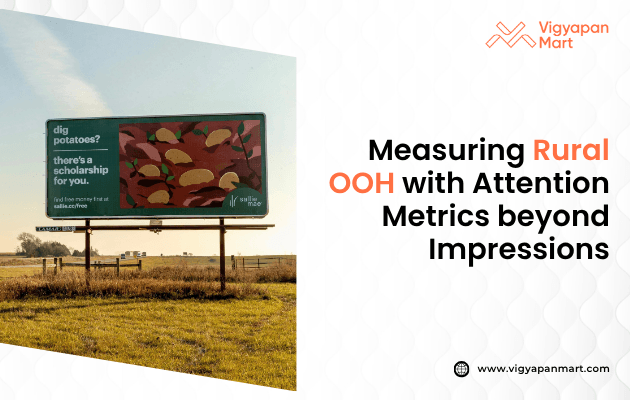
Out-of-home (OOH) advertising is everywhere from busy city streets to quiet rural towns. It means ads shown outside the home, like billboards, bus shelters, and posters. But measuring how well these ads work, especially in rural places, is not just about counting how many people see them (impressions). In this blog, we explore different ways to measure rural OOH advertising that go beyond just impressions. We explain why these new measures are important and how they help advertisers succeed in rural markets.
What is Rural OOH Advertising?
Rural OOH advertising means showing outdoor ads in smaller towns, villages, and countryside areas. These markets are very different from big cities. They have fewer billboards and less advertising clutter, so a billboard in a small town can grab attention better than one in a busy city. But rural areas also have challenges like fewer public transit options and limited technology infrastructure. Measuring ad success here needs local strategies and smart tools.
Why Impressions Alone Aren’t Enough?
Traditionally, OOH ads are measured by counting impressions. This means estimating how many people pass by and maybe see the ad. Impressions are simple and give a number to show potential reach. But impressions do not measure if people actually notice the ad, remember it, or take action because of it.
In rural areas, impressions can be even less reliable because traffic flows are different and less predictable compared to cities. So, to truly understand the value of an OOH campaign, advertisers must look at attention metrics to measure if people pay attention, remember the ad, and then act on it.
What Are Attention Metrics and Why They Matter?
Attention metrics go beyond just counting eyes on ads. They measure how engaged people are with an ad in real environments. For example:
- How long do people look at the ad?
- Do they recall or recognize the brand after seeing the ad?
- Does seeing the ad lead them to visit a store or website?
In Digital Out-of-Home (DOOH) advertising, technology tracks these kinds of engagement and helps advertisers decide where to put ads that get real interest, not just views.
Measuring Rural OOH with Attention Metrics
Here are some key attention-based ways to measure rural OOH effectiveness:
1. Brand Awareness Surveys
Advertisers ask people in the target rural areas before and after the campaign about their awareness and opinions of the brand. This shows if the ads helped people remember the brand or change their feelings about it.
2. Location Visitation Tracking
Using mobile phone location data, advertisers can see if people who passed by the ad later visited a store, event, or website. Comparing this to a control group who didn’t see the ad tells if the campaign had real influence on behavior.
3. Audience Demographics Analysis
Gathering data on who sees the ads (age, gender, income, interests) helps advertisers to tailor messaging better. Rural areas are diverse, so knowing the audience is key to reaching the right people effectively.
4. Engagement Time and Interaction
For digital billboards, measuring how long people look at the screen or interact with content (like scanning a QR code) helps assess attention quality, not just quantity of impressions.
5. Cost-Effectiveness and Reach
Rural OOH ads in less crowded spaces can have better visibility at lower costs. Measuring impressions together with cost per thousand impressions (CPM) helps balance budget spending with audience attention and impact.
Challenges and Solutions in Measuring Rural OOH
Rural OOH measurement faces hurdles like limited infrastructure, fewer data points, and a fragmented market. However, technology advances such as mobile geolocation, surveys using smartphones, and advanced data analytics are improving how advertisers collect and understand data in rural areas. Localizing messages for cultural diversity and using hyperlocal placements make campaigns more relevant and effective. A combination of technology and on-the-ground knowledge creates a better picture of campaign success.
Why Advertisers Should Care?
Moving beyond impressions to attention metrics is essential to prove OOH advertising’s real value, especially in rural markets. Advertisers want to see not just how many people see their ads, but how their behavior changes whether they visit stores, buy products, or think more positively about the brand. Using these advanced measurement methods lets brands optimize their OOH spending for stronger results and build better relationships with consumers in rural areas.
Conclusion
Rural OOH is a unique and powerful advertising medium. But simple impression counts do not reveal the full story of an ad’s impact. Attention metrics like brand lift, location visits, audience demographics, and engagement time provide a deeper understanding. They help advertisers measure real attention and business outcomes beyond just how many people may have seen an ad. Want to measure rural OOH advertising beyond impressions? Connect with Vigyapan Mart experts.
Subscribe to our newsletter
Get updates instantly! Join our community for the latest marketing insights.