
Retail Media Networks: Monetising Supermarket Spaces
Retail Media Networks are reshaping supermarket advertising by turning in store spaces into data driven revenue channels. This blog explains how RMNs work monetisation strategies key metrics and future trends helping brands and retailers unlock higher ROI.
Published March 16, 2026 · Updated April 13, 2026
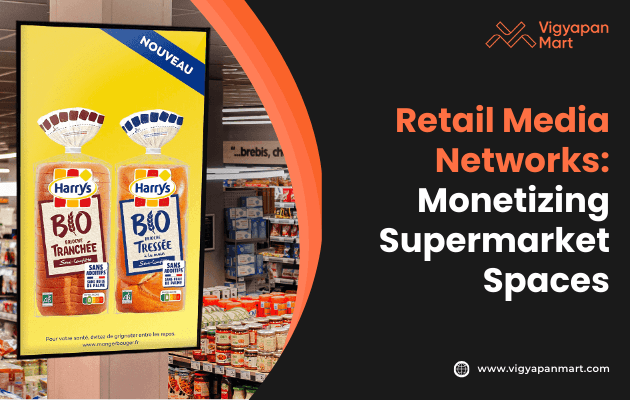
Picture this: You enter your local supermarket in Delhi, grab a cart, and suddenly the screen on it shows ads for atta or toothpaste just right for your family. That’s how Retail Media Networks (RMNs) operate. These are smart ads in supermarkets that use shopper data to present targeted promotions. No more boring blank walls; these new RMN ad spaces now help brands advertise and engage with audiences based on their previous purchases. Results? Such ads give results like digital billboards.
This becomes more important as India’s retail marketing is expected to boom to $1.2 trillion by 2027. Now, what should we expect of this? The new-age RMNs advertisement spaces will help brands turn supermarket aisles into smart advertisements. Results? High-internet buyers and hyper-local targeting.
What Are Retail Media Networks?
Retail Media Networks are ad platforms inside supermarkets. Think about digital screens on shelves, shopping carts, checkout counters, and even end-caps. These are platforms that use first-party data and utilize it to cater the right advertisement for you, such as what you buy via loyalty cards. Such thoughtfulness makes the ads relevant and more engaging to viewers, ultimately resulting in higher conversion.
In simple terms, it's Digital Out-of-Home (DOOH) advertising that has evolved for kirana-to-hypermarket setups. These ads use tech like computer vision and geofencing to spot your age group and ping your phone. RMNs offer no creepy or salesy ads but smart matching of brands to shoppers. Results? Ads that feel personal, not pushy.
The Monetisation Playbook: Strategies for Supermarkets
Monetising supermarket spaces is straightforward with RMNs. How? Here’s the playbook: First, target smartly and use loyalty data to hit high-intent folks. For example: show diaper ads near young parents or masala packets by veggie stalls. This relevancy lifts sales and maintains your sales.
Ad formats that pay
- Digital screens: Charge CPM (cost per mille) at ₹300-800.
- Interactive carts with QR codes: CPC (cost per click) models, engagement 25% higher.
- Programmatic OOH: Real-time bidding via platforms like Broadsign or Google's DV360.
Revenue streams
- Sell directly to CPG giants like HUL or ITC (main chunk).
- Self-serve dashboards for small brands.
- Agency tie-ups for big campaigns.
Key metrics to watch
| Metric | Typical Range | Why It Matters |
|---|---|---|
| Dwell Time | 20–45 seconds | Builds strong ad recall |
| Sales Lift | 8–18% | Directly proves campaign ROI |
| Screen Fill | 65–85% | Maximizes media owner earnings |
But there are challenges as well. Ad clutter or slow internet in tier-2 cities may hinder your ads. Now, what’s the solution? Rotate your creatives regularly and start with offline-first tech.
Future Trends and Implementation Tips
In 2026, brands should expect AI-powered predictive ads and AR try-ons in supermarkets. Think about hybrid setups linking in-store screens to Instagram reels for omnichannel reach. Moreover, programmatic OOH will dominate the market. So, how to start it? Here are some steps:
- Map high-dwell zones (dairy, snacks).
- Partner with a reliable and experienced supermarket advertising agency in India.
- Start with a pilot test with 5-10 screens and then scale for more.
Conclusion
Retail Media Networks flip supermarket spaces from cost centres to revenue machines. With targeted DOOH, programmatic bidding, and data smarts, RMNs can add extra wealth in your pocket while brands grab loyal buyers. India is witnessing a retail boom, and brands are ready to utilise even the walls to advertise. So what to do? Audit your store, plug in screens, and watch monetisation roll in. Considering the factors and trends, RMNs are the future of supermarket advertising. Ready to cash in? Connect with Vigyapan Mart and start small, and turn every aisle into an ad goldmine.
Subscribe to our newsletter
Get updates instantly! Join our community for the latest marketing insights.