
OOH Advertising Costs Explained: Full Pricing Guide for Beginners
This beginner guide explains OOH advertising costs in India covering pricing for billboards transit street furniture retail media and digital OOH. Learn cost factors hidden fees negotiation tips and future trends to plan high ROI outdoor campaigns in 2026.
Published April 13, 2026
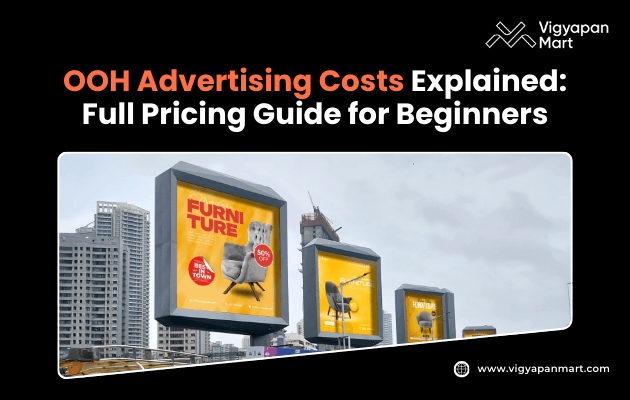
Picture this: Your brand shines on a busy Delhi bus shelter, and thousands of people see your OOH ads every day. OOH advertising, or out-of-home advertising, is putting ads where people move. Some of the best examples are billboards, hoardings, bus advertisements, and street furniture advertisements. Bus stops, benches, kiosks, phone booths, buses, and metros are some of the perfect places for OOH advertising beginners.
In 2026, OOH advertising is growing with the power of digital technology because people are fed up with repetitive digital ads but also want a seamless experience from the brand. That’s why OOH ads are growing with digital twists. Brands may not always need to put huge budgets needed like TV or billboards. If you run a shop or start a brand, OOH advertising is your ticket to more eyes. But understanding the OOH cost is very important for not missing a perfect deal while utilising its power to maximise ROI. This full guide breaks down OOH advertising costs step by step. Learn factors, prices, extras, and tips.
What is Outdoor Advertising?
OOH Advertising uses everyday city structures to display your message. Since people only see them in public places, they are called Outdoor Advertising. Most people see when they commute, wait, or pass by. Let’s break it down fully. First,
1. Billboards (Hoardings)
They are massive roadside displays that are easily visible from highways and junctions for hundreds of meters. They target drivers and passengers repeatedly during commutes and build top-of-mind awareness. In high-traffic spots like Mumbai's Western Express Highway, billboards reach lakhs daily. Their cost rises with size and illumination, but static advertisement versions stay affordable since no tech is involved.
2. Transit Advertising
Transit advertisements use buses, autos, trains, or taxis and turn them into moving billboards. They install wraps or panels on these vehicles that easily attract the commuters at signals or stops. These are perfect for FMCG or services that need hyper-local audiences. Choosing the targeted routes ensures repeated views without fixed-site limits.
3. Retail Media
Retail media includes wall panels, facade wraps, or stands inside/outside malls and shops that capture shoppers at purchase decision points. Such OOH ads use high dwell time near entrances and focus on impulse buys for fashion, electronics, or food. They are often low cost and offer high conversion rates since audiences are already in buying mode.
4. Digital OOH (DOOH)
LED screens or interactive displays play videos, rotate ads, and target by time/weather via software. They get a lot of attention at busy junctions due to their dynamic content. For example, morning traffic shows coffee, whereas nights push nightlife. Now, the question is which one to choose as a beginner? The best answer is to diversify your OOH formats for the evaluation and then utilising the right ones based on the results. Billboards build mass awareness, transit extends reach, retail drives sales, and DOOH adds smarts.
Make sure all of these ad formats stay weather-proof and 24/7 visible. In India, OOH holds 10-15% ad market share, with Tier-2 growth at 20% yearly. Moreover, surveys show that OOH industries will grow at 15% annual rate. Means brands have opportunities that shouldn’t be ignored. Note- if you don’t look for experimentation, partner with an OOH advertising agency to get professional guidance on outdoor advertisement and which one to choose.
Key Factors Influencing OOH Advertising Costs
OOH advertising costs aren't random but very calculated. Especially after the rise of digital technology, the OOH advertising has become more precise and ROI calculated. Let’s find out in detail:
1. Location
Location is a very prime factor for OOH advertisements. The Tier-1 cities like Mumbai and Delhi can offer high footfall, up to 50,000+ daily viewers, so OOH advertising rates will be 2-3x higher. The Tier-2 cities, like Pune, offer 10,000-30,000 views, so the cost will be lower. However, the sub-locations matter as well. For example, city junctions like spots cost more than quiet roads.
2. Duration
Short bursts (15 days) have setup fees but a low daily rate. On the contrary, long runs (3-6 months) discount 10-20%. Beginners start short tests to test OOH advertising.
3. Seasonality
Peak times like Diwali (Oct-Nov) or IPL see 20-50% hikes due to demand. On the contrary, the monsoon season dips the prices that are good for OOH advertising deals.
4. Format and Size
Static OOH ads are cheaper, but digital OOH advertising costs up to 30-50% more for tech and dynamic ad features. Next, size has a directly proportional relationship with OOH advertising costs.
Bigger panels = higher OOH advertising cost.
5. Demand and Inventory
Popular OOH spots stays booked months ahead and cost more, whereas low-demand areas bargain easily.
6. Production Extras
Design, printing, and installation costs also increase the budget of OOH advertising campaigns. Sometimes, it takes cranes for high installations.
7. Regulations
The cost for the municipal approval varies from one city to another. Also, brands should know that all the municipalities and BMCs have different compliances. For cutting costs and utilising your budget efficiently, brands need to master these and cut OOH advertising costs by 15-25%. However, always check traffic reports from OOH advertising owners.
Detailed Breakdown of OOH Advertising Pricing
The pricing for OOH advertising varies, but here’s an average cost table with examples. Check these:
| Media Category | Format | Size | Rental Cost Range | Production Cost | Key Advantage |
|---|---|---|---|---|---|
| Street Furniture | Bus Shelter Panel | 4×6 ft | ₹50k–1.5L | ₹20k–60k | High dwell time and commuter traffic |
| Street Furniture | Kiosk / Phone Booth | 3×5 ft | ₹30k–80k | ₹15k–40k | Urban centrality with compact reach |
| Street Furniture | Bench Wrap | 2×4 ft | ₹20k–50k | ₹10k–25k | Easy installation and pedestrian visibility |
| Billboards | Standard Hoarding | 10×20 ft | ₹2L–5L | ₹80k–2L | High visibility near highways |
| Billboards | Gantry / Highway | 15×30 ft | ₹5L–10L | ₹2L–4L | Heavy traffic volume and illumination |
| Transit | Bus Back / Full Wrap | Full body | ₹1L–3L | ₹40k–1.2L | Wide route coverage and mobility |
| Transit | Auto Rickshaw Panel | 3×5 ft | ₹20k–50k | ₹10k–30k | Hyperlocal reach with daily circulation |
| Retail | Mall Facade Wrap | 20×10 ft | ₹1.5L–4L | ₹60k–1.5L | Premium lighting and shopper footfall |
| Retail | Wall Panel (Shopfront) | 6×8 ft | ₹40k–1L | ₹20k–50k | Highly targeted retail audience |
| Digital (DOOH) | LED Screen | 55″ | ₹1L–3L | ₹50k–1.2L | Content rotation with power included |
| Digital (DOOH) | Interactive Kiosk | 42″ Touch | ₹80k–2L | ₹40k–90k | Software-driven touch engagement |
Static options like street furniture and billboards remain beginner-friendly with lower tech costs, while transit ads and DOOH scale for broader impact. Here’s a suggestion from top OOH ads experts: Add 20-30% for production, installation, and permits in full campaigns.
Additional Costs and Hidden Fees in OOH Advertising
- Permits: ₹5k-20k per spot from municipal bodies; processing delays can add weeks.
- Installation: ₹5k-15k per site, covering cranes, safe fitting, and heights for billboards or wraps.
- Maintenance: ₹2k-10k monthly for cleaning, repairs from pollution, weather, or vandalism.
- Insurance: ₹3k-8k for theft, damage, or liability coverage per campaign duration.
- Digital Specifics: Electricity ₹5k/month for DOOH screens; content upload/setup ₹10k initial.
- Tracking: Free QR codes; advanced cams/beacons for metrics ₹10k-30k to measure footfall or scans.
- Penalties: 5-10% fines for late payments, design changes, or permit violations.
- Agency Fees: 15-25% commission on bookings if using intermediaries for negotiations and networks.
Smart Budgeting Tips for OOH Advertising Beginners
- Budget OOH advertising wisely with this step-by-step:
- Define Goals: Define a goal and set a spending limit.
- Research Spots: Use Google Maps or free tools for OOH advertising traffic.
- Get Quotes: Talk to 3-5 vendors and compare apples-to-apples.
- Calculate Total: Keep 30% extras budget over the rental.
- Buffer 20%: For any kind of hikes.
- Track & Adjust: Post-campaign review
OOH Advertising vs. Other Formats: Full Comparison
| Media Type | Typical Budget Range | Reach Type | Attention Span | Key Strength | Key Limitation |
|---|---|---|---|---|---|
| Street Furniture | ₹10k–60k | Hyperlocal | High (5–10 min) | Excellent proximity to audience | Limited geographic spread |
| Billboards | ₹80k–5L+ | Mass / Highway | Low (seconds) | Bold, high-impact visuals | 2–5× costlier and less local |
| Transit | ₹10k–1.2L | City-wide | Short (signals) | Repeated exposure across routes | Moving and fleeting views |
| Newspaper | ₹20k–50k (equivalent) | Household | Variable | Wide household penetration | Low retention compared to OOH |
| Online Digital | Varies (₹300+ CPM) | Targeted | Skippable | Click-based performance tracking | Ad fatigue and easy avoidance |
How to Negotiate OOH Advertising Deals?
Smart negotiation can save 15-30% on your OOH advertising campaigns. Now, the question is how to do so? Here are some points to follow:
- Prep by researching 2026 OOH rates like ₹20k-1.5L/month, get three quotes, and list your spots and duration needs.
- Ask for discounts on long-term deals or off-peak slots like post-Diwali to save 10-25%.
- Leverage multi-spot bundles by quoting competitors and negotiating group rates 10-20% lower.
- Close with a detailed written contract covering rates, duration, payments, and maintenance terms.
Future Trends in OOH Advertising
OOH advertising trends in 2026 India will evolve with tech, slashing costs and amplifying impact for beginners in Tier-2 cities.
- Programmatic platforms will enable real-time bidding for spots like Google Ads, saving 20% on time and costs.
- AI personalization will rotate content by weather or time, boosting engagement up to 30% on shelters.
- Solar-powered screens will eliminate ₹5k monthly electricity bills, ideal for sunny Durgapur with 40% adoption rise.
- AR overlays via QR scans will offer 3D try-ons for jewelry, lifting conversions 25% among youth.
- 5G connectivity will deliver live video streams on DOOH, enabling real-time events and dynamic campaigns.
- Hyperlocal geo-fencing will trigger ads within a 100m radius, targeting shoppers precisely in markets.
- Sustainable materials like recycled vinyl will cut production costs 15% while appealing to eco-conscious brands.
- Data analytics platforms will track impressions and footfall via cams, proving ROI for SMEs.
- Retail media networks will integrate OOH with in-store digital, creating seamless omnichannel shopper journeys.
Conclusion
Outdoor advertisements are great for building brand awareness and increasing ROI. But the question is about the budget. While it’s true that some of the outdoor advertising methods are super costly, other methods, such as street furniture advertising, are beginner friendly. The key factors of OOH ad costs are Location, duration, and format that offer high ROI and low CPM. From bus shelters to digital kiosks, OOH advertising fits India’s busy streets. But brands must know how to cut costs. So what to do? Get 3 quotes, budget smart, track results. Also, for the best calculated results, partner with reliable Vigyapan Mart OOH experts today.
Subscribe to our newsletter
Get updates instantly! Join our community for the latest marketing insights.