
Advertising in India Revolution: OOH Trends Dominating Markets
OOH advertising in India is evolving with new trends like digital screens, transit media, and sustainable billboards. These innovations help brands reach massive audiences in busy cities while combining technology and outdoor visibility for stronger brand recall and impact.
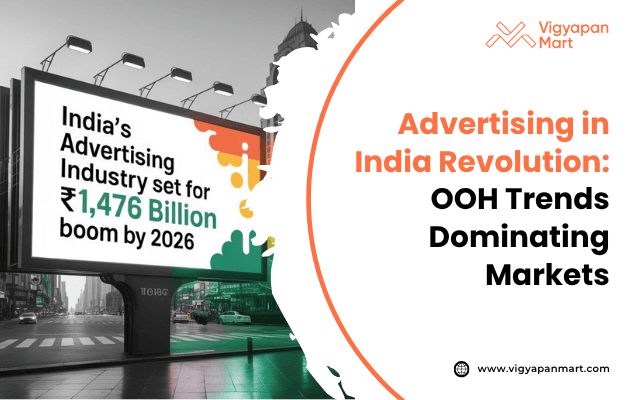
India’s advertisement world is growing like never before, and OOH ads are again leading the charge. With people getting tired of digital ads, OOH is making a bold comeback. Last year, in 2025, the total Indian ad spend on OOH was ₹5,000 crore. And guess what, it grew faster than digital in big cities like Delhi. OOH isn't old-school anymore. It has gone smart with tech and local twists. From Delhi NCR's metro stations to Noida's malls, OOH grabs eyes. And people can't scroll away there.
This revolution mixes digital smarts with real-world punch. It helps brands stand out. In this post, we dive into OOH trends. They rule the 2026 markets around Delhi. Let’s explore how OOH ads are changing the ad world of India again.
The OOH Resurgence: Why It's Back Stronger?
OOH is making a big comeback. It shines on Delhi's busy streets. As per several reports, the Indian OOH ad market is growing at 18-20% yearly. Why? People are out more after COVID. In Gurgaon and Noida. High traffic jams mean your ads will draw more eyes naturally. Metro rides do the same, too. But here is a change. The old static billboards are out now, and people are giving attention to dynamic OOH ads.
Take Delhi's Ring Road hoardings. They now change messages by time or weather. Brands love it. As a result, their OOH recall is generally high. Several studies say that more than 50% of the total OOH ad viewers remember the brand better than online ones. Plus, festivals like Diwali turn OOH into a goldmine of opportunities. Festive wraps on buses easily pull crowds. In these big cities, OOH fits high footfall spots. No wonder budgets shift back to OOH.
Top OOH Trends Dominating Indian Markets in 2026
OOH trends in Delhi NCR are about tech and smart plays. Let’s explore what’s trendy in 2026:
1. Digital OOH (DOOH)
Screens in malls run the video ads that work as dynamic OOH ads. They can also do more live weather reporting, festival updates, match score, etc. It's like Google ads, quick, reliable, targeted, but without the ad fatigue.
2. Sustainability in OOH
Eco-friendly boards use recycled plastic. They pop up on Noida's expressways. Brands like Amul switched to solar-powered OOH in Delhi. As a result, it easily cuts the energy usage and win green points. Big cities are now choosing low-pollution OOH first.
3. Transit OOH
Transit OOH kills it on Delhi Metro and DTC buses. Think about the metro wraps with QR codes. The riders can easily scan the deals, and with AR technology, this has the potential to interact with the viewer altogether.
4. Hyper-Local OOH
OOH ads with hyper-local dialects and cultural influence can target the best spots and win the local market easily. Plus, with AI tools, you can track the footfall and make your OOH ad more relevant.
These trends make OOH unbeatable in 2026.
Challenges and Future-Proof Strategies
OOH isn't perfect. There are challenges, but smart marketers always find a way. Here are some of the common challenges you may face:
- Strict MCD rules may limit billboard sizes and slow down approvals.
- Too many ads clutter the roads, making them less effective.
- Fake viewership numbers erode trust among brands.
- Measuring real ROI is tough without advanced tech.
- Fragmented vendors make planning a hassle for big campaigns.
- Lack of transparency in manual processes frustrates advertisers.
Future Strategies
- Use apps for accurate footfall data on OOH spots.
- Go hybrid by pairing OOH with Instagram ads.
- Blend DOOH with geo-tags in areas like Gurgaon for precise results.
- Allocate 25% of your budget to tech upgrades for stronger ROI.
Conclusion
OOH is revolutionising ads around Delhi. It blends old-school reach with new tech. Its 2026, and trends like DOOH, green boards, transit wraps, and local targeting make it dominate 2026. Now, in such an environment, brands ignoring OOH ads are missing big in the market. It's where India lives, moves, and shops.
So, what to do? Start small and first, test a DOOH ad campaign on the Delhi Metro. Next, track with simple tools and watch your ROI. Need professional help? Connect with Vigyapan Mart today.
Subscribe to our newsletter
Get updates instantly! Join our community for the latest marketing insights.