
Airport Advertising Evolution: DOOH and AR in 2026
Airport advertising in 2026 evolves with DOOH and AR technologies. Smart digital screens and augmented reality create interactive and personalised experiences for travellers. These innovations boost engagement brand recall and ROI, making airports powerful marketing spaces.
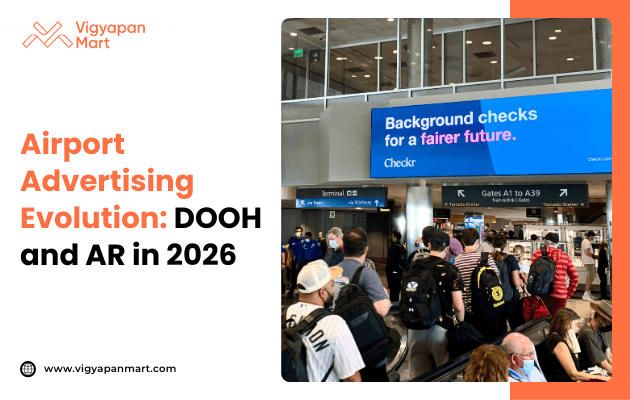
Like all the other OOH advertising mediums, airport advertising is also getting a huge update in 2026. With AI and AR technologies, now airport ads can be a fun game for the audience and a medium for brands to engage with them. Such new ads can change based on the time and crowd. They also offer a QR code, leading to virtual experiences or product info. This is airport advertising in 2026. The results? Such technologies make ads personal and exciting.
The Shift from Traditional to DOOH in Airports
Old-school airport ads were simple posters or basic LED boards. They stayed the same all day and were not interactive at all. Results? They were unable to get attention from tired travellers. But DOOH fixes this. It uses digital screens that update content in real-time. Think AI picking ads based on weather, time, or footfall. Airports love DOOH because people wait 60-90 minutes on average. That's captive time for premium viewers like business folks and families. In India, see it at Mumbai's Chhatrapati Shivaji Airport with dynamic IndiGo flight updates tied to ads. Globally, Heathrow uses AI screens that swap messages fast. The DOOH market grows fast. Statista says it will hit around $20-25 billion worldwide by 2026, with airports taking a big share. Brands buy space programmatically, such as online bidding. This means better reach and quick changes. For Indian brands, it's perfect for tier-2 spots like Lucknow or Coimbatore airports, where travel surges.
AR's Game-Changing Role in Airport Ads
AR takes DOOH further. It adds digital layers to the real world via your phone camera. Point at a DOOH screen, and see interactive fun—like trying virtual sunglasses from Ray-Ban. In airports, AR shines with QR codes or beacons. At LAX, McDonald's ran AR filters where travellers "caught" burgers for discounts. In India, Tata trials AR at Bengaluru for car visuals: you can see how a SUV fits your bag. By 2026, 5G makes it smoother, no lags. Multiple reports show AR boosts engagement over plain DOOH. Conversion rates jump too. Challenges? Privacy rules and high setup costs. But for luxury or auto brands, it's worth it. Imagine AR shoe try-ons at Hyderabad airport for shoppers heading home.
2026 Predictions and Strategies for Brands
By 2026, expect DOOH-AR combos everywhere. AI will personalise ads using safe data: no creepy tracking. Blockchain verifies views for true ROI. Green screens cut energy use. Brands should:
- Use first-party data from apps for custom ads.
- Link AR to Instagram Reels or WhatsApp for follows.
- Track metrics like time spent and sales lift.
In India, tier-2 airports open doors for rural marketing. Auto firms target long-drive lovers. Watch DGCA rules on data use. Early movers win big as passenger numbers climb.
Conclusion
Airport advertising evolves fast with DOOH and AR. From static boards to smart, interactive screens, 2026 brings personal touch for brands. India's travel boom makes airports key spots. DOOH offers real-time flexibility; AR adds fun engagement. Together, they lift sales and recall. Brands ignoring this risk falling behind. Test small at major hubs like Delhi or Mumbai, then scale. Airports aren't just transit points, they're ad battlegrounds. Partner with a seasoned airport advertising agency like Vigyapan Mart and stay ahead, or watch competitors shine. What's your next airport campaign idea?
Subscribe to our newsletter
Get updates instantly! Join our community for the latest marketing insights.