
Supermarket Ad Costs: Breaking Down In-Store Pricing Models
Supermarket advertising is a fast growing retail media channel in India. This blog explains in store advertising pricing models, cost influencing factors, and negotiation tips to help brands choose the right formats and locations for maximum visibility and ROI.
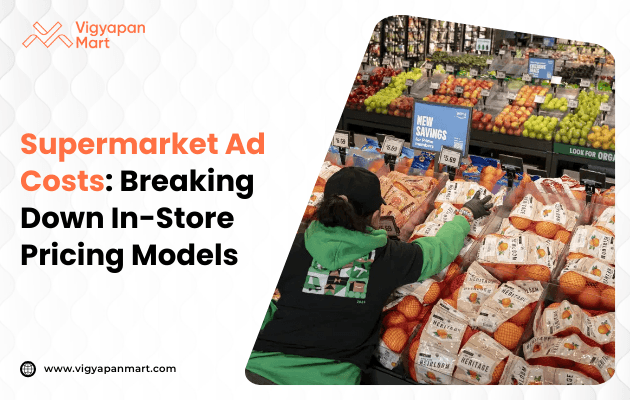
Why In-Store Ads Are Retail's Hidden Goldmine?
In-store ads are a big deal for brands in India. Nearly 70% of the purchase choices are made on impulse. With the retail industry booming in 2026, supermarkets have become the great hotspot for branding and advertising. The in-store ads mix traditional ad signs and also utilise the new digital screen advertising. However, the cost depends on the location, model, store size etc. Now, the question is what model you should choose, the main pricing types, what drives costs, and tips to get best value. But why is it necessary? To launch your best ad campaign and make the most of ROI.
Common In-Store Pricing Models Explained
Supermarkets have many ad spots and each one of them works towards different goals.
- End-cap displays: These are big shelves at aisle ends that are perfect for eye-catching advertisement promo packs.
- Aisle violators and shelf talkers: These ads are small hanging or sticky signs next to products.
- Digital screens and kiosks: LED ad screens that show videos or deals. Some even let shoppers touch or scan the QR.
- Floor graphics and cart ads: These are ad stickers on floors or shopping carts that genuinely attract the eyes as people move.
The total costs change by how long you run it and store traffic. Big chains in big cities charge more because of high-footfall spots.
Cost Breakdown: What Influences Supermarket Ad Pricing?
The cost of supermarket advertising varies a lot. There would be a high difference between tier-1 city and tier-2 or 3 city. Here is a reference table citing an average costing table.
| Model | Avg. Cost (₹ per store/month) | Key Factors |
|---|---|---|
| End-Cap | ₹20,000–50,000 | Size, busy hours |
| Shelf Talkers | ₹5,000–15,000 | Print quality, numbers |
| Digital Screens | ₹30,000–1,00,000 | Screen size, updates |
| Floor/Carts | ₹10,000–30,000 | Wear-tear, install |
But what are the factors that push the cost?
- Store chain.
- Duration
- Location
- Ad spot inside the store.
- Types of ads.
Negotiation Tips and Future Trends
Before you jump into supermarket advertising, make sure to connect with a supermarket advertising agency to explore your options, choosing the best ROI spot possible for your brand. Here’re some tips on getting smart with deals:
- Ask for footfall reports before paying.
- Utilise the bundle models such as end caps with shelf talkers. Such deals offer 15-20% off.
- Pick off-peak months (post-festive) for lower rates.
- Push for performance guarantees, like sales data share.
In 2026, brands should focus more on programmatic DOOH and use AI to swap ads according to the time, crowd, and location. Improved targeting helps you get better ROI and also costs less because of less screen time. You can also utilise the AR filters on your ad screens to offer try-ons like features.
Conclusion
Supermarket advertising in India is rising opportunities for brands in India. With prime locations and technologies, supermarkets now feel alive with smart ads that change according to the location, and audience types. But what about the advertising costs? The key is to find out the best location, duration, and store type according to your requirement. Remember, branded stores in metro cities cost more. For exploring more about supermarket advertising and a detailed execution process, connect with Vigyapan Mart experts.
Subscribe to our newsletter
Get updates instantly! Join our community for the latest marketing insights.