
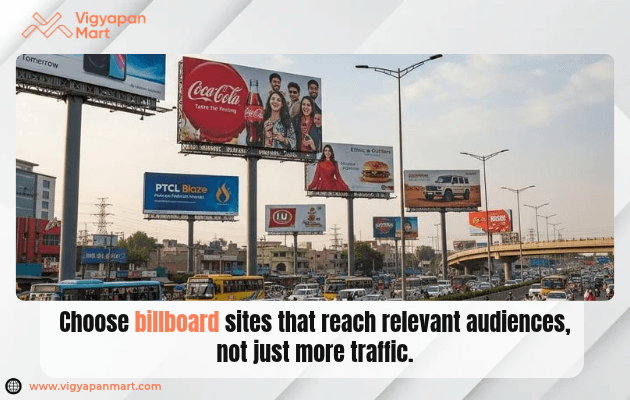
How Can Brands Balance Reach, Frequency, and Location Quality in Billboard Campaigns?
In this blog, we have discussed 7 factors every brand should consider when selecting the best performing locations for their ad campaigns. Follow them all and for an expert guided billboard OOH ad campaign, connect with Vigyapan Mart today.
Published November 13, 2026
Published by Vigyapan Mart Editorial Team | Stay connected
A billboard campaign is not successful because thousands of people see it. The real success lies in its relevancy, the number of times people actually see it, and if the billboard is at the right location.
Reach, Frequency, and Location Quality – these three factors balance the complete OOH advertising equation and help brands get the best OOH advertising results.
Focusing too much on one factor can actually limit campaign performance. But the question is how brands can balance all three factors to get better results from their billboard advertising campaigns.
How do brands choose the right billboard location?
Quick Answer: Brands choose a billboard location by matching the site to their target audience, campaign objective and budget. Key factors include traffic patterns, visibility, viewing distance, dwell time, nearby commercial or residential areas, and the estimated reach and frequency the site can deliver.
Billboard advertising is a form of outdoor advertising that displays brand messages and visuals on large-format billboards.
Understand the Difference Between Reach, Frequency, and Location Quality:
1. First, you select the billboard sites, brands must understand each factor first:
- Reach: Shows the number of people brands reach.
- Frequency: The number of times people encounter the same advertisement.
- Location Quality: Considers traffic patterns, audience profiles, visibility, viewing distance, and the surrounding environment.
These factors work together. Reach interacts with more people, frequency increases the brand recall, and location ensures relevancy.
Remember, a good billboard always balances all three according to the campaign objective and available budget.
2. Prioritise Relevant Reach Over Maximum Traffic:
A very common mistake brands make is selecting their billboard locations according to the traffic only. A busy road may offer excellent visibility but you need relevancy for results.
For example:
A premium automobile brand may benefit more because of:
- Business districts
- Premium residential areas
- Airports
- High-end shopping destinations
Similarly, FMCG branded ads may perform better around:
- Residential areas
- Local markets
- Highways
- Public transport routes.
The question is how to choose the right location for your OOH billboard ads. For that, consider the following:
- Audience profile
- Traffic movement
- Geographical coverage
- Visibility
Your objective should be to reach more relevant people rather than just generating impressions.
3. Maintain the Right Frequency Through Strategic Site Selection
Your billboards may not generate brand recall if people see it only once. Ad frequency plays an important role in reinforcing the advertising messages, attracting viewers, and turning them into consumers.
However, it doesn’t mean that you should place many billboards close to each other. Instead, you should create a planned network of locations to create multiple exposures.
For example, a brand can select:
- Major entry point of the city
- Along busy office and commuter routes
- Near a shopping or commercial district
- Around residential areas
This approach helps brands create repeated exposure but also don’t feel overly pushed. Brands can also create a consistent presence with one billboard over several weeks.
Remember, the key is to maintain the exposure without spending too much.
4. Evaluate Location Quality Beyond Traffic Numbers:
A high-traffic location doesn’t always mean a high-quality advertising site. A billboard’s effectiveness depends on how easily people can notice and understand its message.
First, you should consider visibility, viewing distance, traffic speed, dwell time, and surrounding environment, and audience relevancy.
For example, a billboard at a traffic signal may offer longer viewing opportunities than one along a fast-moving highway. However, a highway billboard may provide much wider geographical reach.
Brands should evaluate these factors together instead of judging sites by traffic volume alone.
Audience Demographics:
Audience demographics refer to the statistical characteristics of a group of people, such as age, gender, income, education, occupation and location.
5. Use Data to Balance Reach, Frequency, and Budget
Modern outdoor advertising formats allow brands to make data-based site-selection. With programmatic buying and digital OOH, brands can now change their advertising locations fast and with context.
According to the FICCI-EY Media and Entertainment Report 2026, India's OOH industry grew by 13% in 2025, reaching approximately ₹6,690 crore in revenue. Plus, Digital OOH also increased up to 18% of total OOH revenues.
Source: (FICCI-EY Media)
This growth shows the increasing importance of measurable and well-planned outdoor advertising campaigns.
Now, here are some ideas to use data:
- Compare estimated impressions across different billboard sites.
- Identify locations with overlapping audiences.
- Understand commuter movement and traffic patterns.
- Compare the cost of reaching different audience groups.
- Evaluate the potential reach and frequency of a proposed site network.
However, brands should not consider impressions as actual attention. They should also examine visibility, viewing opportunities and the reliability of the measurement method.
6. Review Campaign Performance and Adjust the Site Mix
Installing the billboard advertisements is not the final step. Next, you should regularly review campaign performance and identify the best performing locations with the most relevant audience exposure.
For example:
If several billboards are reaching the same commuter group, brands may replace one site with another location to increase their reach to different groups.
Similarly, if a particular item attracts the right audiences but has limited visibility, the brand should reconsider its placement.
Moreover, track these important indicators:
- Estimated reach and impressions
- Average frequency of exposure
- Cost per thousand impressions (CPM).
- Site-level visibility and traffic.
- Brand searches, inquiries or store visits
With the right evolving ecosystem of the Indian OOH industry, brands can now measure their ad performance, focusing on result-driven campaigns. With metrics such as reach, frequency, visibility and audience movement, brands can stay more accurate, transparent, and data-rich for their next campaign.
Outdoor Advertising:
Outdoor advertising refers to all the advertisements media palced in public spaces such as billbaords, bus shelter ads, metro ads, street furniture ads, etc.
7. Build a Campaign That Balances All Three Factors
The best billboard strategy is not the one that maximizes anyone of the three. A campaign should not force you to choose between reach, frequency, and location quality.
A good billboard advertisement combines all three, fulfilling the campaign’s purpose.
For example:
1. Wider reach for a new product launch.
2. Ad frequency and brand recall for established brands.
3. Consumer attention near shopping destinations for a retail brand.
The right location changes with different businesses. Plus, brands should also divide their budget strategically:
| Campaign Objective | Location Strategy |
|---|---|
| Awareness | Wider geographical reach and high-visibility locations. |
| Brand Recall | Consistent branding along high traffic everyday routes. |
| Local Promotions | Locations close to stores, markets and target neighbourhoods. |
| Premium Positioning | Sites in relevant commercial centres. |
Think thoroughly and spend your budget smartly to cover all potential locations.
Key Takeaway: The best billboard campaigns don’t maximise one metric. They match reach, frequency and location quality to the campaign objective, then use CPM and visibility data to refine the site mix.
Digital Out-of-Home (DOOH) advertising uses digital screens in public spaces to display brand messages, images, videos and promotional content.
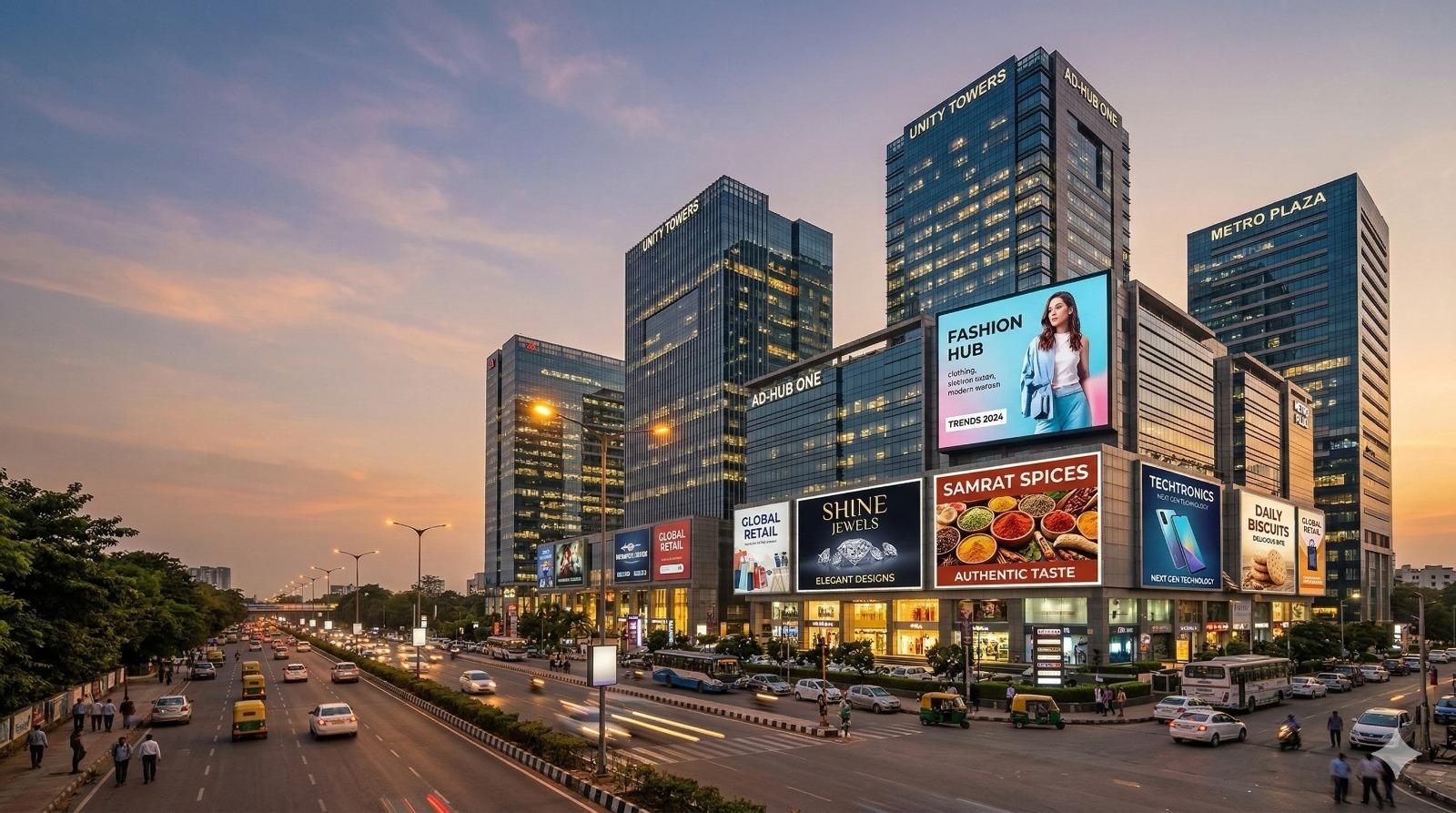
How Vigyapan Mart Helps Brands to Find the Best Balanced and High Performing Locations for Billboard Advertising?
At Vigyapan Mart, a 360-degree marketing, branding, and OOH advertising agency, we help brands plan outdoor advertising campaigns with the right locations, formats and geographical coverage. Whether you want to build city-wide awareness or target specific customer groups, a well-planned billboard campaign can help your brand make a stronger impact.
Conclusion:
A successful billboard advertising campaign doesn't depend on location only. Instead, every high-performing billboard campaign understands their target audiences clearly. They work on travel and audience patterns, exposure opportunities, and campaign objectives.
Alongside, they strongly balance reach, frequency and location quality. Therefore, building stronger visibility, improving brand recall, and utilizing their outdoor advertising budgets most effectively.
Frequently Asked Questions
Subscribe to our newsletter
Get updates instantly! Join our community for the latest marketing insights.