
Measuring OOH ROI: Analytics Tools for 2026 Campaigns
This blog explains how brands can measure OOH ROI in India for 2026 using analytics tools AI geofencing footfall tracking and attribution models to evaluate outdoor advertising performance across metro Tier 2 and rural markets
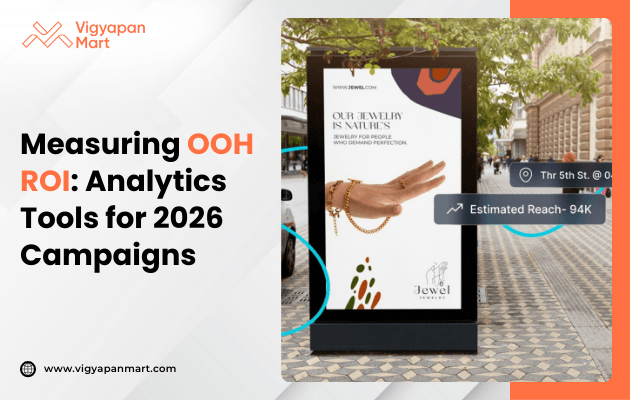
Out-of-home (OOH) ads are everywhere in India, in all directions, even in rural areas. From Mumbai hoardings to Delhi metro to rural highways, they rule the advertising industry of this country. But many brands still wonder: are their OOH ad campaigns bringing real returns? In OOH ads, will hit remarkable numbers, but the counting ROI is still tough for several brands against digital ads. Why? Billboards don't click like apps. But 2026 changes this with smart analytics tools. The new age billboards and other OOH ads use AI, geofencing, and real-time data to track footfall, sales lift, and brand recall. Whether for Tier-2 cities or highways, measuring OOH ROI is now simple. Let's see the top tools and steps to get started.
Why Measuring OOH ROI is Critical in 2026?
OOH is growing fast in India. With the rise of digital out-of-home (DOOH) screens popping up in malls and buses, one new factor is emerging to make the OOH ads more reliable, promising, and precise. ROI!Remember, advertising with tracking the results is like driving blind. A brand in 2026 must be evaluating footfall (people passing by), sales attribution (linking ad views to buys), and cost per impression like key metrics.
In rural and Tier-2 areas, the challenges are bigger, traffic data is spotty, and campaigns mix with digital. In such cases, an OOH advertising agency like Vigyapan Mart uses programmatic OOH ads to let you buy ad slots in real-time, like Google Ads. This means you can book spots that suit your budget and also give the exact ROI. How? While keeping your data private, the programmatic OOH ad technology blends mobile data, cameras, and AI to show clear ROI, helping justify budgets to bosses.
Top Analytics Tools for OOH ROI in 2026
Here are proven tools, with features suited for Indian campaigns:
| Tool | Key Features | Best For | India Example |
|---|---|---|---|
| Broadsign | Real-time DOOH inventory, impression tracking, AI optimisation | Programmatic buying | Mumbai transit screens tracking viewer dwell time |
| Geopath | GPS footfall measurement, audience demographics | Static billboards | Highway ads measuring traffic lift |
| Nielsen | Cross-media attribution, sales correlation | Full-funnel ROI | Linking hoardings to e-commerce spikes |
| Google Analytics 4 + Radarly | Geofencing, pre/post-campaign studies | Hybrid OOH-digital | Tier-2 mall campaigns via location pings |
| Admo.tv | AI video analytics, on-screen heatmaps | DOOH performance | Delhi kiosks analysing engagement |
These new advanced tools integrate easily and leverage CMS, geo-tags, mobile apps, etc. It means you won't have to deal with fake promises and anonymous data, just budget-friendly advertising and maximum results.
Step-by-Step Guide to Implementation
Follow these steps for quick wins:
- Set baselines: Before the launch, make sure to do a survey of footfall and sales in ad zones using Geopath.
- Deploy tools: Link the advertisement to your CRM. Also, activate geofencing for a 500m radius.
- Track live: Use dashboards for tracking metrics like footfall and engagement.
- Analyse and tweak: Compare the ads with control zones. A/B test creatives mid-campaign.
Conclusion
2026 will bring a huge update in OOH. Unlike earlier times, OOH ads now will be able to measure real-time engagement with modern tools, and you can track their progress. Tech like geo-tags, AI, AR, and QR track real impact from city screens to village boards, boosting confidence in budgets. As programmatic OOH grows, AI will add hyper-local tweaks by 2027. So what do you need to do? If you’re planning a new ad campaign in 2026, partner with a seasoned OOH advertising agency to find out how you can leverage modern technology. Looking for such a seasoned agency? Connect with Vigyapan Mart OOH advertising agency today.
Subscribe to our newsletter
Get updates instantly! Join our community for the latest marketing insights.