
Measuring DOOH ROI: Essential Metrics and Tools for Success
Measuring DOOH ROI is vital for modern OOH advertising success. This blog covers essential metrics like impressions engagement and ROAS along with tools and best practices to help Indian brands track performance optimise campaigns and prove real business impact.
Published April 7, 2026 · Updated April 13, 2026
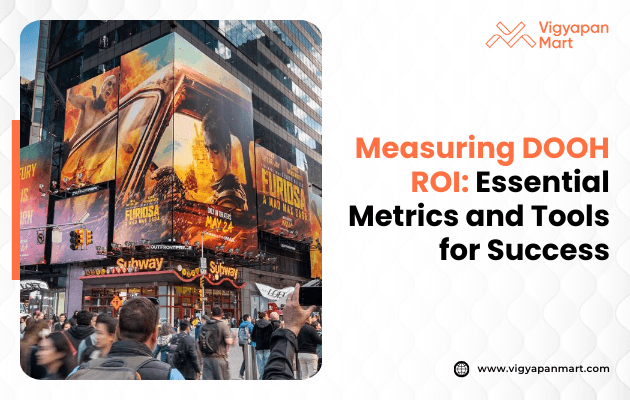
In India, OOH advertising is booming, especially DOOH with digital screens in malls, metros, and highways. But several marketers face a big question: how to measure DOOH ROI? As per the reports, OOH ad spend grew by 15-20% last year, yet gaining returns remains tough. So, what’s the solution?
Using the DOOH ads.
DOOH ads use LED screens and can offer real-time data, unlike static billboards. This makes it easier to track success. But the question remains: how to track it? In this blog, we will discuss key metrics and tools to calculate DOOH ROI in OOH ad campaigns. Whether you run retail or transit OOH ads, these will help show clear value to clients and bosses.
Why Measure DOOH ROI in OOH Advertising?
OOH advertising has evolved from simple hoardings to smart DOOH screens. But without the ROI measurement, you may waste your hard-earned money. The answer to this is measuring DOOH ROI to spot what works and what doesn’t. For example, check which screen in the busy Mumbai market drives more footfall. This data justifies the investment and lets you tweak the OOH campaigns on the go. Now, considering programmatic OOH that buys and sells the OOH ads automatically, data is king. Poor tracking leads to guesswork and good metrics bring 20-30% better efficiency. For Indian brands, this means smarter OOH advertising in cities like Delhi or Bengaluru.
Essential Metrics for DOOH ROI
To measure DOOH ROI in OOH advertising, start with core metrics.
1. Impressions and Reach
Count how many eyes see your OOH ad. High reach means broad exposure in high-traffic spots.
2. Engagement Metrics
Look at dwell time (how long people stop), QR code scans, or NFC taps.
3. Conversion and Attribution
Track sales lift or store visits via geofencing. You can utilize multi-touch models to link DOOH to online buys. This becomes the key for hybrid OOH campaigns.
4. Cost Efficiency
Calculate CPM (cost per 1,000 impressions) and ROAS (return on ad spend). Aim for ROAS over 3x in competitive OOH markets.
5. Brand Lift
Measure your brand awareness via surveys or attention scores. For OOH advertising, this proves long-term value.These metrics turn OOH advertising from art to science.
Top Tools for Tracking DOOH ROI in OOH
The right tools make DOOH ROI easy in OOH advertising. You must pick the right ones to utilise your OOH ads at best. Here are some activities for which you will need the tools.
- For managing the DOOH screens with real-time impression data
- To handle programmatic OOH buying and basic ROI dashboards
- Use Google Analytics 4 with Geofencing for linking OOH ads to foot traffic and conversions.
- For audience measurement and attention metrics in DOOH.
- For tracking retail screen performance.
Find the best tools for these or an OOH agency that uses all such advanced tools. In Vigyapan Mart, we use a real-time OOH ad execution tool to track the execution on the ground and evaluate whether it offers the best visibility or not.
Best Practices for DOOH ROI in OOH Advertising
Follow these steps for success:
- Track the normal footfall before the launch.
- Test A/B creatives on DOOH screens.
- Use first-party data for accurate attribution.
- Avoid pitfalls like ignoring weather delays in outdoor OOH. Use AI to predict the audience behaviour and boost ROI.
Conclusion
Measuring DOOH ROI sharpens your OOH advertising for Indian marketers. So what metrics should you look for? All the brands and advertisers should look for impressions, ROAS, and engagement and pair your measurement goals with advanced tools like Google Analytics 4. So, what to do? Start small: pick 2-3 metrics for your next OOH campaign and build from there. Or the best would be hiring a professional OOH advertising agency like Vigyapan Mart to do so. Read to boost your OOH ads with data-backed ROI? Connect with us today.
Subscribe to our newsletter
Get updates instantly! Join our community for the latest marketing insights.