
E-Rickshaw Ads: Scaling Last-Mile Reach for D2C Brands in 2026
E rickshaw ads are reshaping transit advertising for D2C brands in 2026 enabling last mile reach through affordable DOOH screens geo targeting QR driven commerce and tech led personalization across tier two and tier three Indian cities with measurable ROI.
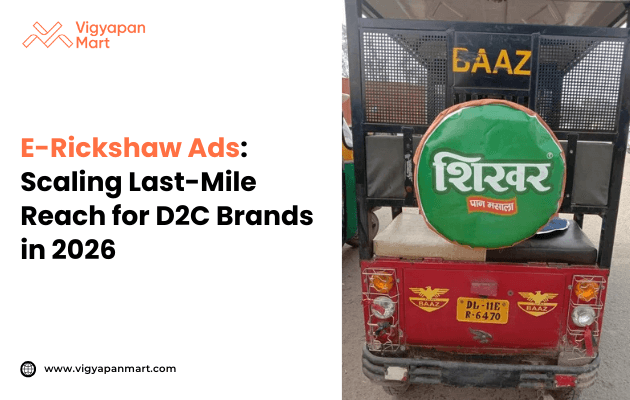
E-rickshaw vehicles are the new power pillar of the transit OOH advertising. Imagine cities like Ghaziabad or Pune that have a high population. These small e-rickshaw vehicles easily move through traffic, and their bright screens can flash ads for your favourite D2C snacks or gadgets. Brands now understand that these small vehicles are not just for short rides but are becoming ad spaces. In 2026, e-rickshaw advertising will help direct-to-consumer (D2C) brands reach customers right at their doorstep. With digital out-of-home (DOOH) screens, QR codes, and geo-targeting, brands can connect with millions in tier-2 and tier-3 cities.
Results? E-rickshaw ads have opened doors for affordable, hyper-local marketing that beats crowded digital ads. And this is big for D2C consumer brands like Mamaearth or boAt.
The Rise of E-Rickshaws in India’s Mobility Scene
E-rickshaws are everywhere now, especially after government support, which boosted electric vehicles till 2024. By early 2026, India will have over 1.5 million e-rickshaws, with numbers growing fast in places like Uttar Pradesh, Delhi-NCR, and Maharashtra. Companies like Zypp Electric and Euler Motors are expanding fleets for last-mile delivery and passenger rides.
Why the surge? Urban traffic and rising fuel costs make e-rickshaws a smart choice. They serve daily commuters in markets, colonies, and small towns, with over 50 million rides a year. For D2C brands, this means ads seen by price-sensitive buyers who love quick online orders. In Ghaziabad alone, thousands of e-rickshaws ply routes to malls and residential areas, turning commutes into shopping prompts.
Why E-Rickshaw Ads Suit D2C Last-Mile Needs?
D2C brands often struggle with the last-mile reach in tier-2 and tier-3 cities, where there is a lack of proper advertising infrastructure and connectivity. In such environments, e-rickshaw ads fix this by putting your message where customers live and shop. For example, an e-rickshaw ad shows 10% off code for organic soaps. Results? Passengers can directly scan and buy the soaps via UPI.
Secondly, e-rickshaw advertising is more affordable than a billboard, where you would only pay ₹50-100 per thousand views. Moreover, Geo-fencing lets you target ads to specific areas.
For example
- Mamaearth ran e-rickshaw campaigns in 2025, boosting local app downloads.
- BoAt used them for earbuds promos, lifting sales in Pune.
These ads blend mobility with impulse buys, perfect for fast-moving D2C goods.
2026 Trends: Tech Boost for E-Rickshaw Campaigns
By 2026, tech will make e-rickshaw ads smarter and more effective for D2C brands than ever. How? And what technologies will be common in 2026 and the coming years?
Let’s discuss
- AI Personalisation: Think about screens showing tailored ads such as raincoats on rainy days or Diwali deals during festivals, using weather and event data.
- Augmented Reality (AR) Integration: Users scan QR codes to try products like sunglasses via phone AR, boosting engagement in real-time.
- Programmatic DOOH Platforms: Programmatic OOH ads will automate ad slot buying across fleets, with AI bidding for optimal spots.
- IoT and Sensor Tracking: GPS, cameras, and sensors measure impressions, dwell time, and footfall lifts for precise ROI analytics.
- Dynamic Real-Time Triggers: The future DOOH ads will change based on time, traffic, or live events via cloud platforms.
- Solar-Powered Screens: Eco-friendly panels will cause less environmental harm, extending battery life and keeping ads running longer in sunny Indian cities.
- 5G-Enabled Interactivity: Faster connectivity will enable video streams, live polls, and UPI-linked impulse buys on the go.
But there are challenges too. Brands must be aware of local ad rules and the sustainability call. They must understand that modern ads not only feel personal but also stand for values. But what is the solution? Connect with the top e-rickshaw advertising agency experts and get personalized solutions to your brand campaign challenges.
Steps for D2C Brands to Get Started
Ready to scale? Start small:
- Pick high-traffic routes in your city.
- Team up with transit advertising agencies for hiring 50-100 rickshaws.
- Create short videos with QR codes and track scans via Google Analytics.
- Measure your ROI after launching the campaign.
- Scale to multiple cities once pilots work.
Conclusion
E-rickshaw ads are the new frontier of transit advertising and are set to transform the segment for D2C brands in 2026. With small size, flexible routing, smart tech, and low costs, they can deliver a personalized targeted reach in India’s heartlands. In this blog, we have discussed how e-rickshaws will impact transit advertising and why brands should consider it a big opportunity. Don’t miss out, connect with Vigyapan Mart, test a campaign today, and watch your D2C brand grow.
Subscribe to our newsletter
Get updates instantly! Join our community for the latest marketing insights.